Professor Christopher Twelves, MD: Advancements in Metastatic Breast Cancer from ASCO 2011
Cancer Treatments Revolve around Metastasis
Anyone who has tried to learn about cancer soon realizes that the disease and the drugs used to combat it are overwhelmingly complicated. Yet the vast world of cancer drug therapy mainly revolves around one aspect: metastasis.
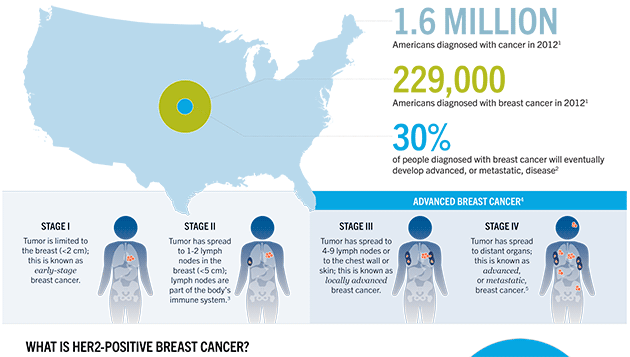
Metastasis is the process by which a cancer spreads from its origin to other locations in the body; “metastases” represent the tumors in these distant locales. Cancer treatments center on the principle that metastases need to be either treated or prevented. This is because the presence of cancer in regions beyond its original location often does the most harm.
Many cancers are first treated with surgery or radiation. The goal of these treatments is to achieve what is called “local control”: the elimination of the cancer where it arose so that it cannot regrow and cause problems. If it has not already spread elsewhere in the body, then these measures lead to a cure.
In contrast, if detectable metastases are present at diagnosis or if the diagnosis is a blood or lymph system cancer, the priority turns from local control to control of the cancer throughout the body. Surgery will be more limited or avoided entirely. If a patient is undergoing regular cancer drug treatments (which can range from a daily pill to intermittent intravenous chemotherapy), then he or she is working either to eliminate metastases found at diagnosis or to prevent their future development. A third group of patients has to deal with an intermediate situation: a cancer that has grown too extensively for surgical removal but has not yet formed detectable metastases in distant sites. These scenarios outline the three broad categories of cancer drug treatments, which we can categorize by their relation to surgery.
The Three Categories of Cancer Drug Treatments
1. After surgery
Name: Adjuvant therapy
Goal: Prevent the growth of undetectable metastases into measurable tumors
2. Before surgery
Name: Neoadjuvant therapy
Goal: Shrink bulky cancers to improve surgical outcomes
3. Instead of surgery
Name: None
Goal: Treat metastases present at the time of diagnosis
In the following sections, I explain the rationale for each of the three categories of cancer treatments, addressing the most common concerns that patients have about them. For purposes of clarity, I provide examples of how certain cancers are treated with a particular sequence of chemotherapy, radiation, or surgery. It is important to understand, however, that there may be several acceptable ways to treat a cancer; researchers continuously strive to improve on current methods through clinical trials. No specific recommendations regarding the treatment of any cancer should be drawn from the examples I cite. The optimal treatment of any cancer is determined through discussions with your physicians.