Adverse drug effects and effective therapy for depression
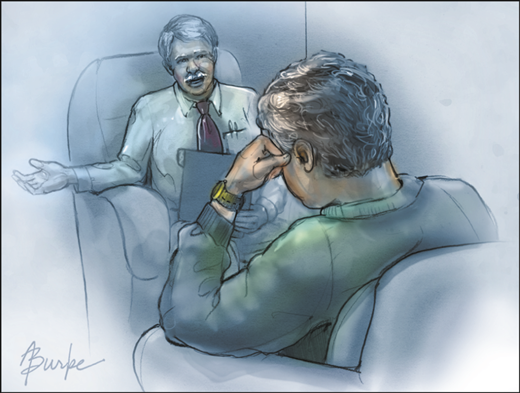
What therapy works best?
Without a doubt, cognitive behaviour therapy is the best researched psychotherapy. This is almost certainly because it is much more easily measurable than other sorts of therapy.
Cognitive behaviour therapy tends to focus on one or two symptoms and so outcomes are much more easily measured.
In psychotherapy in general, the recovery rate after treatment is about 65% – roughly two-thirds of people improve with psychotherapy. Time does heal. There is a spontaneous recovery rate of about 48% over time. Good psychotherapy can undoubtedly speed up the process. Even if an illness does appear to be slow to respond, good psychotherapy is extremely likely to enable someone to use all the resources that they have, and function better.
Can psychotherapy in depression ever be harmful?
Yes, occasionally it can. About 5% of people treated with psychotherapy do become worse. This is not a reflection of the caliber of their therapist but indicates that some people will ‘decompensate’, causing them to function less well. Psychotherapy is hard work and challenging. If you are very fragile, there may not be enough mental energy to take on the treatment. Timing is all important.
Is counselling overrated?
Perhaps you are suggesting that people refer to counselling as a solution for everything nowadays. Certainly it is often mentioned as an almost knee-jerk response to many sorts of crisis. Perhaps we can reflect that, in the ‘good old days’, our society was less mobile, with stronger family ties, greater job security, and a more settled social order.
Did the Church, the Squire, the Boss and the Family supply the support and stability then that we are nowadays trying to replace with trained counsellors via schools, workplaces and the health service?
We now have material benefits, a life expectancy, and a standard of living in this country that our grandparents would never have dreamed of. Is there a greater level of stress and strain, and less domestic, religious, and marital stability nowadays, to go with these undoubted material benefits, or are we less likely to put up with unhappiness, more likely to reasonably expect good health and our share of well-being?
I think I’d prefer to start counselling before I consider taking medication, but my doctor suggests otherwise. Who is right?
It’s good to talk; however, some people who are significantly depressed definitely need to start medication before they can embark on looking at their lives in detail. Considering difficult things that have happened can be very traumatic. If your moods are up and down, and you’re not sleeping properly, the last thing you need to be dealing with is tough issues from the past. Some people may actually be put at greater risk of self-harm by being given insights (or perhaps developing false ones) into themselves before they are mentally strong enough to deal with them. Using the medication first, to give people more coping resources before engaging in counselling, can be very helpful.
Sometimes people seem to make little progress with counselling, perhaps because they’re too depressed to benefit from it properly.
I’ve been seeing a counsellor for 2 years about my depression but I just feel worse. What should I do?
This can happen. If you’ve got the major symptoms of depressive illness despite counselling you should think very carefully about going onto some medication. Some people need to talk before they are ready to start treatment; others need to take medication to help them become ready to talk about things. If your sleep is dreadful and your concentration is shot, you aren’t going to do yourself much justice with your counsellor. Another thing that may delay progress is using alcohol or street drugs to try and control symptoms.
Perhaps, too, you should re-evaluate your counselling. Is it goal-orientated, or open-ended? It is difficult to see the wood for the trees sometimes. Some sorts of counselling are very focused with agreed goals and targets, and limited to an agreed number of sessions.
Sometimes counsellors and their clients can get into rather a cosy rut together and, with the best will in the world, important or uncomfortable changes just don’t get made. Counselling should be more than just support – it should lead to change being enabled.
In a minority of people, difficulties are very deep-seated and then long-term work with a counsellor or therapist may help.
What evidence is there that counselling helps?
Some general practices – not all – are fortunate enough to have counsellors attached to them. Other doctors may have made good links with local voluntary or private counsellors. All this costs money.
Can we justify using Health Service resources on counselling, and do people who are paying for this sort of service receive worthwhile benefit for their money?
Counselling has to justify itself, like any other service. The results of early research projects were rather ambiguous, but a recent large systematic review looked stringently at the benefits of counsellors trained to British Association of Counsellors and Psychotherapists (BACP) standards, working in general practices. Results were mildly encouraging. They found ‘a modest but significant improvement in symptom levels’ and ‘high levels of patient satisfaction’ among people who received counselling. People like counselling, but it may not be as potent a treatment as we would like.
This evidence is welcome because it gives us good ammunition to get better resources for counselling in General Practice. At present there are staff shortages, a variable level of provision of counselling depending on where you are, and long waiting lists. We need to improve this.
Psychotherapy can, as we have seen, provide a non-directive and non-judgmental setting in which to work at your difficulties. The therapist will attempt to help explain what has happened and perhaps trace the origins of your style of coping. It will engender hope, and help kindle a feeling of mastery over problems. Other therapies address specific problems. These therapies are behaviour therapy, cognitive behaviour therapy, and interpersonal therapy. The therapist in this situation focuses on addressing particular problems, and they have a specific aim in treatment – there is a very clear end point.
Behaviour therapy
The techniques of behaviour therapy are based on ‘learning theory’ – from the knowledge we have about how patterns of behaviour are learnt (and therefore changed). The aim of treatment is to change a behaviour rather than thoughts and feelings. It does not look at the genesis of the problem. The aim of treatment is to decrease symptoms.
The symptoms are viewed as unhelpful, difficult behaviours that have arisen because of faulty learning. The aim is to replace these with more appropriate and healthy behaviour. This can be very frightening. In a phobic person, for example, you cannot expect someone with a spider phobia to be comfortable with a spider crawling on their hand in the first treatment session – gradual gaining of experience and careful timing is all important. Behaviour therapy is a very powerful treatment for specific phobias, such as spiders or open spaces. It is also very useful in the treatment of obsessional compulsive disorder.
Cognitive behaviour therapy
This therapy came about as a development from behavior therapy. ‘Maladaptive’ or unhelpful behaviour or feelings can be strongly reinforced and heightened by our thinking patterns. If you are depressed, the situation can be made much worse by negative thinking. This negative thinking is not just a symptom of depression but one of the most important agents in perpetuating the illness. Depressed people can frequently misinterpret what is said and what happens in the environment around them. What was mildly negative rapidly becomes intolerably gloomy. Selfesteem and expectations of oneself plummet. If the triggers to negative thinking can be identified, and challenged by the therapist, the assumptions made are examined and challenged to good effect. It is a clear and orderly form of treatment, and very persuasive.
A lot of the negative and bad thinking that we see in depressive illness isn’t just a symptom of depression but one of the most important things that keeps it going. It’s a vicious circle. People get lower and lower, and feel worse and worse about them.
The aim of cognitive behaviour therapy is to challenge those negative thoughts, to get the patient to gradually decrease them, by questioning them, and questioning the underlying assumptions that led to those thoughts.
This involves recording automatic bad thoughts and keeping a ‘thoughts diary’ of them, and seeing how they challenge those negative thoughts. Then we encourage the person to try out other ways, rather than being stuck with their automatic thoughts and behaviour. Automatic thoughts can be very destructive. Some examples might be:
• If you’ve woken up feeling bad one morning, then the whole day’s going to be bad.
• Just because a passer-by avoids making eye contact with you, you’re ugly.
• Just because somebody didn’t stop and talk to you at length in the morning coffee break, they don’t like you – therefore nobody likes you at work, and therefore everything you do, every part of your life, is useless.
We then teach people to do ‘reality is testing’: are their assumptions confirmed by what happens with other people?
Almost always they’re not, so they can readjust their thoughts. We encourage them to try out new patterns of thought. We get the person to reschedule their day, structuring time for distraction from their negative thoughts and encouraging pleasurable and nice activities. Then there are activity scheduling, getting people to do things that give them some pleasure rather than the same old things.
This can be difficult to do when someone’s depressed: they can see no point in it, they think they’re bad and don’t deserve it. We make up a list of graded tasks starting off with something fairly simple like spending more time having your hair done, or looking around your favourite bookshop.
It’s important to make these tasks achievable and small. Gradually we build up to bigger tasks, and then we get people to re-evaluate some of their assumptions. This is a very powerful way of questioning the sort of negative, depressive thoughts and beliefs that they’ve got so stuck with.
Sometimes, it’s important to include some social skills training. This consists of some basic simple ways of communicating with other people, of making friends. If people are very shy, it can be difficult for them to try out some of those big new ideas that they’ve now got.