“Up/Down” Bipolar Disorder Documentary FULL MOVIE (2011)
I became irritable and agitated on my antidepressant. My doctor thinks I have become hippomanic. What does that mean?
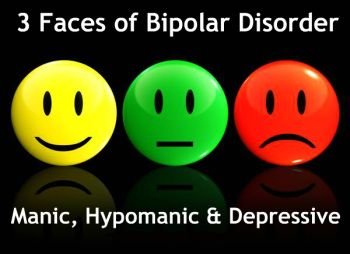
Bipolar disorder can be diagnosed only if someone has a history of at least one manic (bipolar I) or hippomanic (bipolar II) episode. Sometimes a person’s first episode of a mood disorder is that of depression, and therefore a possibility exists that a depressed individual really has bipolar disorder.
The likelihood of this occurrence increases if there is a family history of bipolar disorder. If a person with depression actually has bipolar disorder, an antidepressant may trigger the onset of a hippomanic or manic mood state, which is why bipolar depressed persons usually require a mood stabilizer when taking an antidepressant.
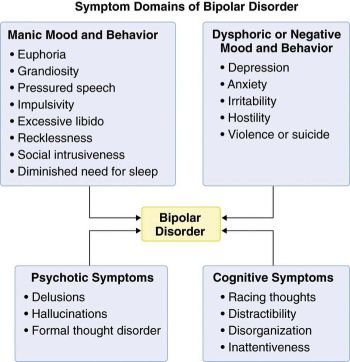
Becoming hippomanic or even manic on an antidepressant, however, is not by itself diagnostic of bipolar disorder. These reactions can occur in non-bipolar depressed persons, although there is some debate among experts as to whether this would be characteristic of a bipolar spectrum illness. If you have a manic response, your doctor will want to stop the antidepressant.
Further inquiry into past personal and family history will be done to be sure evidence of past hippomanic or manic episodes weren’t missed. Once the antidepressant is stopped your hippomanic or manic symptoms should resolve. If they do not, then bipolar disorder is likely present. If resolved, another antidepressant can be tried, as the manic response won’t necessarily occur with another medication. If it does occur again, a mood stabilizer may be necessary in order to take an antidepressant.