How to Recognize, Prevent and Treat a TIA or Mini-Stroke
(Doctors only)
Transient ischemic attack (TIA)
Transient neurological symptoms often present a difficult diagnostic dilemma. It is often difficult to tell if the transient symptoms were due to ischemia or due to something else. Usually, by the time the physician sees the patient, the neurological exam has returned to normal.
On the other hand, it is critically important not to miss the diagnosis of TIA. TIAs may provide an opportunity for physicians to intervene and prevent an ischemic stroke and subsequent disability and must be taken seriously. Search for an etiology must be done expeditiously. Just as angina may serve as a warning for future myocardial infarction, a TIA is often a warning sign of an impending stroke.
Definition
A transient ischemic attack (TIA) is a brief episode of neurologic dysfunction caused by focal brain or retinal ischemia, with clinical symptoms typically lasting less than one hour, and without evidence of acute infarction on brain imaging.
Etiology
The causes are the same as for ischemic stroke. Determining the etiology of the ischemic symptoms expeditiously is very important as there are several causes that, if treated urgently, may prevent a stroke. Such causes include atrial fibrillation and symptomatic carotid stenosis.
Presentation
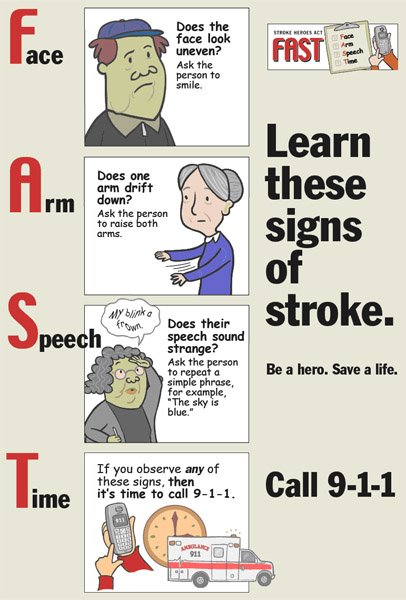
TIAs present the same way as an acute ischemic stroke. The only difference is that the symptoms and signs rapidly and completely resolve, usually within minutes. There is not a typical presentation – it depends on the vascular territory affected.
Differential diagnosis
. Syncope: look for pre-syncopal symptoms.
. Seizure: ask about prior history of seizure, or if any of the following occurred with the event: shaking, clouding of consciousness, tongue biting, incontinence.
. Migraine: be careful about attributing a TIA or stroke to migraine unless there is a clear history of previous migraine with complicated features similar to this event.
. Vestibular dysfunction; vertigo.
. Anxiety, panic attack.
. Hypoglycemia.
. Drug intoxication.
. Mass such as tumor or subdural hematoma.
. Metabolic encephalopathy.