Huang Qin – 黃苓 – Radix Scutellariae Baicalensis
What kind of diseases can be treated by the herbs that clear Heat? How should one choose the herbs in clinical practice?
Herbs that clear Heat are used for treating internal Heat syndrome. They are cold in nature and able to reduce Heat, relieve Fire-toxin, cool the Blood and generate the Body Fluids.
They can be used for various internal Heat syndromes, which can be differentiated according to the affected internal organs and the Defensive, Qi, Nutritive and Blood levels. Internal Excessive-Heat often develops from exogenous pathogenic Heat, although it also could be the result of other pathological processes in the body. However, no matter what the reasons are, when the Heat and its location are found, specific herbs can be used. The internal Excessive-Heat canbe seen and the proper herbs thus can be chosen as follows.
Heat in the Heart and Small Intestine
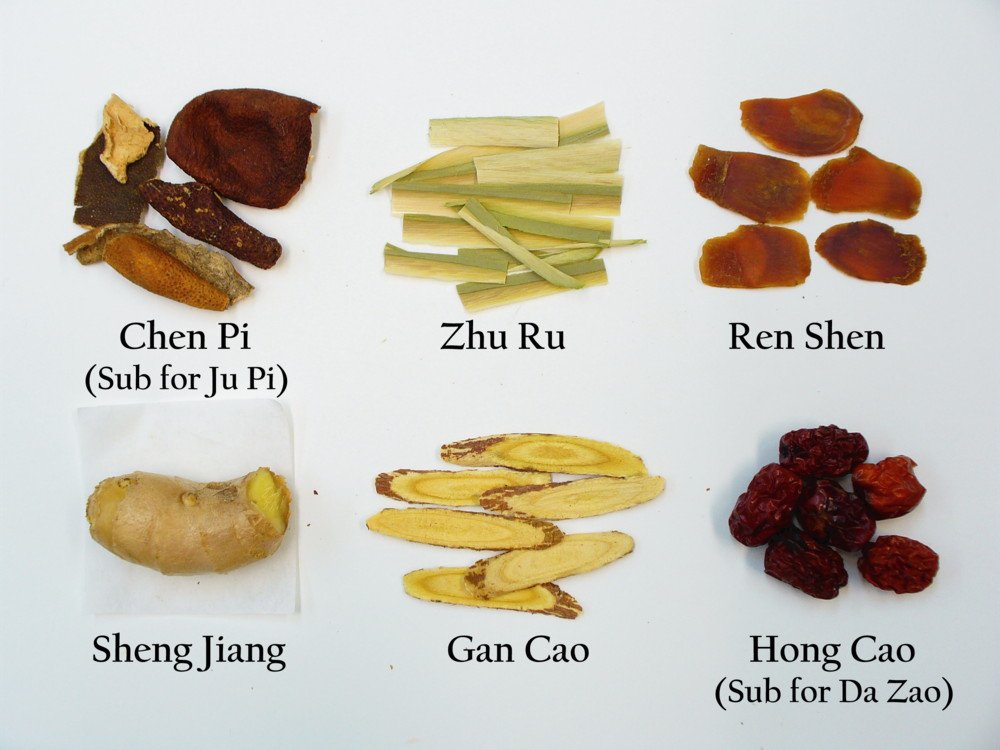
If heat stays in the Heart and its meridian, the main manifestations are fever, thirst, a dry mouth, bitter taste in the mouth, restlessness, irritability, and insomnia. The tongue body is red with a yellow, thin coating. The pulse is rapid and forceful. Herbs that are bitter and cold, or sweet and cold, and enter the Heart meridian are often chosen, such as Huang Lian (Coptidis rhizoma), Zhu Ye Juan Xin (Bambusae viride folium), Lian Zi Xin (Nelumbinis plumula), and Sheng Di Huang (Rehmanniae radix).
If the urine is also dark with a foul smell, and urination is accompanied by urgent and painful sensations, this indicates that the Small Intestine, the internally–externally related organ, is also disturbed by Heat. Herbs that are bitter and cold, and promote urination and clear Heat, such as Dan Zhu Ye (Lophatheri herba) and Zhi Zi (Gardeniae fructus), should be added.
In TCM, many kinds of sores, boils and carbuncles, which are characterized by warmth, swelling, redness, and pain, are regarded as the result of a disturbance of the Heart-Fire. Herbs that are cold and bitter and enter the Heart meridian should be used-for instance, Jin Yin Hua (Lonicerae flos), Lian Qiao (Forsythiae fructus), and Pu Gong Ying (Taraxaci herba).
Heat in the Liver and Gall Bladder
If Heat stays in the Liver and its meridian, the symptoms of the patient will include irritability, red and dry eyes, hypochondriac pain and distension, dream-disturbed sleep, insomnia, headache, dizziness and tinnitus. The tongue body is red or red on the border and the coating is yellow. The pulse is wiry, rapid and forceful. Herbs that are bitter and
cold and enter the Liver and Heart meridians, such as Huang Lian (Coptidis rhizoma), Long Dan Cao (Gentianae radix) and Xia Ku Cao (Prunellae spica), are selected.
If a female patient also complains that her menstruation is ahead of the expected time and is considerably heavy, this indicates that Heat has disturbed the Blood, and Mu Dan Pi (Moutancortex) and Chi Shao Yao (Paeoniae radix rubra), which are cold and enter the Blood, should be added.
As the Liver opens into the eyes, Liver-Heat or Fire may cause disorders of the eyes, such as dry, red, painful eyes and blurred vision. Herbs that are sweet and cool and enter the Liver meridian are particularly effective in reducing Liver-Fire and benefiting the eyes, such as Qing Xiang Zi (Celosiae semen), Xia Ku Cao, Jue Ming Zi (Cassiae semen) and Mi Meng Hua (Buddlejae flos). If Damp-Heat accumulates in the Liver meridian, it may bring about symptoms such as swelling of the external genitals or itching in the vagina, eczema, and turbid and foul smelling leukorrhea and urine.
Bitter-cold herbs such as Long Dan Cao, Ku Shen (Sophorae flavescentis radix) and Zhi Zi (Gardeniae fructus) should be used. If Damp-Heat accumulates in the Liver and Gall
Bladder meridians and obstructs the movement of Qi and water, patients may feel a sense of tightness in the chest, stickiness in the mouth and distension in the hypochondriac region. If Damp-Heat disturbs the secretion of bile then jaundice may appear. Bitter-cold herbs with a fragrant smell, which are able to penetrate turbidity, should be used-for example, Qing Hao (Artemisia e annuae herba) and Chang Shan (Dichroae febrifugae radix).
Heat in the Spleen and Stomach
The Spleen and Stomach are in the Middle Jiao. They are responsible for receiving the food and transforming it into Essence, Qi and Blood. Because of its physiological characteristics and functions, the Stomach is considered as a Yang organ which easily generates Heat, and pathogenic Heat easily accumulates here too. The Spleen is regarded as a Yin organ and it is easily injured by Cold; if the Spleen fails to transport water, then water may accumulate in the Middle Jiao and generate Heat, and bring about Damp-Heat here too.
A Stomach-Heat syndrome is characterized by severe thirst, a dry mouth, preference for cold drinks, a tendency to be hungry, toothache, facial swelling, foul breath, a red tongue body with a yellow coating and a flooding, rapid pulse. Pungent, sweet, and cold substances that can disperse the intensive Heat and direct it downwards should be chosen-for example, Shi Gao (Gypsum). Salty, bitter, sweet and cold herbs, which can lear Heatand generate the Body Fluids, are also a good choice-for instance, Zhi Mu (Anemarrhenae rhizoma), Huang Lian and Sheng Di Huang. If there is bleeding (e.g. hematemesis, bloody stools or purpura), herbs that enter the Blood level and are cold in nature should be used to cool the Blood-for example, Mu Dan Pi, Chi Shao Yao, Zi Cao (Arnebiae/Lithospermi radix) and Sheng Di Huang.
If Damp-Heat accumulates in the Middle Jiao, the patient may suffer from distension in the stomach and abdomen, loose stools or difficult bowel movements, a reduced appetite and eczema or other itching and weeping skin disorders. Bitter and cold herbs should be used to dry Dampness and clear Heat, such as Ku Shen, Bai Xian Pi (Dictamni cortex) and Bai Tou Weng (Pulsatilla radix).