Are people from different ethnic backgrounds more susceptible to bipolar disorder?
The concept of medicine being guided by ethnic or racial differences has recently ignited controversy over the FDA’s approval of BiDil in the treatment of heart failure in blacks.
The concept raises the specter of eugenics and the shortsighted notion that specific diseases exist in groups because of skin color or ethnic background. Clearly, genetic differences do exist based on so-called racial or ethnic backgrounds through the process known as assortative mating (like is attracted to and mates with like), thereby increasing the percentage of particular genes in a population that may increase one’s chances for a specific disease. But this does not provide for the fact that genetic variation crosses boundaries. Just because one’s skin color is different from another’s does not necessarily mean he or she is susceptible to or immune from a specific disease.
For example, although sickle cell anemia is usually associated with African Americans, whites can develop it as well. The color of one’s skin or one’s geographical origin remains only a “rough guide” in determining the odds of developing a particular disease until genetic testing becomes cheaper and easier to perform.
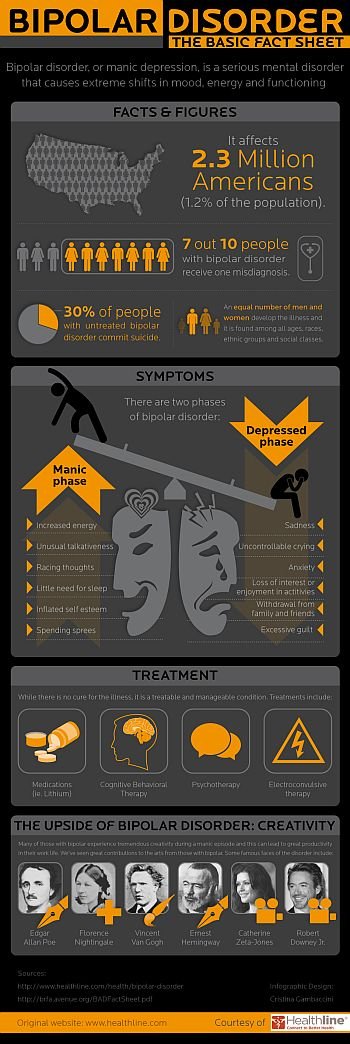
That being said, with respect to bipolar disorder no racial predilection exists. However, because of preconceived notions of race it is thought that populations of African Americans and Hispanics are more likely to be diagnosed with schizophrenia than with mood disorders or specifically bipolar disorder. Studies of ethnicity and bipolar disorder have found that African American groups are significantly less likely to have experienced a depressive episode before onset of first mania compared with white European groups.
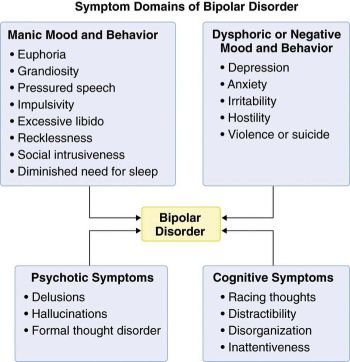
Research has also shown that African Americans and Hispanics experience more severe psychotic symptoms at first mania, but no differences were found in mood incongruent psychotic symptoms (psychotic symptoms that do not reflect the patient’s mood, such as a patient reporting grandiose delusions in the face of depression) between ethnic groups. Because acute mania can be clinically indistinguishable from acute schizophrenia, these findings may account for why these groups are diagnosed more often with schizophrenia while whites are diagnosed more often with bipolar I disorder. Whether these differences are due to some underlying genetic or environmental issue remains to be determined. If anything, because bipolar I disorder knows no real distinction between race, creed, or color, these findings lend further support to the contention that this condition is more strongly rooted in human biology than its counterpart, depression.
Term:
Mood-incongruent – symptoms that are inconsistent with the dominant mood state, such as euphoria in the presence of paranoia of being harmed.