Carbo Hydrates
Adam is nineteen and the star on his university’s Division I hockey team. He spends about twice as much time in practice now as he did when he played for his high school team.
When not on the ice, Adam is in the library maintaining a 3.7 GPA. Because of a grueling hockey and school schedule, he often doesn’t eat a full meal until late in the evening. During his first semester, Adam lost some weight, but attributed it to the skating demands of the team. He was also feeling uncommonly irritable most days, and having more difficulty concentrating while studying. When his vision started to get blurry, the team trainer told him to go to the student health center to get his eyesight checked. The doctor at the center ordered a blood test and sent Adam home, after asking him to come back in the morning to repeat the blood test. Do you have any idea why Adam’s symptoms may have prompted the doctor to have his blood analyzed? What do you think the doctor suspects is happening to Adam?
In the following texts, you will learn about the condition that’s likely causing Adam’s symptoms and how it relates to the body’s use of carbohydrate. We will also discuss the unique role that carbohydrates play in your body, the nutritional differences between simple and complex carbohydrates, the significance of high-fiber foods in fighting diseases such as obesity, heart disease, cancer, and diabetes, and, most importantly, how to change your diet to take advantage of all the wonderful attributes of carbohydrates.
What Are Carbohydrates and Why Do You Need Them?
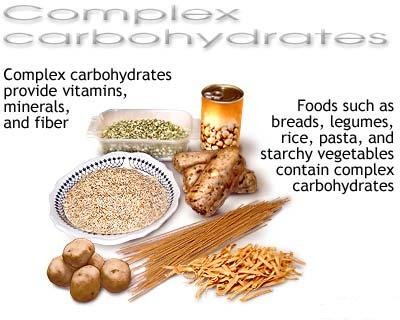
Carbohydrates are essential nutrients that make up the foundation of diets the world over. They are predominant in plant-based foods such as grains (rice and pasta), fruits, vegetables, nuts, and legumes (dry beans and peas), but are also found in dairy products such as milk and yogurt. These foods are staples in cuisines from Asia to Latin America, the United States to the Mediterranean. In Asia, rice accounts for 80 percent of people’s daily calories. In Latin America, carbohydrate-laden bananas and nuts adorn most dinner plates. In the Mediterranean, grain-based pastas, breads, and couscous are plentiful, and here in the United States, many people consume the good old potato on a daily basis.
You need carbohydrates because they are the most desirable source of energy for your body. Providing four calories of energy per gram, their main role is to supply fuel, primarily in the form of glucose (ose= carbohydrate), the predominant sugar in high-carbohydrate foods, to your cells. Your brain in particular relies on glucose to function, as do your red blood cells.
The carbohydrates you eat come mostly from plant foods. Plants make carbohydrates to store energy and to build their root and stem structures. Animals, including humans, also store energy as carbohydrates, but in limited amounts. The storage form of carbohydrates in animals breaks down when the animal dies, so eating meat and poultry will not supply carbohydrates to our diets. Plants form the basic carbohydrate, glucose, in a process called photosynthesis. During photosynthesis, plants use the chlorophyll in their leaves to absorb the energy in sunlight. The absorbed energy splits water in the plant into its component parts: hydrogen and oxygen. Glucose is formed when the hydrogen joins with carbon dioxide that the plant has taken in from the air. The oxygen is released as a waste product.
Glucose is the most abundant carbohydrate in nature, and plants use it as energy, or combine it with minerals from the soil to make other compounds, such as protein and vitamins. They also link glucose units together and store them in the form of starch. Plants synthesize an estimated 140 billion tons of carbohydrates a year. This equals about 20 tons per person in the world.
The Take-Home Message
Carbohydrates are found most abundantly in plant-based foods. Your body cells, including brain cells and red blood cells, use them for energy. Many cultures around the world rely on carbohydrate-based foods as staples in their diets. Glucose is created in plants through the process of photosynthesis, and it is the most abundant carbohydrate in nature
Photosynthesis:
How Glucose Is Made
During photosynthesis, the leaves of green plants absorb the energy from sunlight. This energy splits six molecules of water (H 2 O) into hydrogen and oxygen. The hydrogen joins with carbon dioxide in the plant to create glucose.
In this process, six molecules of oxygen are released into the air. Glucose is the most abundant sugar in nature and the optimal fuel for your body.
Terms:
Chlorophyll – The green pigment in plants that absorbs energy from sunlight to begin the process of photosynthesis.
Photosynthesis – A process by which green plants create carbohydrates using the energy from sunlight.
Glucose – The most abundant sugar in foods and the primary energy source for your body.
Answers
1. (b) Sweet and salty foods provide sugar and electrolytes, which are important sources of energy and overall health. Too much of these types of foods, however, can ead to overconsumption of calories and therefore be unhealthy.
2. (b) Digestion. Circulation is the process of distributing blood or lymph throughout the body. Absorption is the process of pulling nutrients from the GI tract into the body. Excretion is the passing of waste products out of the body.
3. (c) Digestion begins in the mouth, where chewing starts breaking food down and mixing it with saliva and enzymes. The liver is an accessory organ to digestion. The stomach and colon (part of the large intestine) are organs in the GI tract.
4. (d) Epiglottis. The esophagus is a tube that connects your mouth with your stomach. The tongue is a muscle that pushes food to the back of the mouth into the pharynx. The pharynx is a chamber that food passes through just before being swallowed.
5. (a) Heartburn occurs when the lower esophageal sphincter allows acid from the stomach back into the esophagus.
6. (a) Hydrochloric acid (HCl) is part of the gastric juices produced in the stomach; it activates pepsin, breaks down connective tissue in meat, and destroys some ingested microorganisms. Amylase is an enzyme in the mouth that begins breaking down carbohydrates. Bile is made by the liver and emulsifies fat. Gastrin is a hormone in the stomach that stimulates digestive activity.
7. (c) The pyloric sphincter allows chyme to pass from the bottom of the stomach to the beginning of the duodenum, the first part of the small intestine. The lower esophageal sphincter is between the mouth and the stomach. The ileocecal sphincter separates the ileum from the colon. The colon sphincter is also called the anal sphincter and it is the last part of the GI tract.
8. (a) Enzymes. Enzymes such as amylase and lipase break down the individual nutrients during digestion. Hormones are chemical messengers that regulate activities such as metabolism and the cells’ use of nutrients. Protein is a macronutrient, and the digestive organs include the stomach, small intestine, and large intestine.
9. (d) Bile is concentrated and stored in the gallbladder. The liver makes the bile in dilute, liquid form. Bile is not digested; rather, it circulates through the digestive tract.
10. (a) With numerous villi and microvilli along its interior wall, the small intestine indeed has a vast surface area that enhances digestion. Nutrients are absorbed through these projections and are transported through the blood and lymph throughout the body. The small intestine is critical to the process of digestion.
Answers to Myths and Misperceptions
1. True. Smell is a big part of taste.
2. True. The gastrointestinal, or GI, tract runs through the body and connects the mouth to the anus.
3. False. Your body is very efficient and absorbs more than 90 percent of the nutrients in food.
4. False. The trachea is the windpipe.
5. False. Hydrochloric acid is only produced in the stomach.
6. False. Fats and protein take longer to digest than carbohydrates.
7. False. Though most absorption does take place in the small intestine, some nutrients, particularly water, are absorbed in the large intestine.
8. True. Stool (or feces) contains leftover food residue, no digestible fibers, bacteria, gases, and sloughed-off intestinal cells.
9. False. Approximately 20 percent of adults experience heartburn every day.
10. False. Fiber helps keep you “regular.”