“You have brains in your head. You have feet in your shoes. You can steer yourself any direction you choose. You’re on your own. And you know what you know. And YOU are the one who’ll decide where to go…”
― Dr. Seuss, Oh, the Places You’ll Go!
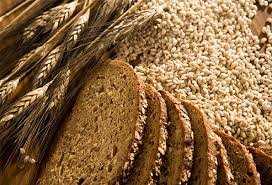
Grains, Glorious Whole Grains
Grains are not only an important staple in the diet but also a wonderful source of nutrition. Americans’ consumption of wheat, corn, oats, barley, and rye products has increased by nearly 50 percent since the 1970s.
The consumption of starchy flour and cereal products is estimated to be approximately 140 pounds per person each year. There are three edible parts in a kernel of grain: the bran, the endosperm, and the germ (see figure). The bran or outer shell of the wheat kernel is rich in fiber, B vitamins, phytochemicals, and trace minerals such as chromium and zinc. The germ or seed of the kernel is a nutritionalpowerhouse providing vitamin E, heart-healthy fats, phytochemicals, and plenty of B vitamins. The endosperm, or starchy component of the grain, contains protein, B vitamins, and some fiber, although not as much as the bran.
Depending upon which parts of the kernel are used, grain products can be divided into two main categories: refined grains and whole grains. In refined grains, such as wheat or white bread and white rice, the grain kernel goes through a milling process that strips out the bran and germ, leaving only the endosperm of the kernel in the end product. As a result, some, though not all, of the B vitamins, iron, phytochemicals, and dietary fiber are removed. To restore some of the nutrition lost from refined grains, enriched grains have folic acid, thiamin, niacin, riboflavin, and iron added to them. This improves their nutritional quality somewhat, but the fiber and the phytochemicals are lost. Though refined grains can still be a good source of complex carbohydrates, you can think of refined as having left some of the nutrition behind. From a health standpoint, what was left behind may end up being the most important part of the kernel. Whole-grain foods, such as whole-wheat bread, white whole-wheat bread, brown rice, and oatmeal, contain all three parts of the kernel. (Note: White whole-wheat bread is a whole grain. It is made from a lighter variety of wheat, so while the bread is lighter in color, it has the same whole-grain nutrition as darker whole-wheat bread.) Whole grains are potential disease-fighting allies in the diet.
Research has shown that as little as one serving of whole grains daily may help lower the risk of dying from heart disease or cancer and reduce the risk of stroke. Several research studies have also shown that the fiber in whole grains may help reduce the risk of diabetes. Because whole grains are abundant in vitamins, minerals, fiber, and phytochemicals, it is uncertain which of these substances are the disease-fighting heroes, or if some or all of them work in a complementary fashion to provide the protection.
Over 85 percent of Americans’ grain choices are not whole grains, but refined grains. Whereas the current recommendation is to consume at least three servings of whole-grain products every day, Americans eat less than one serving of whole grains daily, on average.
The good news is that it’s easy to incorporate more grains into your diet. When it comes to whole grain, you have a lot of choices:
-Brown rice
-Bulgur (cracked wheat)
-Graham flour
-Oatmeal
-Popcorn
-Pearl barley
-Whole-grain cornmeal
-Whole oats
-Whole rye
-Whole wheat
Enriched grains -Refined grain foods that have folic acid, thiamin, niacin, riboflavin, and iron added.
Whole grains – Grain foods that are made with the entire edible grain kernel: the bran, the endosperm, and the germ.
Refined grains – Grain foods that are made with only the endosperm of the kernel. The bran and germ are not included.
Endosperm – The starchy part of the grain kernel.
Germ – In grains, the seed of the grain kernel.
Bran – The indigestible outer shell of the grain kernel.
Table Tips
Ways to Enjoy Whole Grains
Choose whole-grain cereal such as shredded wheat, bran flakes, raisin bran, and oatmeal in the morning.
Combine a 100% whole-wheat English muffin and low-fat cheddar cheese for a hearty breakfast cheese melt.
Enjoy your lunchtime sandwich made with a whole-wheat pita or 100% whole-grain bread.
Try instant brown rice for a quick whole grain at dinner.
Snack on popcorn or 100% whole-wheat crackers for a high-fiber filler in the afternoon.
The Take-Home Message
Carbohydrates are divided into two categories: simple and complex. Simple carbohydrates include the monosaccharide’s and disaccharides; complex carbohydrates include polysaccharides. Glucose, fructose, and galactose are the three monosaccharides. Sucrose, lactose, and maltose are the three disaccharides.
Starch, fiber, and glycogen are all polysaccharides. Dietary fiber occurs naturally in plant-based foods. Functional fiber has been added to foods because it has been shown to have a specific, functional effect. The total fiber in your diet is a combination of dietary and functional fiber. Viscous, soluble fiber has thickening properties and can be fermented by intestinal bacteria and moves slowly through your intestinal tract. Insoluble fiber typically moves more quickly through your digestive system, so it can have a laxative effect.