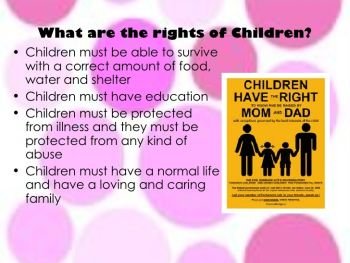
The UN Convention on the Rights of the Child (UNCRC)
Childrens Rights – Unicef – UK
UN Convention on the Rights of the Child
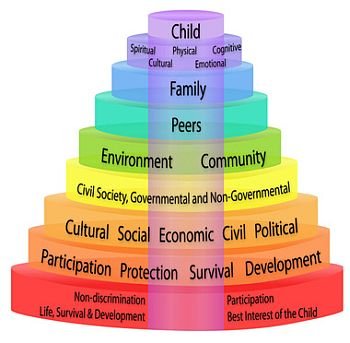
Children’s rights to participate in the decision-making process are enshrined in Article 12 of the United Nations Convention on the Rights of the Child (UNCRC) (United Nations 1989). Article 12 grants a child who is capable of forming a view the right to express that view freely in all matters affecting him, and these views should be given due weight in accordance with the age and maturity of the child.
So, for most practitioners and their agencies and the organizations involved the question now is not what to do or whether to do it, but how. These papers and the research studies will go to present, illustrate what works and what gets in the way. It should therefore be of use to practitioners working with children, their managers who set up the structures to enable children’s participation to happen and to students and academics who are interested in the policy and theories underpinning the thinking and recent developments in participatory practice.
In the UK, the Children Act (1989) was the main driver in requiring the involvement of children and young people in a range of decision-making arenas, the focus at that time being on their involvement in individual social work decision-making arenas. Subsequent legislation and guidance continues to encourage the rights of children to participate, the focus now being more on enabling their involvement in organizational policy and change. Every Child Matters (Department for Education and Skills (DfES) based its overall goals for achievement on the five outcomes on consultations with children, and the Children Act (2004), contained legislation to further children’s participation in advising on new local authority structures, such as Children’s Trusts. A Children’s Commissioner for England was created with the intention of ensuring children’s rights are upheld and their voices heard in a range of arenas. Further opportunities for participation, especially in schools, were named in the 2007 Children’s Plan, Building Brighter Futures (Department for Children, Schools, and Families (DCSF), which set out strategic objectives for the next ten years. While the structures for enabling children to participate in organizations, in particular schools and youth forums, are improving there is less evidence that children are routinely involved in decision making at an individual level in social work, such as in assessments, in writing their records or in meetings. And there continues to be debate about how children’s rights should be exercised both by children in groups, and by children as individuals. While there is generally agreement that the nature and degree of children’s participation, both in policy and in the process of practice in the UK, will vary depending on the child’s interest, capacity and the decisions to be made, there are continuing concerns not just about the difficulties in process but also about definitions and, indeed, about the generality of the principle itself. On the one hand, there is a move to see children as individuals and social actors with capacity for self realization; on the other, there is also awareness that in some situations particular issues are raised for children by conflicting rights and notions of responsibility which involve some determination of capacity and protection by adults.
Questions arise as to whether all children can or should be taken seriously – and, if so, at what age? In the child protection arena there are key concerns about safeguarding: about managing the balance between the ethics of care and issues of rights. And there are concerns as to the extent to which the expression of their views might challenge power issues within the family and within the wider community and, if so, how and who will manage this? At the same time there is some ambiguity in policy and practice at government level where, alongside the participation agenda, run practices in health and social care which are directed at greater state control and surveillance of children and families, such as through electronic databases. There is increasing awareness of the ways in which participation can impact on children as individuals and about the role of professionals in enabling children’s effective participation at various levels and in acting upon what they hear. Research evidence of children’s participation in a range of arenas suggests that there are positive effects, such as increased self esteem and self confidence. There is also evidence that their views can influence service delivery, such as through Children’s Plans, in schools and in policy decisions at local and national levels. However, not all children wish to participate either in individual decisions or in matters of public concern. For them, respect and fairness may be more important than participation per se. There is also evidence that, in both organizational and individual decision-making arenas, bureaucratic management structures militate against relationship-based social work which is the cornerstone of empowering practice.
Currently we know little about outcomes, but what information we do have suggests that there may be critical differences where children are participating as a group on more general matters, such as in school councils, and where children are participating in individual situations, such as family meetings, reviews and child protection conferences. In those cases very personal material of a sensitive nature is being shared in a public domain, and skills and great care are needed to ensure their participation is experienced positively. Particular problems arise where, for example, their views on their individual care are in conflict with those of their adult careers or the professionals responsible for their care, such as where parents are separating or where they have been abused. The situation is nuanced and complex and the discourse of politicians, theoreticians, and researchers reflect these debates. These papers are an attempt to learn more about the views of children and young people in need on their involvement in decisions about their family life and their care, and to explore some of the transactions in decision-making processes between themselves and the professionals involved. How do children in the social care domain experience and make sense of the participatory processes they have experienced; what responses can or should professionals encourage and make of what they hear, both at individual and at agency levels; what skills and training do the professionals need and what contribution, if any, might participation play in children’s wellbeing or well becoming when they have been involved in decisions about their life?
Definitions
Definitions of what ‘participation’ means and what it comprises abound. Kirby et al. describe it as a multi-layered concept which embraces notions of both process and outcome. The United Nations Committee on the Rights of the Child 2009 General Comment (No.12) also notes the process and outcome aspects of participation, and describe how the term has evolved and is now widely used: …to describe ongoing processes, which include information sharing and dialogue between children and adults based on mutual respect, and in which children can learn how their views and those of adults are taken into account and shape the outcome of such processes. Most commonly the term ‘participation’ is now used in a broad sense to cover different types and levels of involvement, to describe a range of activities taking place in differing circumstances, involving different types of engagement, and including representation, consultation and advocacy in widely differing situations.
Participation as taking part
Participation literally means to take part or to share in. So at one level engagement in a social work intervention by the child or young person would constitute participation. Service users who do not engage do not participate. A key social work skill, be it in direct work with children, or in facilitating their involvement in consultations on the services they receive, is thus to engage the children and young people so that they are actively taking part in the process.
Teaching Human Rights
Teaching Human Rights aims to serve as a user-friendly tool for human rights education and a multi-colored umbrella covering a number of basic human rights areas. Human rights may be generally defined as those rights which are inherent in our nature and without which we cannot live as human beings.
Human rights and fundamental freedoms allow us to develop fully and use our human qualities, our intelligence, our talents, and our conscience and to satisfy our spiritual and other needs. They are based on humankind’s increasing demand for a life in which the inherent dignity and worth of each human being are accorded respect and protection.
Their denial is not only an individual and personal tragedy but also creates conditions of social and political unrest, sowing the seeds of violence and conflict within and between societies and nations.
The development of the human rights framework
The history of human rights has been shaped by all major world events and by the struggle for dignity, freedom, and equality everywhere. Yet it was only with the establishment of the United Nations that human rights finally achieved formal, universal recognition.
The turmoil and atrocities of the Second World War and the growing struggle of colonial nations for independence prompted the countries of the world to create a forum to deal with some of the war’s consequences and, in particular, to prevent the recurrence of such appalling events.
This forum was the United Nations. When the United Nations was founded in 1945, it reaffirmed the faith in human rights of all the peoples taking part. Human rights were cited in the founding Charter as central to their concerns and have remained so ever since. One of the first major achievements of the newly formed United Nations was the Universal Declaration of Human Rights (UDHR), adopted by the United Nations General Assembly on 10 December 1948.
This powerful instrument continues to exert an enormous impact on people’s lives all over the world. It was the first time in history that a document considered to have universal value was adopted by an international organization. It was also the first time that human rights and fundamental freedoms were set forth in such detail. There was broad-based international support for the Declaration when it was adopted.
Although the fifty-eight Member States that constituted the United Nations at that time varied in terms of their ideology, political system, religious and cultural background, and patterns of socio-economic development, the Universal Declaration of Human Rights represented a common statement of shared goals and aspirations – a vision of the world as the international community would like it to be.
The Declaration recognizes that the “inherent dignity … of all members of the human family is the foundation of freedom, justice and peace in the world” and is linked to the recognition of the fundamental rights to which every human being aspires, namely the right to life, liberty and security of person; the right to an adequate standard of living; the right to seek and to enjoy in other countries asylum from persecution; the right to own property; the right to freedom of opinion and expression; the right to education; the right to freedom of thought, conscience and religion; and the right to freedom from torture and degrading treatment, among others.
These are inherent rights to be enjoyed by all inhabitants of the global village (women, men, children and all groups in society, whether disadvantaged or not) and not “gifts” to be withdrawn, withheld or granted at someone’s whim or will.
Eleanor Roosevelt, who chaired the United Nations Commission on Human Rights in its early years, emphasized both the universality of these rights and the responsibility they entail when she asked:
Where, after all, do universal human rights begin? In small places, close to home – so close and so small that they cannot be seen on any maps of the world. Yet they are the world of the individual person; the neighborhood he lives in; the school or college he attends; the factory, farm or office where he works. Such are the places where every man, woman and child seeks equal justice, equal opportunity, equal dignity without discrimination. Unless these rights have meaning there, they have little meaning anywhere. Without concerned citizen action to uphold them close to home, we shall look in vain for progress in the larger world.
On the occasion of the fiftieth anniversary of the Universal Declaration of Human Rights in 1998, Mary Robinson, High Commissioner for Human Rights, called it “one of the great inspirational documents of our human history.” It has served as the model for many national constitutions and has truly become the most universal of all instruments, having been translated into more languages than any other. The Declaration has inspired a large number of subsequent human rights instruments, which together constitute the international law of human rights. These instruments include the International Covenant on Economic, Social, and Cultural Rights (1966) and the International Covenant on Civil and Political Rights (1966), treaties that are legally binding on the States that are parties to them. The Universal Declaration and the two Covenants constitute the International Bill of Rights.
The rights contained in the Declaration and the two Covenants have been further elaborated in other treaties such as the International Convention on the Elimination of All Forms of Racial Discrimination (1966), which declares dissemination of ideas based on racial superiority or hatred as being punishable by law, and the Convention on the Elimination of All Forms of Discrimination against Women (1979), prescribing measures to be taken to eliminate discrimination against women in political and public life, education, employment, health, marriage and the family. Of particular importance to anyone involved with schools is the Convention on the Rights of the Child, which lays down guarantees of the child’s human rights.
Adopted by the General Assembly in 1989, the Convention has been ratified by more countries than any other human rights treaty. In addition to guaranteeing children protection from harm and abuse and making special provision for their survival and welfare through, for example, health care, education, and family life, it accords them the right to participate in society and in decision-making that concerns them. Two Protocols to the Convention have recently been adopted, the Optional Protocol on the sale of children, child prostitution and child pornography and the Optional Protocol on the involvement of children in armed conflict (2000).
Chart of the Principal United Nations Human Rights Instruments
INTERNATIONAL BILL OF RIGHTS
Universal Declaration of Human Rights (UDHR), 1948
International Covenant on Civil and Political Rights (ICCPR), 1966
International Covenant on Economic, Social and Cultural Rights (ICESCR), 1966
Convention Relating to the Status of Refugees, 1951
International Convention on the Elimination of All Forms of Racial Discrimination, 1966
Convention on the Elimination of All Forms of Discrimination against Women, 1979
Convention against Torture and Other Cruel, Inhuman, or Degrading Treatment or Punishment, 1984
Convention on the Rights of the Child, 1989
Promoting Human Rights
Since the adoption of the Universal Declaration of Human Rights, human rights have become central to the work of the United Nations. Emphasizing the universality of human rights, Secretary-General Kofi Annan stated on the fiftieth anniversary of the Declaration that “Human rights are foreign to no country and native to all nations” and that “without human rights no peace or prosperity will ever last.”
Within the United Nations system, human rights are furthered by a myriad of different mechanisms and procedures: by working groups and committees; by reports, studies and statements; by conferences, plans and programmes; by decades for action; by research and training; by voluntary and trust funds; by assistance of many kinds at the global, regional and local levels; by specific measures taken; by investigations conducted; and by the many procedures devised to promote and protect human rights.
Action to build a culture of human rights is also supported by United Nations specialized agencies, programmes and funds such as the United Nations Educational, Scientific and Cultural Organisation (UNESCO), the United Nations Children’s Fund (UNICEF), the Office of the United Nations High Commissioner for Refugees (UNHCR), the United Nations Development Programme (UNDP), the International Labour Organization (ILO) and the World Health Organization (WHO) and by relevant departments of the United Nations Secretariat such as the Office of the High Commissioner for Human Rights (OHCHR). Other international, regional, and national bodies, both governmental and non-governmental, are also working to promote human rights.
At the World Conference on Human Rights held in Vienna, Austria, in 1993, 171 countries reiterated the universality, indivisibility, and interdependence of human rights, and reaffirmed their commitment to the Universal Declaration of Human Rights. They adopted the Vienna Declaration and Programme of Action, which provides the new “framework of planning, dialogue and cooperation” to facilitate the adoption of a holistic approach to promoting human rights and to involve actors at the local, national and international levels.
The United Nations Decade for Human Rights Education (1995-2004)
Not least of these activities to promote human rights is human rights education. Since the adoption of the Universal Declaration, the General Assembly has called on Member States and all segments of society to disseminate this fundamental document and educate people about its content. The 1993 World Conference on Human Rights also reaffirmed the importance of education, training and public information.
In response to the appeal by the World Conference, the General Assembly, in 1994, proclaimed the period 1995 to 2004 the United Nations Decade for Human Rights Education. The Assembly affirmed that “human rights education should involve more than the provision of information and should constitute a comprehensive life-long process by which people at all levels in development and in all strata of society learn respect for the dignity of others and the means and methods of ensuring that respect in all societies”.
The Plan of Action for the Decade provides a definition of the concept of human rights education as agreed by the international community, i.e. based on the provisions of international human rights instruments. In accordance with those provisions, human rights education may be defined as “training, dissemination and information efforts aimed at the building of a universal culture of human rights through the imparting of knowledge and skills and the molding of attitudes and directed to:
(a) The strengthening of respect for human rights and fundamental freedoms;
(b) The full development of the human personality and the sense of its dignity;
(c) The promotion of understanding, tolerance, gender equality and friendship among all nations, indigenous peoples and racial, national, ethnic, religious and linguistic groups;
(d) The enabling of all persons to participate effectively in a free society;
(e) The furtherance of the activities of the United Nations for the maintenance of peace.”
The Decade’s Plan of Action provides a strategy for furthering human rights education through the assessment of needs and the formulation of effective strategies; the building and strengthening of programmes and capacities at the international, regional, national and local levels; the coordinated development of materials; the strengthening of the role of the mass media; and the global dissemination of the Universal Declaration of Human Rights.
The process of human rights education in schools
A sustainable (in the long term), comprehensive and effective national strategy for infusing human rights education into educational systems may include various courses of action, such as:
• The incorporation of human rights education in national legislation regulating education in schools;
• The revision of curricula and textbooks;
• Pre-service and in-service training for teachers to include training on human rights and human rights education methodologies;
• The organization of extracurricular activities, both based on schools and reaching out to the family and the community;
• The development of educational materials;
• The establishment of support networks of teachers and other professionals (from human rights groups, teachers’ unions, non-governmental organizations, or professional associations) and so on.
The concrete way in which this process takes place in each country depends on local educational systems which differ widely, not least in the degree of discretion teachers may exercise in setting their own teaching goals and meeting them.
The teacher will always be the key person, however, in getting new initiatives to work.
The teacher therefore carries a great responsibility for communication of the human rights message. Opportunities to do this may vary: human rights themes may be infused into existing school subjects, such as history, civics, literature, art, geography, languages and scientific subjects, or may have a specific course allocated to them; human rights education may also be pursued through less formal education arenas within and outside schools such as after-school activities, clubs and youth forums.
Ideally, a human rights culture should be built into the whole curriculum (yet in practice, particularly at secondary level, it is usually treated piecemeal, as part of the established curriculum in the social and economic sciences and the humanities).
In the classroom, human rights education should be developed with due attention to the developmental stage of children and their social and cultural contexts in order to make human rights principles meaningful to them. For example, human rights education for younger children could emphasize the development of self-esteem and empathy and a classroom culture supportive of human rights principles.
Although young children are able to grasp the underlying principles of basic human rights instruments, the more complex content of human rights documents may be more appropriate to older learners with better developed capacities for concept development and analytical reasoning.