Is it a Panic Attack or Heart Attack?
Can gastrointestinal diseases or disorders act like a heart attack?
Myocarditis is the inflammation of the heart muscle itself, whereas pericarditis is the inflammation of the pericardium (the sac surrounding the heart). Very often, myocarditis can coexist with pericarditis. Either disorder may be caused by a variety of viruses and bacteria, but it may be idiopathic (arising from an unknown cause). Nevertheless, in the majority of cases a virus is responsible, particularly for pericarditis.
Often you can relieve chest pain from pericarditis by sitting up. At first glance, the symptoms mimic those of a heart attack, but physical findings along with various diagnostic tests can distinguish between the two.
Affected patients often have a mild fever. Idiopathic arising from an unknown cause.
In some instances, various gastrointestinal diseases or disorders can cause you to think you’re undergoing a heart attack. Heartburn, for example, occurs when stomach (gastric) acid washes up from the stomach into the esophagus. Heartburn can produce a burning sensation behind the breastbone (sternum). Chest pain due to heartburn usually occurs after you eat a meal and may last for hours. Heartburn tends to occur more often when you bend forward at the waist or lie down.
Often it’s accompanied by a sour taste and the feeling of food reentering your mouth (regurgitation, a medical term for vomiting).
Other disorders that can imitate the symptoms of a heart attack center on the esophagus. They, too, cause chest pain similar to that of a heart attack. They include esophageal spasm, esophagitis (inflammation of the esophagus), and achalasia (explained below).
In esophageal spasm (spasm of the esophagus), the muscles that normally move foods down your esophagus while swallowing lose their coordination. This can lead to painful muscle spasms. Since both esophageal spasm and angina can be relieved by nitroglycerin, you might mistake this condition for angina or even heart attack.
Another swallowing disorder, achalasia, causes chest pain. What happens when achlasia occurs is that the valve in your lower esophagus fails to open properly to allow food to enter your stomach. Instead, the food backs up into the esophagus (regurgitation, or vomiting), and that action produces chest pain and heartburn. Esophagitis, an inflammation of the esophagus, also can cause chest pain. Diseases or disorders of the gallbladder, such as gallstones (stones that form in your gallbladder) andcholecystitis (inflammation of the gallbladder), produce upper abdominal pain that on the surface might cause you to think you were having a heart attack. In the majority of cases, however, the characteristic symptoms and various diagnostic tests can distinguish one from the other.
Sometimes, peptic ulcer pain may feel like that of a heart attack. If you experienced a bout of peptic ulcer, however, you probably would have a history of stomach trouble for weeks, months, or even years. The pain is always related to food.
Hiatal hernia is the bursting or splitting of a portion of your stomach into your chest through the hiatus (space or gap) between your diaphragm (a muscle that separates various intestinal organs from the chest cavity) and your esophagus. This hiatal hernia also causes chest pain that may on the surface mimic pain from angina or a heart attack. However, once again, the characteristic clinical picture and various diagnostic tests can identify which is which.
Terms:
Esophagitis – inflammation of the esophagus.
Achalasia – disorder in which the valve in the lower esophagus fails to open properly to allow food to enter the stomach. Instead, food backs up into the esophagus, leading to chest pain.
Hiatal hernia – herniation of a portion of the stomach through the diaphragmaticesophageal hiatus into the chest, leading to chest pain.
What is Tietze’s syndrome?
Tietze’s syndrome is a form of costochondritis. In this disorder, the cartilage (a fibrous connective tissue) of your rib cage, particularly the cartilage that joins your ribs to your sternum (breastbone), becomes inflamed from an unknown cause. The pain of Tietze’s syndrome may occur suddenly, and it can be severe. Naturally, you might think you were having a heart attack, because the pain can be similar. However, this pain can always be reproduced or increased by pressure directly on your rib cage, particularly on your sternum or the ribs near your breastbone. In a heart attack, onthe other hand, direct pressure on the chest wall would not influence your pain. Heart disease is not associated with Tietze’s syndrome.
Terms:
Tietze’s syndrome – a condition in which the cartilage of the rib cage, particularly that joining the ribs to the sternum (breastbone), becomes inflamed due to unknown causes and often triggers chest pain.
Costochondritis – inflammation of the rib cartilage.
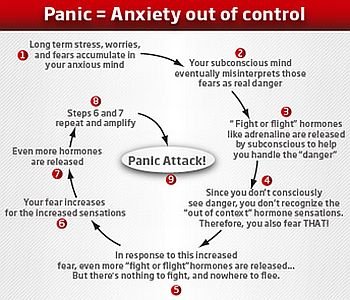
What is a panic attack?
For certain people, an unusual fear can cause an intense anxiety reaction. That can bring on chest pain, rapid heartbeats, hyperventilation (rapid breathing), profuse sweating, and shortness of breath. A panic attack may on the surface imitate a heart attack, but there is no relationship between the two. Panic attacks are a form of emotional disorder that seems to run in families, and they can be treated successfully in most cases.