The Science and Art of Psychotherapy: Insider’s Guide
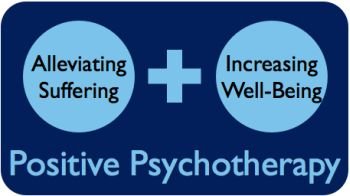
How does psychotherapy work? Does it work?
If you read about any psychiatric medication, you will learn that most are “mechanisms of action unknown.” The same holds true for psychotherapy, making us wrestle in detail with what also makes common sense.
Some excellent studies have been published, showing the efficacy of a type of psychotherapy for a particular disorder over a particular time frame, but this work still cannot explain how healing takes place. Dr. Susan Vaughan’s The Talking Cure does a remarkable job of making the case for psychotherapy’s actually changing brain chemistry. She outlines a schema that, if true, would offer one explanation behind a clinical truth that many of us see daily: people get better when engaged in psychotherapy with a therapist whom they feel understands them. Drs. Jerome and Julia Franks’ Persuasion and Healing takes a comprehensive look at the literature on outcome research and mechanisms of action in psychotherapy. They conclude that in all of the work that has been done, no one has ever been able to show definitively that one form of therapy works better than another.
Psychotherapy is extraordinarily complicated, with many interpersonal factors at play. This dynamic of a situation makes it difficult to determine through the scientific method how any given individual might get better when the larger group is studied. Many of us would say that it boils down to several key ingredients. The first would be the relationship between you and your therapist. While any number of providers might be a “right enough” fit for you, it is important that the fit be right enough. That fit is often easier to feel if the person is well trained, as patients who feel that their therapist is likable but does not know enough seldom stay in therapy.
Patients do not improve simply by following a manual (as helpful as a manual or workbook can be) in the same way that they do with a manual and a person whom they feel they can trust and who knows what he or she is doing. In most treatments, you will identify with aspects of the personality of your therapist and perhaps incorporate them into your own personality, whether you are aware of it at the time, or not. Your therapist will have to use his or her personality and life history to make sense of yours, and a human bond has to form in order for this action to take place; this bond provides an essential ingredient in creating the foundation for your recovery.
After the bond has formed, you might say that your therapy has worked because it helped you to make your unconscious conscious, to find better compromises to deal with your life’s predicaments, to relieve the shame that binds you, to feel less alone, to experience more love, to discover greater intimacies, to wash your hands less often, to speak in public more convincingly, to abuse alcohol less, to earn more money, to love your spouse more, to be a better parent, to tolerate the loneliness and void of your existence better, to feel fewer bodily aches and pains from anxiety, or to just do it all without the need for panic attacks! You are in the land of “mechanism of action unknown.” It makes sense that if therapy did not work, people would not go, nor would therapists devote their lives and careers to helping others via the use of this medium.
Selma’s comments:
After I left my 45-minute session, I would be in one of a variety of moods. However different these moods, there was no question I was having a strong reaction to the session.
There was no way to compare it to, say, a 45-minute class. Sometimes I left having a laugh at some delicious piece of humor that had been spoken that might not have made sense to another. Or, I could feel elated or understood. I could leave feeling just as much misunderstood, or terribly hungry, or exhausted, or tired and irritable. I could leave with a feeling of awe or excitement, or with profound depression and tears. Whatever it was, there was always much feeling and response to the session. One day I left in deep thought; I was on foot and needed to walk to the bus stop. I was so preoccupied and pensive that I just walked by instinct. I crossed a street in the middle of a block, and a cop stopped me for jaywalking. He brought me to attention, as I had been so unaware. I had to go to traffic school to avoid a ticket!
This example became a metaphor for my life. I felt I had been jaywalking all of my life, not being very aware. I had gone in some strange zigzag (that could be dangerous and disastrous) and moved along by instinct to avoid being hit or killed. The cop came to symbolize my analyst, and the traffic school represented my analysis, a place where I became aware of the dangers I put myself in. I learned of the people who would suffer terribly as a consequence of my being hurt or killed and who loved me (my family). I saw I could live a better life going by the rules. Crossing with the lights at the corner meant knowing where I was going and with a good sense of direction.
Another time, I was very discouraged and angry with myself. I felt extremely anxious that past repetitive, destructive behavior just kept coming up in my life. I felt like the mythological creature whose head you chopped off only to discover more heads appearing in its place. I felt defeated and said this to my analyst. “Why do I do this treatment? I keep at it so long and no changes whatever are happening!”
I said this as I arose to leave, and I looked at him. He just shook his head from side to side. He said quietly, “Oh, my, my, my . . . there are many changes.” I walked out and thought about it over that day, night, and weekend.
He was right. How could I have said that to him? I was so moved I was close to tears. I had been so critical and unappreciative. Elizabeth Barrett Browning’s poem, “How Do I Love Thee?” came to mind, but with reference to myself. Here was the beginning of a love for myself. I became able to count the ways there were changes, and Ibegan to do things and live in ways that gave me a feeling of pride in myself. I could not even remember having this sense of myself before, given my constant self-criticism. I think the excitement and pride I felt, but had not allowed myself to feel because of this deep anxiety, maybe matched how I must have felt when I took my first steps as a baby. But there was a difference. When my own children started to walk, my mother would smile but then gasp, “Oh, oh,” and run after the baby to grab her. I asked, “Why do you do that?” She told me she was afraid the baby would fall and that she wanted to prevent her from falling. I was then in analysis, and I could realize then that undoubtedly she had done that with me, and I not only became fearful of the consequences of walking, but could see for myself that her fear of my developing separate abilities instilled a deep fear in her that was transmitted to me to as a toddler.
I became fearful of every step I took that implied separation, long after I was no longer a child. I was learning to walk again through the analysis, and this time with encouragement. I could not understand what that meant until I went through it myself.