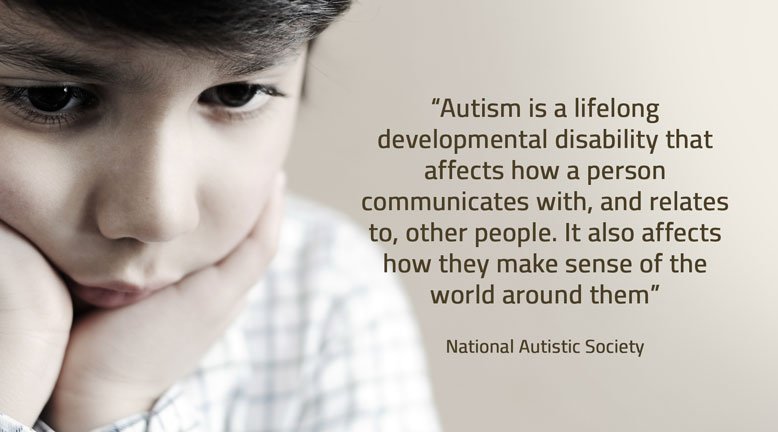
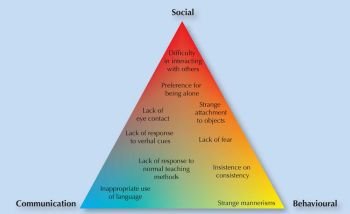
What is Autism? Do you know the signs?
How does the government decide if a child is disabled?
While your local Social Security office decides if your child’s income and assets are within the SSI limits, all documents and evidence pertaining to the disability are sent to a state office, usually called the Disability Determination Service (DDS). There, a team consisting of a disability evaluation specialist and a medical or psychological consultant reviews your child’s case to decide if he or she meets the definition of disability.
If the available records are not thorough enough for the DDS team to make a decision, you may be asked to take your child to a special examination that SocialSecurity will pay for. It is very important that you do this and that your child puts forth his or her best effort during the examination.
As you can see, it is imperative to collect, organize, and safely store all of your child’s school records as well as records of psychological, neurological, and medical examinations.
They will continue to be examined as long as your child requires medical care or insurance benefits.
The law states that a child will be considered disabled if he or she has a physical or mental condition (or a combination of conditions) that results in “marked and severe functional limitations.” The condition must last or be expected to last at least 12 months or be expected to result in the child’s death. In addition, the child must not be working at a job that is considered to be substantial work by the government.
To make this decision, the disability evaluation specialist first checks to see if a child’s disability can be found in a special listing of impairments that is contained in Social Security’s regulations. These listings are descriptions of symptoms, signs, or laboratory findings of more than 100 physical and mental problems, such as cerebral palsy, mental retardation, or muscular dystrophy, that are severe enough to disable a child. The child’s condition does not have to be one of the conditions on the list. But if the symptoms, signs, or laboratory findings of the child’s condition are the same as, or medically equal in severity to, the listing, your child is considered disabled for SSI purposes. If your child’s impairment (s) does not meet or medically equal a listing, the DDS then decides whether it “functionally equals” the listings. They assess the effects of the condition or combination of conditions on your child’sability to perform daily activities by comparing your child’s functioning to that of children the same age who do not have impairments. To do this, they consider questions such as:
● What activities is your child able to perform?
● Which activities are limited in comparison with those of same-age peers?
● What type and amount of help does your child need to complete age-appropriate activities?
To determine whether your child’s impairment causes “marked and severe functional limitations,” the disability evaluation team obtains evidence from a wide variety of sources who have knowledge of your child’s condition and how it affects his or her ability to function on a day-to-day basis and over time. These sources include, but are not limited to, the doctors and other health professionals who treat your child, teachers, counselors, therapists, and social workers. A finding of disability will not be based solely on your statements or on the fact that your child is, or is not, enrolled in special education classes.
In these cases, SSI benefits are paid for up to 6 months while the formal disability decision is being made.
What are the eligibility criteria for Supplemental Security Income (SSI)?
SSI benefits are payable to disabled children under age 18 who have limited income and resources or who come from homes with limited income and resources.
This means that:
● The child must meet the government’s definition of being financially needy, or he or she must live in a home where the parents have limited income and assets.
● A child may be eligible for SSI benefits based on disability from the date of birth; there is no minimum age requirement.
● A child may be eligible for SSI benefits based on disability until attainment of age 18.
● At age 18, the government evaluates a person’s impairments against its definition of disability for adults.
When evaluating a disabled child under 18 years of age for SSI eligibility, the government looks at the parent’s income and assets. If the parents’ assets and income fall below a predetermined level and the child has a condition that meets the government’s definition of disability, then the child is eligible for SSI benefits. This applies to children who live at home or who are away at school but return home occasionally and are subject to parental control. This process is called deeming of income and assets.
If a child was ineligible for SSI benefits because of parental income, his eligibility status an change when he reaches 18 years of age. A child who was not eligible for SSI before his or her 18th birthday because the parents’ income or assets exceeded the government’s criteria, may become eligible at age 18. The federal government does not consider the parents’ income and assets when deciding if a child over 18 is eligible for SSI.
For the autistic child who receives SSI benefits, turning 18 may have little effect on those benefits. Ordinarily, a child’s SSI benefits end when a child reaches age 18 (or 19 if the child is a full-time student). However, for the child who is disabled, those benefits can continue to be paid into adulthood.To qualify for SSI benefits asan adult, an individual must be eligible as the child of someone who:
● Is getting Social Security retirement or disability benefits
● Has died and that child must have a disability that began prior to age 22
If a disabled child getting SSI turns 18 and continues to live with his or her parents, but does not pay for food or shelter, a lower SSI payment rate may apply.
For the autistic child who receives SSI benefits, turning 18 may have little effect on those benefits.
Does autism usually qualify as a disability according to the Social Security Administration?
Historically, a child’s diagnosis of autism was a guarantee of qualifying for supplemental security income payments, assuming the parents met the federal earnings and resources requirements. This evaluation is carried out by employees called Disability Examiners from the child’s home state. In the past, these examiners simply looked at the diagnosis and approved the case. Things have changed since that idyllic time. The Social Security Administration (SSA) has imposed new changes and these changes have filtered down to the state Disability Determination Service (DDS) level. These changes mandate that the disability examiners look beyond the diagnosis and evaluate the functional ability of the child. According to the guide, the Disability Evaluation under Social Security, children must have “marked and severe functional limitations” in order to be found disabled.
The result of these changes is that a diagnosis of autism does not always guarantee an approval of benefitsalthough an evaluation of the child’s disabilities within that diagnosis may.
For most children diagnosed with autism, meeting the requirement of marked and severe functional limitation should be easy if all their documentation and reports reflect their disabilities honestly.
Some problems that may result in an inappropriate benefits denial are:
● Evaluations and clinical reports that attempt to “spare the feelings” of the parents giving an inappropriately benign diagnosis or one that is purposely vague.
● Reports of clinical improvement under limited conditions, such as:
● Within a limited time frame: For example, “the child’s violent outbursts have decreased over the past 3 days” does not mean they are gone forever.
● While with a particular teacher: Some teachers can exert better control over children or tend not to report poor behavior for other reasons.
● While treated with a particular medication: Although a medication may make a real improvement, it is not necessarily sustained nor does it necessarily improve other behavior. For example, an antidepressant may improve a child’s social withdrawal; however, it does not follow that na improvement will occur in his disabling tendency to wander or be inattentive in class.
● Variability in interpretation of the benefits eligibility standard: The disability examiner alone determine disability.
● This determination is based on a personal definition of the terms used in the listings.
● Disability examiners may have little or no experience with the evaluation of autistic children.
● The disability evaluators are charged with interpreting the guidelines without adequate training in the subtleties of autism diagnosis and behaviors.
For example, one of the biggest problems in the Social Security Listings for autism/PDD is found in Listing 112.10 A1b. It calls for the child to have “Qualitative deficits in verbal and nonverbal communication and in imaginative activity.” Some disability evaluators may interpret this to mean that a profoundly retarded autistic child with behavioral problems that included violence and self-abuse would not be eligible for disability because one of the child’s evaluations stated that the child appeared to have capacity for imaginative play.
Parents may be the only advocate a child has in this process. It is their duty to assure that their child gets the benefits they are entitled to. A fair decision can be made if accurate information is provided to the disability evaluator. Parents should see to the following:
● Make sure all physicians, psychologists, teachers, and therapists provide an honest and complete evaluation of the child.
● Their statements should show the full severity of the disability. The evaluations should report how the child behaves at a normal functioning level, not just when he or she is having a good day. Examples of the problem behavior should be included.
● Review the child’s individual educational program (IEP) carefully. Make sure all the diagnoses arecorrectly recorded and that a clear and comprehensive list of the child’s disabilities is made.
● Review reports of behavioral or communicative improvements. Make sure they adequately reflect the conditions under which the behavior was observed, what conditions were required to achieve those improvements, and how long the improvement lasted (or was observed).
● Contest and demand clarification or revision on any evaluation that does not honestly reflect the child’s ability.
Parents may be the only advocate a child has in this process.
Next: What is Medicare?