How Your Brain Can Turn Anxiety into Calmness – University of California
ANXIETY – WORLD HEALTH ORGANIZATION
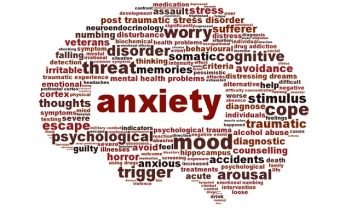
Anxiety states
Feeling anxious is a natural human response to protect ourselves from harm. If you’re in a risky situation, your body releases adrenaline, a hormone that raises your pulse rate, opens your pupils, increases your circulation and alerts you to be physically ready for ‘fight or flight’. This primitive response was very useful in the primitive world when you might suddenly have to fight off a sabre-toothed tiger or run into the jungle carrying your baby.
Adrenaline gives us drive and alertness, which helps us react to any stressful situation.
Nowadays our stresses tend to be mental rather than physical ones. Home worries, relationship disappointments, family tensions, money problems, unfulfilled dreams are all sources of worry and anxiety. Sometimes these problems can be resolved and then our anxiety goes but, if left unresolved, they can cause illness. Perhaps together with an exhausting job or some physical ill-health, they can then combine to make one feel persistently anxious.
Our underlying personalities matter too. Some people have very placid unruffled personalities, whilst others are more highly tuned and sensitive. Some of us are life’s worriers, others seem to take everything in their stride, but everyone has their limits and nobody is immune. We can’t expect to transform our underlying personalities and change ourselves into different people, but we can accept ourselves for what we are, recognise our ownpotentials and strong points, and live with or work on our own weak areas.
Anxiety can be useful, or can be incapacitating and cause suffering and loss of function. The term anxiety disorder covers the mental and physical manifestations of anxiety.
Anxiety can be of several types. It can be:
Persisting: a generalised free-floating anxiety
Focused: on a particular situation or animal, as in phobia
Overwhelming: as in panic.
There is a feeling of fear and this may be accompanied by a feeling of impending doom. There is physical and mental discomfort. It is a feeling about the future – what might happen (not what has happened). There is a feeling of threat about the situation. The emotion it causes is out of proportion to the reality of the circumstances.
My wife just worries and worries about the slightest thing. It’s got right out of proportion. You can’t reassure her and she makes herself ill with it.
Some of us are just ‘born worriers’. One person said she had to do all the worrying in her family because, if she didn’t, nobody else would. If worry and anxiety become a major part of your life, you can make yourself ill with it. The picture of an overanxious person can include symptoms such as physical tension (headaches, exhaustion, poor sleep), physical overarousal (palpitations, excess sweating), or mental tension (poor concentration, nervousness, irritability). Stresses – major or minor – may set these off, and so can too much alcohol.
Its important to avoid using tranquillisers in this situation.
They may give temporary relief but, unless your wife’s ability to cope changes, she will feel the need to keep taking them. Start off by helping to build herself up, both physically and psychologically. Going to a sports club, aerobics class, yoga session or gym will relax her physically and increase her sense of well-being and self-confidence. Encourage her to do sports or pastimes that she may have enjoyed in the past.
Counsellors or therapists may use structured problem-solving techniques to help with excess anxiety. They might challenge her anxious thoughts and worries by asking her to write them down, and producing some rational solutions to them. People then choose their own best solution, and the therapist then helps them to put their plan into practice, and reviews their results.
Again, anxiety management classes, relaxation groups, or cognitive behaviour therapy are all recognised as being helpful therapy for generalised anxiety disorder. Medication can also help anxiety.
Generalised anxiety
Generalised anxiety can become a problem at any time of life, but often begins in early adult life. Women are more often affected than men. Anxiety accounts for just over a quarter of the psychiatric complaints that are seen by general practitioners. About 4% of the population is affected.
You are continually apprehensive and worried. You feel tense, particularly in the muscles of the head and neck. The autonomic nervous system (outside our control) is overaroused. Part of this arousal is expressed as ‘hypervigilance’ – being on the alert, and scanning the environment for possible dangers. You might have difficulty sleeping, particularly difficulty in getting off to sleep, and interrupted sleep. There is a continuing feeling of ‘being on edge’. It is common to feel tired with anxiety – not just because of loss of sleep, but because being on the alert for long periods are exhausting.
What causes it?
There are many factors that are thought to contribute. There is some genetic influence – anxious families producing anxious children. Past experience of separation from parents can predispose to anxiety states in adult life. There is sometimes a background of an expectation to achieve, and also conform, excessively. Then there are more obvious links, such as current stressful situations, particularly uncertain situations. Uncertainty gives rise to a feeling of lack of control over one’s destiny, and this is uncomfortable and draining.
Treatment of generalised anxiety
Practical intervention
When someone is troubled with anxiety, it is worth looking at very basic intervention to try and help deal with the current situations that might be causing the anxiety. Money – or its lack – may be a grinding difficulty and anxiety. Seeking help from a debt counsellor at the Citizen’s Advice Bureau can transform financial chaos and worry into a manageable task to be worked out systematically.
Psychotherapy
Psychotherapy can be helpful, particularly cognitive behaviour therapy. This is especially helpful in panic disorder (see below). The question is asked, ‘What are the thoughts that lead to panic?’ Work is done to replace these unhelpful thoughts with more realistic thoughts. You might be asked to consider how likely it is that you really will have a heart attack if you stand up and give a presentation at work. You will be encouraged to structure your thoughts differently and replace previously anxious thoughts with more realistic and helpful thoughts.
Anxiety management training
The techniques used are clear and easily learnt. They give sufferers skills to learn, and to go on using themselves. The techniques include the use of distraction (moving on to different thoughts), the control of anxious thoughts, relaxation and breathing exercises, and education. If you have learnt about the effects of anxiety on the mind and body, the manifestations it has can be much less frightening.
Drug treatment
The old-fashioned (but still effective!) tricyclic antidepressants such as dothiepin or doxepin are efficient anti-anxiety drugs, as well as being antidepressant in action. The newer antidepressant group, the SSRIs, can be very useful in the treatment of anxiety.
Both these groups of drugs are of course non-addictive, and can be taken for as long as is necessary.
Beta-blockers are drugs that are used in the treatment of high blood pressure. They can also be used in anxiety. Probably the most effective way to use them is in short bursts for helping to control anxiety (and perhaps tremor) when performing – for performance anxiety such as a musical performance or giving a lecture. They are not really so good in helping with anxiety in the long term. Another problem is that continued use of betablockers can sometimes cause a lowering of mood.
The diazepam family of drugs (such as Valium) is very good at reducing anxiety. However, there is a big and very important disadvantage to their use, and that is that they are habit-forming. They are difficult to stop, and their dose has to be increased over time to achieve the same result. They are useful drugs in the treatment of anxiety but they should be used for short periods only (days, or a few weeks, rather than months).
Very occasionally, when none of the above drugs is helpful and behaviour therapy has not dealt with the whole problem, the MAOI group of antidepressant drugs may be used. They are effective in severe anxiety but they do have to be used with great care. You would have to stop eating any tyramine-containing foods, the most common of which is cheese – and they have potentially very serious interactions with some other drugs. TheMAOIs are used only occasionally in the treatment of severe anxiety.
My doctor has started me on antidepressants. I certainly am depressed but there are times when I experience severe spells of anxiety. She says the antidepressants will help the anxiety in time, but I wonder if tranquillisers such as Valium wouldn’t help too.
Depression and anxiety are often found together. Treating the depression will lower the level of anxiety.
In recent years doctors have been increasingly cautious about prescribing tranquillisers. They were overused by the previous generation, before we became aware of their side-effects and their habit-forming potential. This can develop after only 2–3 weeks of daily use.
Some people are certainly particularly vulnerable to the habitforming potential of tranquillisers and, if we could be clearer as to who is at risk of this sort of problem, then perhaps the pendulum of treatment could swing back a little.