Acupuncture & Health : Acupuncture for Anxiety Attacks
Stress, Anxiety, and Depression: How Acupuncture Can Help
Anxiety and Acupuncture – British Acupuncture Council
Could acupuncture help me?
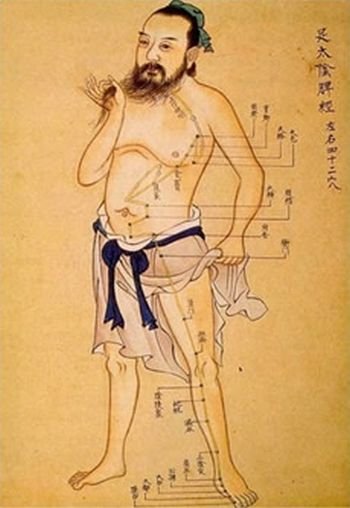
If everything you have tried has not worked, or if you cannot tolerate the side effects of a medication, or you simply wish to pursue a more natural course of treatment, acupuncture can prove helpful. Whether it works by energizing the body’s own endogenous neurotransmitters, or whether it mobilizes the power of the mind over the body, we know that acupuncture can yield formidable results. If patients in China can have open heart surgery using acupuncture alone, it is not in any way out of line to consider the role acupuncture might play in facilitating your own treatment. For further information, see the reference section’s acupuncture source.
A more immediate, almost risk-free compromise which might allow you to assess acupuncture’s possible viability as a treatment strategy is the use of an Alpha-Stim SCS cranial electrotherapy device. This unit delivers small electrical charges to each of your ear lobes. This waveform normalizes brain electroencephalogram (EEG) activity, smoothing out the peaks and valleys that can go along with a picture of anxiety. Some patients have reported that this device has really helped in the same way some patients with depression have reported that the stimulation from a light box during the winter helps lift their mood.
What are the roles of diet, sleep, exercise, and social activity in maintaining my recovery?
Time and again, we forget how elemental basic functions of our body are to our well-being. While it comes as no surprise that regular sleep, a balanced diet, brisk exercise, and social relatedness correlate directly with patients’ reports of feeling better; it also comes as no surprise that we often neglect to take care of ourselves in these basic ways. Sometimes the demands of child care, finances, or the workplace make it impossible to sleep more or work less, and the costs of these demands accumulate. Sometimes we want the best of both worlds-to cheat the demands of our body by thinking we do not need to apply the basic laws of human physiology to our own situation and yet still feel just as good and productive. Like with the rest of life, being human means that the bottom line of our personal accounting is a human one. Almost everyone feels better when he is rested, well-nourished, and in shape. Simply making interventions in one of the above departments may make it that much easier for you to manage your symptoms or to help make the transition off of the medications you already take for anxiety.
Selma’s comments:
I considered myself cool at one time. I was “with it” in the current scene of what everyone was doing. I thought that this was how people saw me. I thought I was so cool because I had overcome emotion and feeling. I didn’t seem to be swayed by anything. I looked at those who got emotional or hysterical or intense or passionate, and while I didn’t feel dead, I also didn’t feel moved and could coolly look at the situation and wonder why they had to make such a fuss. If there was an argument or reasonable difference of opinion, I moved away, and I agreed with everyone. Never did I use the term “anxiety” about myself. I had no anxiety, as I thought I was above the emotional capacity to have it.
At the same time, I was running myself ragged and exhausted. I took care of friends, skipping food for 3 days and then eating ice cream nonstop, and I constantly recriminated myself for what I said to anyone from the bus driver to friends. I felt a gnawing, shaking, physically ominous feeling of lack of control late at night when my husband would have to work. I never used the word anxiety . . . I was handling my life. I was taking amphetamines (prescribed then for weight control as well as depression . . . now called speed) and it dehydrated me. It made me so physically nervous and jazzed up that I also took sleeping pills to relax and sleep, which didn’t work; I had severe insomnia due to night frights. I was dreadfully afraid of the night (a carryover from childhood, but my self-control just didn’t work with night fright), and I smoked.
Working with my doctor, I stopped cold turkey. It was over . . . the amphetamines and barbiturates, and I never took them again. Finally, a few years later, I was able to end the smoking, also forever. I had tried my theories of diet, sleep, exercise, and social activity, but for me, my attempts were all backward. My idea before treatment had been to weigh 105 (OK, 104, maybe) and I would handle life because I would be so secure in my achievement and able to be the perfect weight to be accepted. I thought my lack of sleep was a major problem; that exercise could help me; and that the social scene was my ticket to success. It took years for me to see the backwardness of my thinking. When I have figured out the roots of my anxiety, diet, sleep, exercise, and social activity are wonderful parts of life. But they are not my problem solvers. When I solve my problems, these become mine with which to enrich my life.
Are there any religious approaches to managing my anxiety?
Religion-in it’s most quotidian and spiritual aspects-can alleviate anxiety. Over the ages, mankind has used spiritual traditions to cope with the human condition and all of its attendant existential anxieties. This question stimulates more thoughts than answers, but several principles come to mind.
If the shoe fits, wear it. If going to church, connecting to the cultural traditions of your faith, or reading scripture helps you to cope with the pain and anxiety in your life, then do it. If prayer helps you access a deeper side within your mind, do it. Without making any comment about any particular faith or the nature of divinity, it seems safe to say that any process which prompts you towards introspection and relationship with a person, power, or force that you esteem serves a self-soothing function.
One principle receiving much focus in Christianity is that of forgiveness. Dr. Robert Karen’s The Forgiving Self: The Road From Resentment to Connection looks at the psychological function of forgiveness in its genuine, noncoerced form.He states that forgiveness can represent a way of working through the anger of resentment. This function proves useful for the management of anxiety which stems from unresolved rage: the wrongs done us, and our role in still giving them the power to bother us so much. Learning to forgive can go along with working through and letting go of the raw pain from these wounds.
The Buddhist tradition of mindfulness also has great power in the management of anxiety. Dr. Mark Epstein makes this case in Going to Pieces Without Falling Apart: A Buddhist Perspective On Wholeness, as does Dr. Jeffrey Brantley in Calming Your Anxious Mind. The central notion of mindfulness teaches us to allow and hyperfocus on the idea which makes us most anxious. Rather than fight our anxiety or try to disavow it, we allow it; and as we do so we become able, paradoxically, to create a distance between it and ourselves. Thus it becomes less threatening and less disturbing. We begin to develop control over it by letting go of the control. Rather than fight the void you feel in yourself and attempt desperately to fill it, you can allow it and thus soothe yourself the process of allowance. This technique is quite powerful-tries it, and if you want to meditate, too, then it is even more likely to serve as yet another weapon in your arsenal to manage your anxiety.
Terms:
Physiology – having to do with normal functioning of body systems and organs.
Mindfulness – a state of being aware of all of the details of one’s surroundings.