Isolation – A short documentary on Depression & Anxiety
Anxiety and Depression Association of America – Depression

Where can I find an anxiety disorders support group, and how could that help me?
Group therapy can provide one of the mainstays in treatment for anxiety disorders, and an anxiety disorder support group can provide an essential touchstone. The easiest place to start this process is the Anxiety Disorders of America Association (ADAA) Web site. You can enter your state and zip code and they will contact you with the closest meeting place. You can meet others who have suffered from anxiety, educate yourself more about anxiety disorders, find a referral for treatment, and learn of different group therapy options. The group modality of treatment can prove invaluable with anxiety disorders. The power of the group and the strength drawn from surrounding yourself with others who suffer from symptoms similar to your own yields a calming, stabilizing presence. This technique can combat the feelings of shame and secrecy that so often go along with anxiety. Believe it or not, you are not alone out there.
Selma’s comments:
My anxiety disorders support group was comprised of me and my analyst, and it helped me to transform myself from inappropriate energy wasting and life-destroying anxieties. I came to accept life’s realistic anxieties, which can be handled. This allows me to live a life that can be constructive and creative and competent with consistent, applied, hard work. This support group involved both of us concentrating and sifting through a problem and allowing it to be disbursed in a different way. With slow, laborious, dedicated work, my life was changed forever. This support group of two saved my life, and indeed, gave me life. Whatever support group is used, I would think it cannot be an outside-of-you experience. You have to be the most active member of the support group; as it seems to me, the only person that makes the change develop is oneself.
There is no question in my mind that I could not have done it without my analyst. No one else or no other group could possibly have supplied that intense concentration on me, coupled with a depth of knowledge and training.
What do I do if all else fails?
If all else fails, two major strategies come to mind. If you have tried various treatments that simply have not worked for one reason or another, it may be that you suffer from an unconscious source of anxiety that, were it conscious and available to the surface of your mind, would be more known and amenable to intervention. In these situations, finding a well-trained psychoanalyst who comes with a highly regarded referral in your area can be invaluable. To find one near you, go the Web site of the American Psychoanalytic Association.
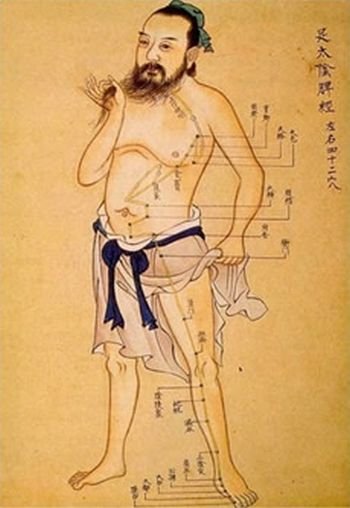
If Western medicine and its medical model has failed you, or you feel unable to settle into any of the more traditional Western treatment frames described in this texts, then I would recommend you go East. The Eastern medical model-often integrated with the best of what we know in the West-uses a different framework to diagnose and treat disease. Many patients who cannot become comfortable or find effective therapeutics with the Western model have gone East and had success. Why this phenomenon takes place is complicated and may stem from a genuine recognition of the inseparability of the mind and the body. But if all else has failed, you stand only to gain by consulting with the traditional Chinese medical doctor in your area. If your internist cannot help you find one, then you might try the closest Chinese embassy, cultural center, or language center as a point of departure.
Selma’s comments:
Everything failing is a thought that never occurred to me in all the years of my analysis. That is not to say my treatment always looked up, forward, or encouraging. There were dark days, weeks of them . . . especially in my adolescence. There were terrible mood swings and deep regressions with destructive behavior and painful, horrible acting out. There were times I wanted to leave, and my doctor would tell me, “you work so hard to see it, and then you throw it all away.” But I never thought of failure or of turning elsewhere. It was like birth . . . you are here and you learn to walk, to talk, and to live; and if it fails, you’re dead. So you just keep on working with the problems of life. That’s the way I felt about analysis. It was a total commitment. I had found a way that I could live, and if it wasn’t working for me, I just had to keep at it harder and more-never less-and it would work out. When the threads twist, you just have to resign yourself to a slower process of unwinding; the knots will come out, but it takes patience.
In fact, I do believe this attitude is essential for success. Otherwise, if you’re going to try intense treatment and “better” hasn’t happened in 6 months, then you have set yourself up
for failure. Theoretically, I suppose if I had felt my analysts weren’t good, I might have changed. But I never would have moved away from psychoanalysis. And I would be very cautious about faulting the analyst . . . not that it can’t happen that you have one that is not right for you or that you can’t have other reasons to change, but you must always examine your own motives. I have talked to people who tell me they have had analysis, and that it did nothing. Much of the time, I discover what they call analysis, and whom they call an “analyst” is far removed from a clinician with the kind of training I mean.
If I were not to choose analysis, the alternative for me would probably be destructiveness in one form or another. I always chose analysis. That, of course, may not be the rule for everyone, but childhood patterns are repeated, no matter how bad they may be. And if one’s background incorporates unhappy family dynamics, they will crop up over and over again without much change unless they are worked through, no matter how much your will is to have it otherwise. And that’s where you need the commitment . . . that no matter what it takes . . . you will stick at it and work it through . . . with a determination that this will not fail you, as the past so miserably did. Years of dedicated, applied, painful work with a good, trained analyst, and the reward is personal freedom. You can’t get any better than that.
Where can I find more information?
A trip to your local bookstore’s psychology section may lead you to all the reference material you need. Finding a doctor who specializes in anxiety in your community can answer many questions, as can contacting the Department of Psychiatry at your local medical school.
Selma’s comments:
When I first saw an analyst at 16 years old, I was convinced that no one but me had the depressive feelings and anxieties that I had. I inhabited a world that somehow had been selected by someone for me, or because of my own failures and inadequacies, was mine in which suffering, pity, and contempt were the reigning powers. Everyone else in the world was blessed with desirability and other attributes I could only jealously fathom. I was filled with self-loathing and isolation.
That actually changed the first time I went to my doctor’s office. He told me that I wasn’t alone and what I was suffering from, and although at that time not carefully delineated, it was common, not only to kids my age, but to people of all ages, and could be helped enormously. He said it was possible I could eat normally . . . as all I had in the 3 days before I saw him were some saltines and jam (not many), and even though I didn’t believe him for a minute, I was desperate and wanted to start. He also said astonishing things about girls and their mothers that piqued me as I intensely loved/hated my mother and felt her terrible problem in life was having an awful daughter like me. I was really hooked on these attractive options, and instantly felt not alone for the first time in over a year.
This analytic world became the passion of my life in some ways. I started to read. Someone named Freud had started it all, so I began with The Interpretation of Dreams. It is hard to explain the changes that came over me . . . the revelation that I was part of a very large world . . . not only I wasn’t alone, but what was going on in my head was universal. That was the first book and the beginning of a lifetime of reading books about psychoanalysis.
I began to have a deep understanding of insight, of its value and of its need. I could see how helpful it would be for so many people looking sincerely for answers to myriad problems of life, of self, and of family. If only people were alerted to it if it was available, affordable, accessible, and there was knowledge of it.
In all the years that I was in analysis, it was comforting to me to see the spread into so many areas of Freud’s emphasis on the influence of infancy and early childhood on adult life. So wherever I was able (there were many opportunities), as president of the PTA, through the boards I was on, conferences I directed, the synagogue and the church (as I had both), I invited analysts to speak on what was appropriate given the situation, but always dealing with children, family, or inner anxiety. These were always free programs, and the talk was always directed to a community audience and was not professional.
The turnouts were phenomenal. My earlier thoughts on my being unique in my set of problems seemed ludicrous. Everything I had suffered belonged to a never-ending, large world, and people were looking for help and answers. The question/answer periods were enlightening, stimulating, and very touching. The respect between the speaker and the audience members filled me with pride about the analytic world. These were wonderful times. Then something happened. Probably it was the continuing growth of the managed care phenomena, and cost effectiveness started somehow to be a part of the discussion of life’s problems. Insurance companies were directing what they would pay away from insight-oriented therapy to medication and quick diagnosis one could find in a manual that did away with the complexity of the mind and the individual.
I can’t go into all of these changes. There are many others, but for those who are looking for lasting meaningful change that will give them an opportunity for a life of freedom, creativity, satisfaction and happiness, psychoanalysis still exists and is as vital and significant as always, with competent, caring practitioners and a large following.
Whether it is called psychoanalysis or psychotherapy (by an analyst), it offers the route to know more about anxiety than any other way.
There are books, meetings, lectures, a lot of information on how to solve problems, live life, or raise children. In all of these venues there is also participation by an insight-oriented therapist or a psychoanalyst. I think the search is not complete or whole until this, too, is explored and considered. When learning more about anxiety and its cures, it is important to consider the distinction between that which will ease immediate pain (a symptom), that which will offer help directed to a cognitive learning self that may or not be applicable to a symptomatic area but will not hold up in the long run, and that which will bring the structural change so that it is changed forever. This is analytic knowledge, and there are proponents of all of this; I believe good self-education incorporates this analytic insight.