Bipolar video diary – hypersexuality & me (Video)
Bipolar Disorder and Sex Addiction
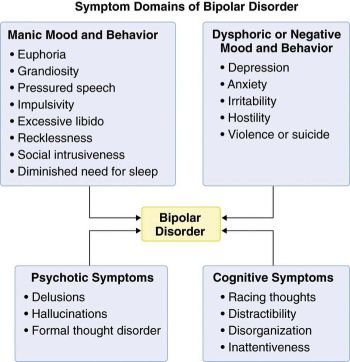
Bipolar Hypersexuality or Sex Addiction?

My antidepressant is helping, but I have sexual side effects. What can I do?
Many antidepressants can have sexual side effects, which range from decreased interest in sex to difficulty having an orgasm. Many individuals are too embarrassed to ask their doctor about these problems, but it’s important to discuss such side effects and learn your options. Depression itself can be a cause of reduced interest in sex, so first a determination needs to be made as to whether the depression has remitted on the medication. If depressive symptoms are gone, then other considerations should also be made, such as what the baseline sexual functioning was prior to becoming depressed or prior to the treatment. As a group, SSRIs do have a very high incidence of sexual side effects associated with them. These side effects can result in reduced compliance and thus reduced efficacy of the medication. Several options address these effects.
Sometimes a “wait-and-see” approach is effective, as the negative effect may wane with time. Another option is to try another SSRI, which may not have the same effect for you personally, or to switch to a different class of antidepressant that does not typically cause sexual side effects. Antidepressants not typically associated with sexual side effects are bupropion, mirtazapine, and nefazodone. Nefazodone however, has been implicated in some cases of liver failure, and thus is not routinely prescribed unless other options have been exhausted. If the medication currently being taken is working, however, rather than take the risk of switching to another medication that may not be as effective, other types of medications may be prescribed in addition to the antidepressant that can counteract the effect SSRIs have on sexual functioning. The different options should be discussed with your doctor, but current approaches include the use of sildenafil (Viagra), bupropion, and herbal remedies.
I have episodes of hypomania without depressive episodes. I am considering not getting treatment.
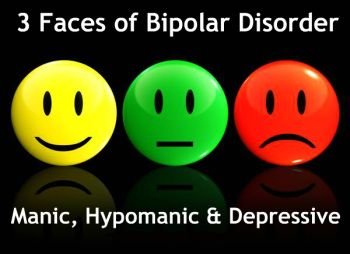
Hypomanic symptoms by definition are not severe enough to cause marked distress or disability. To some degree, they may improve your general well-being and level of functioning. At the same time, however, such episodes can adversely impact your social relationships.
Bipolar symptoms occur in cycles, and if you wait long enough, many symptoms may in fact remit even without treatment or you may cycle downward into a more depressive state. The real concern is whether or not someone will switch into a depressive state, which can be more debilitating. No one can predict with any degree of accuracy whether this will happen to you.
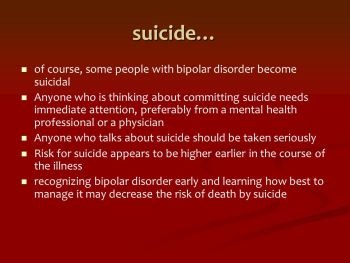
Most studies of bipolar disorder have demonstrated that, on average, for every day one experiences hypomania, one will experience thirty-seven days of depression. The risks of a significant depression leading to disability are great: a loss of productivity in school or work, impaired relationships, family conflicts, financial problems, developmental delays in children, and most significantly, suicide. Research suggests that bipolar disorder itself can have harmful effects on the brain that render the cycles more frequent, intense, and prolonged with time. These effects may make you more susceptible to future depressive episodes, possibly more severe, in the future.
Can I take other medicines while I am on an antidepressant?
It is always important to inform any doctor you see of all medications you are taking, including any herbal or over-the-counter supplements. Although many medications can be taken concurrently, there is potential for reactions between many medications as well, thus consideration must be given for this. Sometimes, the potential reaction is minimal and may be due to additive side effects (e.g., sedating effects may combine).
Other times, the presence of one medication can influence the elimination of the other medicine from the body, either allowing excessive accumulation or causing too-rapid depletion. Consequences can thus be toxicity or lack of efficacy. The SSRIs have specific enzyme groups that metabolize the medication. Each SSRI has a different profile as to the enzymes involved in its own metabolism. MAOIs are generally contraindicated in combination with all other antidepressants due to the risk for serotonin syndrome, which can be fatal (although there are certain combinations that skilled clinicians can prescribe in a methodical way to minimize the risks). Serotonin syndrome occurs when there is excess serotonin in the central nervous system.
Symptoms include tremor, confusion, incoordination, sweating, shivering, and agitation. Most SSRIs are contraindicated in combination with thioridazine (Mellaril) as well, due to risk of cardiac toxicity. SSRIs should be used cautiously in combination with sibutramine (Imitrex), commonly prescribed for migraine, also due to risk for serotonin syndrome. St. John’s wort, an herbal preparation used for depression, should be avoided when on a prescribed antidepressant, also due to potential risk for serotonin syndrome. Again, there are some circumstances when a psychiatrist will combine two SSRIs, for example, but this is typically done cautiously and under his or her guidance.
Terms:
Metabolize – the process of breaking down a drug in the blood.
Serotonin – syndrome an extremely rare but life-threatening syndrome associated with the direct physiological effects of serotonin overload on the body. Symptoms include flushing, high fever, tachycardia, and seizures.
Cardiac toxicity – damage that occurs to the heart or coronary arteries as a result of medication side effects.