Heart Healthy Diet Tips – Eating to Prevent Heart Disease and Boost Heart Health
The Function of Fat in the Body
Our nerves, muscles and organs must be cushioned by a normal amount of fat. If we did not have a certain amount of fat in our gluteus maximus (the buttocks), for example, we would never be able to sit down because we would have to sit directly on our muscles and bones.
Those who wish to lose weight should reduce the bad, saturated fat content of their diet, and those who wish to gain should increase their good, unsaturated fat intake. But even when on a reducing diet, there should be some fat in your diet because it plays an important and essential role in your body’s chemistry.
Stored in the body, fat provides a source of heat and energy, while the accumulation of a certain amount of fat around the vital organs (such as the kidneys) gives great protection against cold and injury.
Fat also has a function to perform in the body’s cells, for which special fats known as unsaturated fatty acids are needed in small amounts. Without these a roughness or scariness of the skin would result.
Fats have another all-important function: they carry the fat-soluble vitamins A, D, E and K through the body.
As you can see, a certain amount of fat in the diet is necessary to a healthy functioning body. But it’s the kind of fat that is most important! Unsaturated fat is best. Caution – go light on clogging saturated fats!
Low Fat Meals Cut Heart Disease Risk
A British research report by Dr. George Miller of Britain’s Medical Research Council stated: High fat meals make the blood more prone to clot within 6 to 7 hours after eating. Low fat meals can almost immediately reverse this condition. Most heart attacks occur in the early morning. One reason may be the overnight clotting effects of a high fat dinner. Researchers feel that by cutting fats from your diet, you may be able to add years to your life and cut the risk of heart disease! Also the recent University of Chicago scientific research supports Dr. Miller’s landmark statement that the healthiest meals for the heart are the low-fat, vegetarian diets with ample fruits and vegetables.
Dr. Attwood’s Tips for Low-Fat Shopping
•Remember, meat-free and dairy-free is healthiest.
•Spend most of your time in the produce department.
•Try new varieties of produce. Look at those with the most intense colors and remember organic is best!
•Don’t forget about pasta made from whole-grains.
•Go straight for the whole-grain breads section.
•Buy unrefined, low-fat, sugarless, high-fiber cereals.
•When buying packaged, canned, frozen foods –read labels.
•Don’t underestimate beans – whether dried, frozen or canned they are delicious and healthy for you.
• Buy low- or no-fat snacks – there are many choices. Careful, some are high in salt, sugar and calories.
•Replace milk and low-fat dairy products with soy, nut and rice milks, and soy and tofu cheeses, etc.
In 1998, the world lost one of its beloved, strong and dedicated health crusaders. Dr. Charles Raymond Attwood was a devoted pediatrician for over 35 years. He championed a low-fat vegetarian menu for children, was a strong health and nutrition activist and an associate of Dr. Benjamin Spock. www.vegsource.com
Dr. Charles Attwood –Great Health Crusader
As a doctor, humanitarian and fellow of the American Academy of Pediatrics, Dr. Attwood fought many battles against mainstream medicine and big business to ensure the health of people everywhere, particularly children. One major battle occurred in 1996. As a member of the Center for Science in the Public Interest, Dr. Attwood led opposition to the giant Gerber Baby Food Company’s practice of diluting its baby foods with water, sugar and starch. He won! Gerber stopped this 40 year crime against America’s children. Now their foods are 100% fruits and vegetables. Other baby food companies then followed.
In the last 20 years, Dr. Attwood held high the banner advocating a low-fat, plant-based diet as the most healthy for youngsters. His highly praised 1995 book, Low-fat Prescription for Kids makes a strong scientific argument for this kind of diet. His research shows in order to avoid the leading causes of premature death later as adults, namely: heart disease, stroke, cancers, diabetes, etc. it’s important children follow his program.
Raw Nuts and Seeds Are Good Food
Gary Null, a leading health activist writes in his book, The Complete Guide to Sensible Eating, Raw nuts and seeds are fine sources of protein, minerals (especially magnesium), some B vitamins and unsaturated fatty acids. Delicious as snack foods or used with other foods. www.garynull.com
There are few foods that are more highly packed with life force than raw seeds and nuts. Consider the Japanese archaeologist who found millet-like seeds in an ancient tomb in Egypt which had lain dormant in the dark for 4,000years. He put them in some water and they sprouted! There are more than 300 kinds of seeds and nuts that grow around the world and they vary nutritionally, but most of them are good sources of B vitamins, (thiamine and foliate) and iron, magnesium and zinc. Many of them are also loaded with vitamin E, protein and fiber. Raw nuts and seeds, as a snack food (try this great combo – nuts and raisins) are excelled by no other food, supplying the body with healthy polyunsaturated fats, protein and nutrients it needs for heart health and good nutrition.
To make Nut Butters: grind 12 cups of raw unsalted 123 nuts in a food processor or blender, turning the machine off every 20 seconds. Continue grinding nuts down until they’re a thick, fudge-like paste. Then add sunflower or nut oil (start with 1 tablespoon and add more only if necessary), blend until smooth. Keep refrigerated.
The large network of veins and arteries through which your blood circulates, need to be open, clear and strong to keep your blood circulating. High blood pressure is a sign they are straining, having to squeeze extra hard to push your blood through. This wears them out and your heart, too. Change your lifestyle.
Strokes result when blood clots form in the arteries, blocking nutrients to brain cells. Omega 3 fish oils are anticoagulants present in fish such as tuna or salmon. You can also get a good dose in a daily teaspoon of flaxseed oil. Onions and garlic are other natural anticoagulants.
Automated External Defibrillator (AED) Offers Fast Miracle – for victims of sudden cardiac arrest. A report in the New England Journal of Medicine states that the survival rate for those who received their first defibrillation no later than 3 minutes after a collapse was 74%, as opposed to 49% survival rate for those defibrillated after more than 3 minutes. The FAA has decided to have medium to large passenger planes carry an AED. Med centers, big businesses, universities, schools, cruise ships etc. must have one in their first aid kits for emergencies. www.nejm.org
Organic Virgin Olive Oil Highly Recommended
Mother Nature has provided us with wonderful healthy oils which can be used in preparing foods, mayonnaise and salad dressings or for sautéing and marinating, etc. Virgin, cold-pressed olive oil has been used for centuries. Even Hippocrates used olive oil in his practice.
Other good oils are cold-pressed safflower, sesame, sunflower and soybean oils. These oils can be used in salad dressings, recipes, baking, etc. We still use oils sparingly. They’re healthy in polyunsaturated and unsaturated fatty acids. Please, don’t use genetically engineered canola oil.
Another favorite oil of ours is organic unrefined flax seed oil which is the richest source of omega-3 essential fatty acids (more than double that of fish oils). We also use hempseed oil. These two fragile oils must be kept cold, preferably in the freezer (they do not solidify) and they should not be heated. You can add them to foods after they have been cooked. We suggest you add 1 to 2 teaspoons daily of these oils to your diet, for the omega fatty acids are vital to your bodily functions, especially the heart!
Four Protective Foods – Fruits & Vegetables
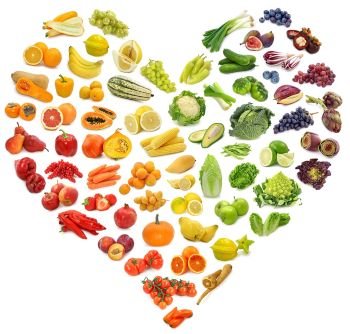
Remember that three-fifths of your diet should consist of organic, raw and lightly cooked vegetables and fresh fruits. These foods not only contribute isoflavins, vitamins and organic minerals to the diet, but they also add the bulk and moisture required for healthy elimination and smooth body functioning. They also help maintain the alkaline reserve of the body and add variety, color, flavor and texture to the diet.
Vegetables are virtually fat-free and contain no cholesterol!
The ideal way to get the full amount of vitamins and minerals from organic vegetables is in their raw state, in fresh vegetable salads or as garnishes with meals. When cooking vegetables some vitamins and minerals may be lost.
The nervousness and peevishness of our times are chiefly attributable to tea and coffee. – Dr. Bock, 1910
Fresh Juices Are Best
Freshly prepared organic vegetable and fruit juices are ideal ways to add vitamins and minerals to your diet. We enjoy carrot, celery and beet juice mixed together. See page 159 for more delicious combinations.