How to Quit Smoking Naturally Using Herbs, Hypnotherapy & Exercise! (Video)
Quit Smoking Using Natural Remedies Like Herbs, Fruits and Vegetables
Why is group therapy as important as anti-tobacco drug therapy?
Group therapy is a frequent intervention used in smoking cessation programs. Group intervention is not necessarily the most effective method of quitting when it is the only method used; however, it is effective in combination with other smoking cessation tools, including medications. Group programs teach people to recognize problems that occur while quitting. Group members offer emotional support and encourage each other to reach for success, which many people find helpful. Studies have demonstrated differences in abstinence success rates depending upon the type of therapy utilized as well as whether or not it is used in combination with medication therapy. Table bellow illustrates those differences. (It is important to note that the medication and counseling statistic is from a different set of studies, and therefore one cannot compare that number against any of the other numbers as denoted by the asterisk [*].)
Successful abstinence rates by type of therapy
Format -estimated abstinence rate
No format – 10.8%
Self-help – 12.3%
Telephone counseling – 13.1%
Group counseling – 13.9%
Individual counseling – 16.8%
Two formats – 18.5%
Three or more formats – 23.2%
0–1 Counseling sessions – 21.8%
2–3 Counseling sessions – 28.0%
4–8 Counseling sessions – 26.9%
More than 8 counseling sessions – 32.5%
Counseling without medication* – 14.6%
Counseling with medication* – 22.1%
* Data cannot be compared as they are from a different set of research.
Are there herbal remedies for smoking cessation?
Thousands of people are looking for alternative approaches to smoking cessation. As a result, non-traditional quit smoking methods look attractive to many who do not want to take medications or to participate in traditional programs used to stop smoking. These alternatives are known as Complementary and Alternative Medicine (CAM). The U.S. Department of Health and Human Services (DHHS) conducted a metaanalysis that determined alternative therapies such as hypnosis, acupuncture, electro stimulation, and laser treatments were not effective in tobacco cessation. If you decide on herbal medicines, discuss your plan with your doctor, pharmacist, or a holistic health practitioner.
Herbal Remedies
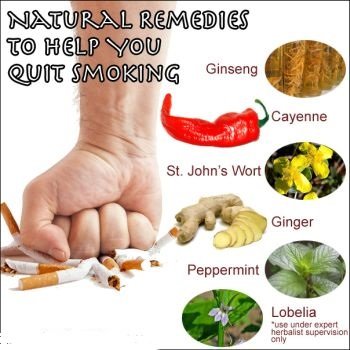
All of the following herbs that will be discussed have been used as aids for smoking cessation. Herbs have been used traditionally in Eastern medicine for years but have been introduced to Americans only recently. There are herbal teas as well as pills that are available over-the-counter (OTC) at health food stores.
Ginseng
Ginseng is a root that has been made into a medication, which has been used historically in Chinese medicine for 7000 years. It is grown in the Far East as well as the United States. Ginseng can be eaten raw or prepared using various methods. The best way to prepare it is to brew it into a tea. Ginseng is purported to reduce stress, improve cognitive performance, boost energy, enhance memory, and stimulate the immune system. Many of these effects are similar to the effects of nicotine. Studies conducted in China reported that ginseng increased the activity of the brain’s neurotransmitters.
Kava
Kava is a sacred drink to many Pacific Islanders. Kava is purported to relieve anxiety that is associated with the withdrawal symptoms of a variety of addictive drugs including nicotine and alcohol. Kava is non-addictive and is also an appetite suppressant. One of the chemicals found in kava inhibits the enzyme monoamine oxidase-B (MAO-B), which is also inhibited by the antidepressants Nardil and Parnate. Inhibiting MAO increases the neurotransmitters dopamine and norepinephrine in the brain, which may explain why kavais thought to have smoking cessation properties. However, neither Nardil nor Parnate are believed to be safe or effective in treating tobacco dependence, and they are far more potent MAO inhibitors than kava. Kava is contraindicated in all patients taking antidepressant medications.
The therapeutic uses of kava are as follows:
• Relieves anxiety and stress and the ensuing depression
• Is a muscle relaxant
• Is a diuretic and anti-inflammatory medication
• Is an anti-convulsant
• Protects against strokes
• Is a mild analgesic
• Is a mild anesthetic
• Is a topical antifungal medication
Lobelia
Lobelia also has been called the Indian tobacco or the pukeweed. It is a purgative used in small doses as an expectorant to treat respiratory problems; in large doses it is used as an emetic (it makes you vomit) to treat food poisoning. It grows all over North America. It has nicotine-like properties in that it is both a stimulant and a relaxant. In small doses, lobelia can have a soothing, sedative effect. It can calm the jittery nerves of someone who is withdrawing from nicotine. Thus, if lobelia is taken during smoking withdrawal, the cravings will be reduced. If one smokes a cigarette while taking lobelia, however, the smoker may become nauseated and may vomit.
It also may have mild antidepressant effects, which helps with the initial sadness during nicotine withdrawal. Precautions: It is contraindicated to take lobelia during pregnancy, if you have low blood pressure, if you get easily nauseated, if you are taking blood pressure medications, if you are a diabetic, or if you are already on potassium replacement therapy, diuretics, or corticosteroids. If you are taking aspirin and nonsteroidal anti-inflammatory drugs (NSAIDs), the combination can increase the risk of a toxic reaction.
How many times does a typical smoker quit throughout his or her life?
Many attempts at quitting are often the norm. Occasionally you will find someone who threw the cigarettes out and never went back. That is atypical for most smokers. Research shows that 70% of smokers want to quit, 81% of smokers have tried to quit at least once, 35% try to quit each year, and quitting may require more than 10 attempts before becoming successful. Only about 7% of smokers attempting to quit remain smoke-free at the end of one year. This is exactly why tobacco dependence should be thought of as a chronic relapsing condition, and adding the various medications and support groups available can increase the success rates for quitting.
Only about 7% of smokers attempting to quit remain smoke-free at the end of one year.
What can I do to avoid “triggers”?
Triggers are the environmental stimuli that are associated with smoking and serve to support the ongoing habit. A trigger prompts you to reach for a cigarette. Some of the most common triggers for smoking are things such as stress, coffee, and alcohol. Other triggers include:
• The morning routine
• Certain people, often smoking buddies or a spouse
• Driving
• Finishing a meal
• Watching TV
• Talking on the phone
• Post coitus
• Boredom
• Finishing something
• Breaks at work or after work
• Feeling anxious, tense, angry, or lonely.
Whatever the triggers may be, it’s important to make note of them. If you prepare for your triggers, you can handle them better. Avoiding triggers, at least until you are more secure as a nonsmoker, will help in the process. Triggers can overwhelm the unprepared quitter.
Try the “4 Ds”:
• Drink plenty of water, between six and eight glasses per day.
• Delay the impulse to smoke for three to seven minutes. The urge should pass.
• Do something else that will take your mind elsewhere.
• Deep breathe.
It is important to drink lots of fluids, eat right, and get enough sleep. A poor diet and the lack of a good night’s sleep can decrease your resistance to triggers. Cognitive behavioral therapy and support groups also help to both identify the triggers and assist in developing coping strategies when one is confronted with a trigger.
Lisa’s comment:
During the first days after quitting, I experienced a mysterious and disturbing phenomenon whereby I received repetitive images of my right arm (I am right-handed) that kept swinging up to my face holding a lit cigarette. I did not want a cigarette; however, I told my therapist that I could not imagine going through the rest of my life with this image “assaulting” me. She told me to vocalize my determination to quit and that my subconscious would listen. Every time the image jumped up, I loudly spoke out “I do not want a cigarette. I have a higher goal in mind, and that is to live my life as a nonsmoker; smoking a cigarette is an obstacle to reaching my goal.” It’s truly amazing how quickly this worked and how the appearance of the image began to decrease in frequency, until it disappeared altogether. The images stopped in a few days after this method.