Health Benefits of Yogurt I What The Heck Are You Eating I Everyday Health (Video)
10 Surprising Health Benefits of Yogurt
Discovery
The signs for the existence of bacteria as infectious agents have always been present and these signs have been important in the survival of Man. The discovery of fire and the sterilization of food with cooking must have had a huge impact on the health of humans. Whether this was a conscious decision or not is impossible to determine. Certainly by the medieval era and probably as far back as Roman civilization, it was known that water may not be safe; so water purified by the presence of alcohol was frequently consumed. Wine, of course, was common in southern Europe and ale in the British Isles.
There was also an understanding that some diseases were infectious, though there was no known cure; only a degree of prevention of infection could be obtained by increasing your distance from those showing symptoms. Members of the English court regularly left London when there was a plague epidemic as they were aware that plague could be transmitted from person to person. They were not aware, however, that the causative bacterium was more likely to be transmitted by the fleas of rats; rather that there was something in the air.
The discovery of bacteria came from Antonie van Leewenhoek. Van Leewenhoek was a Dutch trader living in late 17th-century Delft. Glass lenses had been known in ancient Assyria and they had been used in spectacles since the 13th century. Van Leewenhoek was able to make what are by modern standards crude lenses. The lenses were thick and essentially very powerful magnifying glasses, able to provide magnification of about 200-fold. With this crude tool and his exceptional eyesight, he was able to describe not only red blood cells but also single-cellular organisms including bacteria. He was also able to draw accurately what he saw. In 1683, he wrote to The Royal Society in London describing discoveries that he had been making since 1676, which included examining scrapings from teeth where he noticed that there were small individual cells that were moving; some were spinning and some moved rapidly through a water environment. He was also amazed by the vast numbers that were present. He called these ‘animalcules’; they were probably the first bacteria ever seen. Even though microscopes improved in the 18th century, there were no further significant descriptions of bacteria until the 19th century, when compound microscopes, made of more than one lens, were able to provide clearer images. More recently the electron microscope has provided clear images of bacterial cells.
By the second half of the 19th century, the theories of Darwinian evolution had been accepted and that of spontaneous generation rejected, the latter being exemplified by the rejection of the view that maggots were spontaneously generated on a rotting piece of meat. However, the spontaneous generation theory still persisted bacteria as it was thought that most food could spoil because it generated bacteria rather than becoming infected from outside. The French microbiologist Louis Pasteur had originally been a chemist and he exposed a broth full of nutrients to heat, known to kill bacteria. He showed that if this nutrient medium was in a glass flask with a long swan neck open to the air then it never became contaminated with bacteria; however, if the glass was broken the medium soon became contaminated and bacteria grew. From this he concluded that bacteria were present in the air and they were being introduced on particles of dust. The swan neck prevented the dust entering the vessel. Indeed, some of these flasks were kept for many years without becoming contaminated. This became the basis of Pasteur’s germ theory of infection.
Pasteur examined food and beer that had spoiled. He noticed that bad beer did not contain the large round yeast cells that had been responsible for the fermentation but rather small, rod-shaped bacteria.
He concluded that these were responsible for the spoilage. Therefore, he went on to develop the technique of heating to prevent bacterial contamination of liquids by bacteria. This technique, which we now call pasteurization, raised the temperature sufficiently to ensure that the common bacteria, which were already present in these liquids and responsible for spoilage, would be killed. As this did not involve boiling, it had a lesser impact on the taste. This was not sterilization and it did not remove all bacteria but rather just prolonged the shelf life of the liquid.
Pasteur’s theory that bacteria were invading from outside caught the attention of the Scottish surgeon Joseph Lister, who believed that this could be exploited to prevent the human body from being infected by bacteria. He had originally considered that miasma (bad air) was responsible for the infection of patients during surgery. Ignaz Semmelweis, a Hungarian doctor working in Vienna, had shown the importance of washing hands in the prevention of infection. Despite this, most surgeons still did not believe that this was an essential precaution. Lister read Pasteur’s findings about the germ theory of infection. He tried to find a chemical that would kill bacteria and experimented with carbolic acid, which contained phenol. The dipping of instruments in carbolic acid prior to surgery radically reduced post-operation infection, and the swabbing of wounds with carbolic acid also reduced the incidence of gangrene. Lister was also adamant that his staff wash their hands between operations; he took Semmelweis’s instructions further and insisted this was done using 5 per cent carbolic acid.
The germ theory of bacteria was, by the 1870s, well established and bacteria were seen as major causes of disease. Pasteur demonstrated that gangrene, an infection of dying tissue, occurred in the absence of oxygen and he was one of the first to show that there were anaerobic bacteria as well as those that require oxygen. Pasteur had also been interested in vaccines and he had found that bacteria he had cultured in the laboratory, when injected often did not cause infection in laboratory animals.
Furthermore, when he did subsequently inject animals with fresh bacteria, he found that the animals were, in some way, protected. We now call these cultured bacteria ‘attenuated’ or ‘non-virulent’, and Pasteur called the process of pre-injection of attenuated bacteria for subsequent protection ‘vaccination’. He used a symbiotic relationship/ further this term in honour of Edward Jenner’s immunization against smallpox with the structurally related cowpox virus. Pasteur’s innovation was to use the same bacterium for immunization as that which causes the disease.
The German scientist Robert Koch first met Pasteur in London in August 1881 following joint invitations from Lister. Their opinions on the germ theory often differed; in particular, Koch was skeptical about Pasteur’s ability to attenuate bacteria to render them suitable for vaccination. He believed that the properties of bacteria were permanent and disavowed Pasteur’s proposal that variations in a bacterium’s virulence could explain why epidemics could occur, as the virulence of the bacterium temporarily increased. Koch’s major contributions were to explore the role of individual bacteria as the sole cause of specific diseases. He developed techniques for isolating individual bacteria, particularly by the use of agar, a substance derived from seaweed that solidified media, thus producing a nutrient matrix on which individual bacterial cells could form discrete colonies. The circular glass trays which he used, Petri dishes, were named after his assistant. This was an enormous step forward and allowed the isolation of individual bacterial species. He and his team were able to isolate the various bacteria that caused diphtheria, typhoid, pneumonia, gonorrhea, meningitis, leprosy, bubonic plague, and tetanus.
Koch’s most important discoveries were the bacteria responsible for anthrax and tuberculosis. With the former, he was able to show that the anthrax bacillus was able to transfer from animal to animal.
He noticed, however, that it did not survive long outside the animal and instead formed spores. This discovery contradicted his own theory on the permanent properties of bacteria for which he had argued so vehemently with Pasteur. He found spores to be metabolically inactive and that they could survive for long periods in soil, changing into active virulent bacteria on entering a new host. His techniques for bacterial isolation also identified the bacterium responsible for the tuberculosis, Mycobacterium tuberculosis. This was a major medical discovery as tuberculosis was responsible for more than 10 per cent of premature deaths at the time.
By the end of Koch’s research career at the start of the 20th century, many of the major bacterial species responsible for infection had been identified. Although bacteria were clearly involved in the process of disease, it had not been clear whether they were solely responsible. Koch’s isolation techniques allowed him to prepare pure cultures of bacteria, so he devised criteria to determine whether an individual bacterial species was the cause of an infection.
These were known as Koch’s Postulates. Originally they were:
1. The bacteria could be isolated from the animal suffering from the disease.
2. The bacteria could be cultured in the laboratory.
3. When the cultured bacteria were introduced in another animal, they should cause the same disease.
4. The same bacteria can be re-isolated from the second infected animal and shown to be identical to original bacteria.
If these postulates could be followed, it would be possible to state that the individual bacterium was the cause of the disease and the disease was infectious.
Koch’s postulates are still used today but they have often had to be modified, particularly the first postulate, as many bacteria can just be carried by the first hosts, who become asymptomatic carriers, rather than causing an infection. An example of this may b Diagram showing the structure of a biofilm80Re the bacteria that cause cholera, Vibrio cholerae, or dysentery, Shigella dysenteriae. In these cases, the first postulate has to be abandoned. Furthermore, the introduction of pure bacterial cultures did not always precipitate disease in test animals, not least for the fact that the ability of a bacterium to cause disease is strongly influenced by the immune status of the new host. As we shall see later, a new generation of bacteria, now known to cause disease but only in immune compromised patients, cannot be identified by Koch’s postulates.
Causative bacteria were found for a number of different infections including Streptococcus pneumoniae for pneumonia by Leo Escolar in 1881 and Haemophilus influenzae for bronchitis by Richard Pfeiffer in 1892. The latter had been discovered during an influenza outbreak and was thought to be the causative organism of influenza. Koch’s postulates could not demonstrate this and it was subsequently found that both these respiratory pathogens were actually opportunistic, in that they only caused disease in patients whose immune system was already compromised by another infection, for example by the influenza virus, or another underlying disease affecting the immune system.
Escherichia coli was one of the most important bacterial species identified at the time. Discovered in 1885, it was named after its discoverer, Theodor Escherich. Its importance has been not only because it is a pathogen, which can cause a variety of different symptoms, nor because it is one of the most important bacteria commonly found in the human gut, but rather because it has become the main scientific tool for studying bacterial structure, genetics, and virulence.
The list of bacterial discoveries is vast. We know that bacteria can survive and have been discovered in virtually every environment on Earth. They can also survive in the extremes of temperature, pressure, and acidity in the environment. The ability to survive extreme acid conditions is not confined to environmental bacteria. Gastric ulcers were suspected as the reason why Napoleon Bonaparte kept his hand within his coat, in order to relieve the pain, and their presence was confirmed by a post-mortem after his death. In his case, the ulcers had led to a malignant tumor. The cause of ulcers was suspected to result from stress or eating spicy food but it was not until 1982, when Robin Warren and Barry Marshall of the University of Western Australia identified a small, helical bacterium, that these factors were no longer associated with ulcer formation. Warren and Marshall isolated the bacterium Helicobacter pylori. It had previously been believed that no bacterium could live in the stomach, though there had been some pathological evidence showing these bacteria in gastric biopsies since the late 19th century. Warren tested their hypothesis by drinking a culture of Helicobacter pylori. Within five days, he developed the symptoms of gastritis, which he eventually eradicated with a course of antibiotics. This was a hugely important discovery not only because it identified a new species of bacteria but also because ulcers were finally able to be treated not just with histamine H2-receptor antagonists (such as ranitidine), the conventional treatment to relieve the symptoms, but also with antibiotics to remove the cause. Because of its predisposition to cause ulcers and the subsequent risk that this damage may lead to malignancy, Helicobacter pylori has been identified as a possible carcinogen which should be eradicated.
Other, previously unidentified, bacteria were identified in the final quarter of the 20th century. Closely related to Helicobacter pylori) catalysing ATP-dependent t0R are the bacteria of the genus Campylobacter. Suspicions that an organism such as this existed were originally expressed by Escherich in 1886 where he saw spiral-shaped bacteria in stools of children with diarrhoea. Similar observations were made until this organism was first isolated in the 1972 by Dekeyser and Butzler, who examined the faeces of a young woman who had severe symptoms of diarrhoea and fever. This prompted a search to find this organism in the faeces of other patients with severe diarrhoea. This organism was found to be responsible in the cases of about 5 per cent of children with severe diarrhoeal symptoms. Two species were subsequently identified, Campylobacter jejunii and Campylobacter coli. Campylobacter jejunii was subsequently found to have the ability to become invasive (rarely it could spread through the body and was not just confined to infection of the gastrointestinal tract). By the 1980s, Campylobacter jejunii infections had become well recognized and were shown to be the major cause of bacterial enterocolitis.
Gastrointestinal bacteria have not been the only recent bacterial identifications. In July 1976, there was a convention of the American Legion at the Bellevue Hotel in Philadelphia. They had gathered to celebrate the bicentenary of the signing of the American Declaration of Independence. A large number of the veterans subsequently fell ill with pneumonia symptoms; over 200 were given medical treatment and thirty-four died from this unknown disease. These were reported first to the Pennsylvania Department of Health and the outbreak was then referred to the Center for Diseases Control and Prevention (CDC) in Atlanta. They considered that the environment of the hotel might be the cause rather than human-to-human spread as there was no subsequent infection away from the hotel. Furthermore, some pedestrians walking past the hotel also became ill. Still no cause could be found. The lungs of patients who had died of the mysterious disease were examined and nothing could be found except some rod-shaped bacteria that were ignored at the time. With all subsequent investigations proving fruitless, Joseph McDade at CDC decided to re-examine these rod-shaped bacteria. He produced a serological test for this organism and found that the blood of all the sufferers had antibodies to this bacterium. This was a previously completely unknown organism and was named Legionella pneumophila. It was living in the water-cooling part of the hotel’s air conditioning system and was thus spread throughout the hotel. The disease has been called Legionnaire’s Disease.
Legionnaire’s Disease is an example of environmental bacteria that have previously had no major contact with Man, which is probably why we were unaware of them. However, when we alter the environment in which we live, we can change it sufficiently to allow previously harmless bacteria to prosper. Legionella pneumophila is a widely distributed bacterium that lives in water all over the world, especially in temperatures above 25°C. It is completely harmless unless it has access to lungs.
This did not happen until we sprayed or atomized water. Thus Legionnaire’s Disease is solely a product of modern living. Of course, many regulations have been introduced to reduce its impact but outbreaks still occur and approximately 500 people become infected every year in England and Wales.
The isolation of new bacteria as a result of changing lifestyles is becoming more common. There has been increasing concern about Escherichia coli or E. coli. As we have seen, these bacteria are regular residents of our gastrointestinal tract. However, there are many types of this organism, some of which lead to some s that have a predisposition towards iHerious symptoms. It is the most common cause of traveler’s diarrhoea, but this usually resolves within a couple of days. Our vulnerability to this is just that our immune systems have not experienced a particular localized strain of this bacterium before, whereas the local population has become resistant to it. More serious is the emergence of new strains of E. coli, which were previously unknown. The most notorious of these is E. coli O157:H7. The number refers to it serotype and it is often abbreviated to E. coli O157. Its importance lies in its capability to cause very severe haemorrhagic diarrhoea, which can result in kidney failure. Rarely these bacteria can be spread from person to person but usually outbreaks result from contaminated meat or vegetables. It was first isolated in a single patient in 1975 but it was first shown to cause an outbreak in 1982, caused by the ingestion of contaminated hamburgers. Most gastrointestinal bacteria are spread by the faecal–oral route, and E. coli O157:H7 is no exception except that the bacteria originate predominantly from the faeces of cattle. Without causing the animal any symptoms, E. coli O157:H7 reside in the rectum of cattle, probably within the majority of herds in the United Kingdom.
The reason why they should reside there now and did not in the past is unclear but is probably related to changes in animal husbandry. We know that cattle have, since the Second World War, been fed a variety of experimental diets; the Mad Cow Disease (BSE) outbreak was a result of this. Something we have changed appears to have influenced the microenvironment within the rectum. Cattle continue to shed these bacteria in the faeces and the meat obtained from them becomes contaminated. Only a few E. coli O157:H7 strain types appear to be virulent to humans. In these cases, if the meat is contaminated, while it is uncooked it can pass the bacteria to other food products particularly during preparation.
Environment and civilization
Bacterial spoilage of food
From the rise of prehistoric Man to the end of the 19th century, and in some areas to the a symbiotic relationships, It is not known whether the cooking of food was developed as a means of sterilizing it or whether it was considered to improve the taste. Whichever it was, this has a significant impact in reducing bacterial contamination. The ability to reduce the bacterial load was important for human health; however, even exposing food to heat to kill the bacteria was only a temporary solution, for once the heat source had been removed the food easily became contaminated again. A longer-term solution was required. Probably the earliest method of preserving food was to ‘salt’ it. This was achieved by removing as much water as possible and then soaking the food in high salt concentrations.
The salt draws water out of many bacteria by osmotic pressure and largely prevents them growing. The value of salt as a preservative has been known for many millennia and salt became a highly prized commodity. Indeed, the word salary derives from the Latin for salt, which was given to Roman soldiers for the preservation of their food.
Another ancient method of preserving food was to smoke it by exposing it to the smoke of the fire. This probably originated from the use of smoke to deter insects from landing on meat, and the observation that the meat took longer to spoil. The smoke contains particulates that enter the meat and inhibit bacteria growth. Unlike salt, this is often considered to be a flavor enhancer and is still continued in the preparation of meats such as pastrami and fish such as salmon. Honey as a non-spoiling foodstuff has been known for 10,000 years as its collection has been depicted on early cave paintings. It was taken from wild bees, as it still is in more primitive cultures. Honey also preserves other food. It has a very low water content and its high sugar concentration can inhibit fermentation. Its viscosity also provides a barrier preventing bacteria from penetrating and this, coupled with its sticky nature, provides a good defense against bacteria invasion either for itself or any foodstuff that is placed within it. Many honeys contain antibacterial compounds that actively kill bacteria; one is glucose oxidase, which converts glucose into gluconic acid with the release of hydrogen peroxide gas. This gas is very effective at killing bacteria. Manuka honey from New Zealand is very effective in killing methicillin-resistant Staphylococcus aureus (MRSA); it can also produce hydrogen peroxide, but there are other antibacterials present in it as well.
Alcohol production, which is not normally a bacterial process, was probably discovered about 7,000 years ago, the first evidence of its production going back to ancient Persia. In sufficient concentration it can also act as a food preservative. How long this has been known is difficult to judge. The Romans were probably the first to distil alcohol but it is not known if they used it as a preservative. Robert Boyle in the 17th century identified it as a preservative and it has been used for preserving food ever since.
Bacteria of the Acetobacter genus can oxidize alcohol, converting it to acetic acid (vinegar). These bacteria can proliferate in up to 7 per cent alcohol. Vinegar was known to the anci that have a predisposition towards that etent Egyptians and Babylonians and probably was first identified as it destroyed wine. Because Acetobacter requires oxygen, wine kept in sealed containers is not normally affected. Vinegar was found to provide a sharp taste and has been added to many foodstuffs at a concentration of up to 10 per cent. It is also a preservative and can be used for pickling but usually at a much higher concentration (about 20 per cent). Almost any natural alcohol product can be made into vinegar including beer, wine, and cider. The important aspect is to ensure that just the right oxygen level is maintained as too much will remove all the carbohydrates present. The ability of vinegar to maintain its characteristics over a long period are seen with the making of classic balsamic vinegar, where the vinegar is stored for a minimum of 12 years, though some is kept far longer.
Cheese manufacturing
Hunter-gatherers probably became ‘farmers’ in the Mesolithic period after the last ice age. The domestication of animals, probably first sheep and goats, probably took place 9,000 years ago in the Middle East, with herds of cattle being kept within 1,000 years afterwards. An early result of domestication would have been the ready provision of milk from each of these animals. Milk is highly nutritious and a good energy source, but it spoil easily and is soon unfit to drink, especially in hot climates. Some means of preservation was required.
The addition of acid to milk with rennet causes the milk protein casein to coagulate and thus solidify. The mixture of solids and liquids, known as curds and whey, is separated and the solid curds are compressed into a block. This block of solidified milk, which we call cheese, is able to resist spoiling by bacteria because they will have difficulty in penetrating any further than the outer layer and the block remains acidic, which can be too hostile an environment for bacteria to become established.
Therefore, the production of cheese preserves milk, often for many weeks, and it conserves most of the fat, protein, and minerals that were in the original milk. It is unlikely that early cheese production was a conscious effort to acidify milk but rather a chance observation that it could happen spontaneously if the milk became infected with certain bacteria, which convert the sugar lactose in milk into lactic acid. The likely explanation has been that nomads in the Middle East often placed milk into a sheep or goat stomach for storage during a journey and when they came to drink it, it had coagulated because of the bacteria in the stomach and the residual rennet present. Whatever the story, basic cheese production probably occurred soon after the domestication of sheep and goats. We have no means of knowing what early bacteria produced the first cheeses but they were probably closely related to those that are currently employed. These are collectively known as lactic acid bacteria and a number of bacteria can achieve this, but the most common are Lactococcus lactis subsp. lactis or cremoris, Lactococcus salivarius subsp. thermophilus, Lactobacillus delbruckii subsp. bulgaricus, and Lactobacillus helveticus. The genus of Lactococcus had previously been identified as Streptococcus and often these bacteria are identified in this genus.
The first recorded observations of cheese production were in Egyptian tomb murals, probably from around 4,000 years ago, and in Babylon at about the same time. Ancient Greek mythology, including Homer, mentions cheese production and by the Roman civilization, cheese was a normal part of the diet. It is likely that all of these were basic cheeses, made with single starter bacteria a symbiotic relationship dHl culture comprising a bacterium related to the ones above. The results would have been moist salty cheeses such as modern-day sheep’s cheeses, for example feta from Greece or beyaz peynir from Turkey.
In the past 2,000 years, cheese manufacture has become more sophisticated, with specific bacteria used for individual cheese types. The bacteria were naturally present and the effect exploited. The so-called mesophilic Lactococcus lactis are often used in the production of the European hard cheeses, such as cheddar, feta, and the Dutch cheeses. These bacteria do not ferment citrate and do not produce carbon dioxide. The softer cheeses are often formed with the thermophilic bacteria such as Lactobacillus delbruckii subsp. bulgaricus and Lactobacillus helveticus. These produce cheeses such as mozzarella and Emmental. Of course, the range of cheeses is now vast and there is much experimentation with new strains of bacteria and even mixtures of mesophilic and thermophilic bacteria.
In addition to the initial challenge with the starter bacterial culture, it was soon found that the introduction of other microorganisms enhanced flavour and texture. Much of this has been achieved by the use of environmental bacteria that were found serendipitously during the cheese-making process long before the existence of bacteria was actually known. The involvement of the fungus Penicillium notatum, which gives blue cheese its distinctive color, is well known but the involvement of secondary bacterial cultures is less familiar. These are known as adjunct cultures. Recognizable products of an adjunct culture are the ‘eyes’ or ‘holes’ in Swiss cheese. The starter bacterium is likely to be Lactococcus lactis followed by the late addition of the adjunct bacterium, such as Propionibacter shermani or Propionibacterium freudenreichii. These bacteria use the lactic acid produced by the starter bacteria and slowly generate carbon dioxide. This gas produces the ‘eyes’ of Emmental.
More often adjunct bacterial cultures are used to alter texture and taste. The raw cheese is often salty and bitter, from the lactic acid, so the use of adjunct cultures can change the final taste by breaking down some of the products of the primary culture. They also often speed up cheese ripening. Bacterial adjunct cultures are usually employed in the manufacture of harder cheeses as the softer ones are usually treated with moulds, not bacteria. They are often used for washing the outside of cheese as a smear, giving it the characteristic outer surface. These smear bacteria have to be salt tolerant and their ability to grow at low pH is the main reason why they were originally found on the surface of cheese.
Lactobacillus casei and Lactobacillus plantarum are now added during the manufacture of cheddar. Brevibacterium linens has been used to produce the outer surface of Gruyère, Munster, and Limburger cheeses. This bacterium produces the very characteristic red-orange color of the cheese and is also responsible for the distinctive flavor. Historically, cheese manufacture was often done in damp dairies where many of these bacteria would have already existed. Now, of course, these bacteria cultures are carefully controlled ensure that the ash and the correct mixture of adjunct bacteria is added to provide a more uniform product. Finally and equally important, these smears protect against moulds spoiling the cheese and allow the cheese to be stored for months and sometimes years. The principle for this is that a large mass of bacteria prevents the establishment of other microorganisms that might spoil the food. This is probably achieved by the bacteria releasing chemicals that prevent the growth of other bacteria rather than direct competition for nutrients. In any case, the net result is that these ‘good’ bacteria prevent ‘bad’ bacteria from spoiling the food and hence are a potent form of food preservation.
Yogurt manufacture
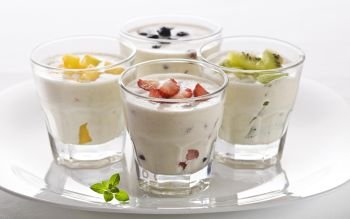
Yogurt is a Turkish word and means to thicken or coagulate. Yogurt has probably been used for more than 6,000 years, though the first written reports were during the Roman Empire where it had been noted that nomadic groups were preserving milk by thickening it and that the product tasted pleasant. Its origins are probably similar to cheese production in that the milk had been kept in sacks made of animal products where it had coagulated. When the sack had been emptied and refilled with milk, the coagulation would have occurred even more quickly. Towards the end of his reign in the mid 16th century, Francis I of France had formed an alliance with the Turkish Ottoman empire. He developed a severe bout of diarrhoea, which his physicians could not cure. A Turkish physician gave him yogurt, which cured him, and its benefits as a medicine were then widely broadcast.
Because of the Turkish occupation of central Europe during the 16th and 17th centuries, it became a part of the staple diet of many of the conquered countries. Its popularity extended throughout Asia, from Sumatra to Russia, both as a food such as raita and as a drink such as lassi, both from India.
By the 19th century, it was noted that Bulgarians often lived longer than their Western counterparts. The Bulgarian microbiologist Stamen Grigov examined Bulgarian yogurt microscopically and noted that there were large numbers of both rod-shaped and spherical bacteria. The rod-shaped bacteria we now call Lactobacillus delbrueckii subsp. Bulgaricus, though at the time it was just referred to as Lactobacillus bulgaricus. The associated longevity of regular consumers of yogurt resulted in its promotion as a health food, which is where it stands today.
Yogurt is traditionally made by adding a starter culture, often called a ‘mother culture’, which is usually taken from a recent batch of yogurt, and adding it to milk at about 40°C. Nowadays the milk is sterilized by heating it to near boiling first to kill any resident bacteria. In the traditional production of yogurt, the milk was not sterilized and the high concentration of bacteria in the starter culture usually, but not always, suppressed the resident bacteria. The original production of yogurt must have been a fortuitous event, for it requires both the spherical bacteria seen by Grigov, Streptococcus thermophilus, as well as the Lactobacillus. Both bacteria are thermophilic and prefer elevated temperatures, above 40°C for growth, a temperature that is lethal to many other bacteria. This probably explains why yogurt originally developed in southern Asia. The culture in yogurt produces acid; hence the sharp taste if it is not sweetened. However, it is this acidity that preserves it and prevents other bacteria and moulds from spoiling it. Like cheese, it will now keep for many weeks even if not kept cold.
Probiotics
Yogurt is essentially the first probiotic medium. A probiotic is, according to the Food and Agriculture Organization of the United Nations, ‘a live microorganism which when administered in adequate amounts confers a health benefit on the host’. Probiotic was a term first employed by Werner Kollath while working on dietary problems at the University of Munich in 1953, when he described beneficial bacteria in digestion in contrast to those that cause disease.
The presence of lactic acid-producing bacteria in milk is not a fortuitous accident. They have coevolved as they help to protect young mammals, fed initially on breast milk, against gastrointestinal diseases. This is achieved by providing significant quantities of bacteria, in breast milk, which are able to colonize the gastrointestinal tract and create an acidic environment, so that more pathogenic bacteria cannot survive. As well as lactic acid-producing bacteria, human milk contains bifidobacteria as well. There are many species of the Bifidobacterium genus and they can colonize many parts of the human body. They are anaerobic bacteria so they can only operate effectively where there are low oxygen levels, similar to conditions in the lower gut. Bifidobacteria have the ability to ferment oligosaccharides; these are relatively short carbohydrates made up of chains of up to about ten sugars (oligosaccharides). In particular, they can ferment the oligosaccharides found in milk. This would certainly assist breastfed infants. Some strains of bifidobacteria can ferment oligosaccharides derived from plants, which would be difficult to metabolize otherwise and thus their presence could aid absorption of nutrients from plant material. The common species used as a probiotic is Bifidobacterium bifidum; it is a natural colonizer of the gut and it does maintain the balance of microorganisms, preventing the growth of other bacteria. It is also believed to strengthen the immune system but much of the research in this area is still ongoing and the benefits have yet to be proven.
Probably the main benefit associated with probiotic bacteria is recolonization of the gut after antibiotic treatment. The effect of some antibiotics can be effectively to annihilate all the main residents of the lower bowel, leaving it vulnerable to infection by pathogenic bacteria; an example of this will be seen later with Clostridum difficile. The introduction of large numbers of beneficial bacteria can restore the balance within the gut before it is eventually recolonized by other harmless bacteria.
Sewage disposal
In London before the 19th century, there had always been an underlying stench resulting from the disposal of human waste, mainly in communal cesspits. It is the reason why the affluent areas of the city moved westward as the prevailing westerly wind carried the smell towards the east of the city.
The summer of 1848 was unusually hot, the cesspits overflowed, and raw sewage flowed into the Thames. The hot weather encouraged bacteria to grow and this produced an overwhelming stench, known as the ‘Great Stink’. This affected business in the Houses of Parliament and, although heavy rain soon dealt with the immediate problem, it was the precursor to the building of London’s sewerage system. However, unsatisfactory open sewerage arrangements still exist in much of the developing world.
Bacteria have always been an essential component of the disposal of human waste. Roman civilization where collective latrines collected human waste, which was often disposed of in a cesspit. The collected waste is decomposed most quickly by anaerobic bacteria, which originate in the faecal matter itself. Eventually these bacteria would decompose all the matter; however, in a cesspit there is no drain and, as it is continuously filled, eventually it has to be emptied or abandoned. Many human communities still use cesspits, though their modification in the industrialized world is the septic tank, so called because of its use of bacteria to break down human waste. This is usually a sealed tank, favoring anaerobic conditions and preventing unwelcome odors’. Unlike the cesspit, there is a soak away where the liquids from the bacteria fermentation are able to drain into the surrounding soil. So a balance is reached such that the new waste coming in is offset against the discarded bacterial ‘waste’, as long as the system does not become clogged or the bacteria are not killed by the disposal of detergents or other chemicals.
A sewage treatment plant is essentially a septic tank on a much larger scale. Human waste is transported by means of water through sewers to a treatment plant, which may be many kilometers away. Sewage treatment plants often add bacteria after the non-human items, such as fats, are removed. There are many different bacteria found in sewage treatment plants, other than the normal intestinal organisms; they include mainly soil bacteria such as those of the Bacillus, Pseudomonas, and Achromobacter genera. In essence, bacteria detoxify human waste, whether this is a natural process or in dedicated treatment centers