How HIV/AIDS works and scientific responses
AIDS appeared at a time when the world was growing ever more interconnected, one of the reasons it spread so rapidly. It also came at a point of unprecedented scientific advance and confidence. The eradication of smallpox in 1977, advances in virology and immunology and in a range of other medical disciplines had given rise to optimism about what science and medicine could do.
Although there was the science available to understand its origins and the mechanisms of HIV and AIDS, it soon became clear there was to be no medical or scientific silver bullet. Preventing HIV transmission and successfully treating patients needs more than scientific solutions. The epidemic has found its most fertile locations in parts of the world where there is poverty and inequity, especially where this is gendered. Dealing with this disease means understanding the science and then looking beyond it.
How the virus works
There are two main sub-types of the virus: HIV-1 and HIV-2, the latter being harder to transmit and slower-acting. Both originate in simian (monkey) immunodeficiency viruses (SIV) found in Africa. The source of HIV-1 was chimpanzees in Central Africa, while HIV-2 derived in West Africa from sooty mangabey monkeys. How and when the virus crossed the species barrier continue to be sources of speculation and historical interest.
Current thinking is that the epidemic had its origins through chimpanzee and monkey blood entering people’s bodies possibly during the butchering of bush meat in the 1930s.
Viruses have been described as ‘a piece of nucleic acid surrounded by bad news’. A virus is genetic material covered with a coat of protein molecules. Viruses do not have cell walls, are parasitic, and can only replicate by entering host cells. They have few genes compared with other organisms: HIV has fewer than 10 genes; the smallpox virus has between 200 and 400 genes; the smallest bacterium has 5,000 to 10,000 genes; and humans have about 30,000 genes.
The genetic material of life forms, including most viruses, is deoxyribonucleic acid (DNA). This contains the genetic instructions specifying the biological development of cellular life. Some viruses, including HIV, have ribonucleic acid (RNA) as their genetic material, and are called retroviruses (scientifically, retroviridae). HIV also belongs in the family of viruses known as lentiviruses, which means slow-acting. In humans, lentiviruses result in diseases that develop over a long period, many affecting the immune system and brain.
HIV has to invade cells to reproduce. Within these cells, it produces more virus particles by converting viral RNA into DNA in the cell and then making many RNA copies. The conversion is done through an enzyme called reverse transcriptase. The switch from RNA to DNA and back to RNA is significant and makes combating HIV difficult. Each time it occurs there is a possibility of errors and the virus mutating. This is made more likely because reverse transcriptase lacks the normal ‘proofreading’ that occurs with DNA replication. Once formed, the copies or virus particles break out of the cell, destroying it and infecting other cells.
The mutation of the virus means various sub-types or clades of virus have evolved. Identifying clades allows scientists and epidemiologists to track the spread of infection across the world. Type B is the main clade in the USA, type C in Southern Africa, while in East Africa, A and D are most common. The greatest variety is in West Central Africa.
Mutation means the virus can outwit human responses, both our biological response and the technology we deploy through drug development. Individual human immune systems fight infections, and we can pass this resistance and response on to the next generations. However, HIV attacks the cells of the immune system and, in particular, CD4 cells. There are two main types of CD4 cells. The prime target is CD4 T cells which organize the body’s overall immune response to foreign bodies and infections. The virus also attacks immune cells called macrophages which engulf foreign invaders in the body and ensure the immune system will recognize them in the future. Once the virus has penetrated the wall of the CD4 cell it is safe because it has become part of the immune system. The biological response of ‘herd immunity’, where the ability to fight an infection is passed on, or succeeding generations are ‘selected’ because they are resistant to a disease, does not yet occur with HIV.
Virus particles lie dormant in the cells until their replication is triggered. The trigger is not fully understood but could be an infection such as TB, or the deterioration of the immune system.
Our technological response is limited. The virus mutates and becomes resistant to drugs. For an individual, this means the drug combination they take should be tailored to the variant of virus with which they are infected. A person developing drug-resistant HIV infection in the rich world requires costly tests, sophisticated laboratory facilities, and drug combinations; in the poor world, it is usually a death sentence. At the population level, drug-resistant infections have long-term ramifications; if they spread, treatment becomes much more difficult and expensive for everyone.
HIV mutation may mean it becomes less of a killer, but equally it could become more robust and easily transmitted. Virologists monitor the virus and its changes to ensure we are warned of new developments. While it is generally understood that HIV infection is for life, what is often not appreciated is that an HIV-infected person can be re-infected with new strains of the virus, damaging their prospects for survival. Effectively, such individuals get ‘super-infections’.
When a person is newly infected, they sero-convert – this means the virus has taken hold in the body and it (or its antibodies) will be detectable by an HIV test. During this period, an infected person may experience a fl u-like illness and will have very high viral loads, that is the number of virus particles in the blood or body fluids, especially semen or vaginal secretions, will be high.
However, there is a ‘window’ period when a person may be infected and infectious but the virus is not yet detectable, meaning HIV tests are not completely reliable for new infections, and blood supply safety cannot be guaranteed. In the period immediately after infection, a person will be very infectious. This is of epidemiological importance. The more people there are in the early stage of infection, the greater the chance of exposure and infection, thus the epidemic builds up its own momentum.
Infectivity also rises as the disease progresses and the viral load increases. The window period is followed by the long incubation stage. During this phase, the viruses and the cells they attack are reproducing rapidly and are being wiped out as quickly by each other. Every day up to 5% of the body’s CD4 cells (about 2,000 million cells) may be destroyed by approximately 10 billion new virus particles. Eventually, the virus destroys immune cells more quickly than they can be replaced. A healthy CD4 cell count is normally over 1,000 cells per mm3 of blood. The World Health Organization recognizes four stages in HIV disease progression. Stage 1 is asymptomatic infection, when the CD4 count is normally greater than 500 per mm3 of blood. Stage 2 is when the count is between 350 and 499 per mm3, and symptoms might include some mild weight loss, fungal infections, and herpes zoster (shingles). When the CD4 cell count falls below 350, in stage 3, a person has advanced immunosuppression with opportunistic infections, fevers, severe weight loss, diarrhoea, candidiasis (infection with a yeast-like fungus that causes thrush), and possibly TB. Stage 4, AIDS, occurs when there are fewer than 200 CD4 cells per mm3 of blood and the person is seriously ill with diseases such as TB which may spread beyond the lungs, Pneumocystis carinii and other pneumonias, the parasitic disease toxoplasmosis, and meningitis.
A few people may experience symptoms of disease with CD4 counts above 200, while others show no symptoms with CD4 counts below 200. Generally though, infections will increase in frequency, severity, and duration until the person dies. The CD4 count is one of the measures used by physicians in deciding when to begin drug therapy.
Testing
Most HIV tests look for the presence of antibodies to the virus rather than detecting the virus itself: if a person has antibodies, they have the virus. The most common test for antibodies is the enzyme-linked immunosorbent assay (ELISA), which is cheap and simple to perform. Initially, HIV could only be detected using blood samples. The South African and the DHS surveys collected people’s blood on absorbent paper by pricking a finger, heel, or ear. This is invasive, as people don’t like having blood taken, but it is as simple as the process many diabetics go through daily to assess their blood-sugar levels. However, there are now tests that can identify the antibodies in saliva and other body fluids and they are quick and easy to use, especially in the context of population surveys. Tests have also been developed to estimate how recently a person has been infected, giving a measure of incidence. Although the indirect tests such as ELISA are cheaper and quicker than testing for the virus itself, testing for the virus is sometimes preferable and involves a process called polymerase chain reaction (PCR). This uses a technique by which DNA from a cell can be replicated to a point when it can be measured. Both ELISAs and PCRs are also used for detection of diseases other than HIV.
Transmission
HIV is found in all body fluids of an infected person, although in minimal quantities in sweat, tears, and saliva. Exposure to blood or blood products carries the maximum risk of infection. This is why there is so much concern around blood safety and hygiene in health care settings, and why there are high levels of transmission among drug users who share syringes. However, sexual intercourse is the most common source of transmission: 75–85% of people are infected this way. This includes both homosexual and heterosexual intercourse, though globally heterosexual intercourse predominates.
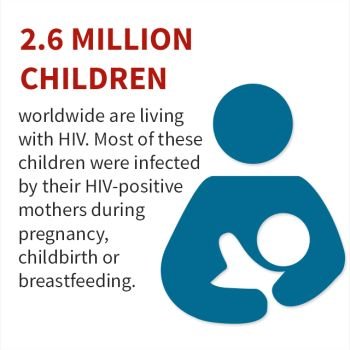
The virus can be passed from infected mothers to their infants by crossing the placenta, during the birth process, and through breast milk. Reducing the risk prior to or during birth is simple: in most resource-poor settings, the drug nevirapine is used, which lowers mother-to-child transmission from about 25% to between 8% and 17%. The drug is cheap and easily administered, with one dose for the mother prior to delivery and a dose for the infant after birth. Where affordable, more complex treatments, including ART, are offered, and are so successful that few babies are born with HIV infection. If mothers have access to clean water and infant feeding formula, then bottle-feeding means HIV will not be transmitted through breast milk. However, in many settings this is not the case, and work at the University of KwaZulu-Natal has shown that where formula and clean water are not available, babies of women who exclusively breast-feed are substantially less likely to be infected than infants who are given both formula and breast milk.
The chance of infection varies with stage of disease, and the viral load is crucial. Also important is the state of the immune system, health, and nutritional status of the exposed person. One benefit of ART is that it reduces the viral load, making a person on treatment much less infectious. There is a debate as to whether treatment will increase or reduce the scale of the epidemic. Reduced viral loads reduce infectivity, but the infected person is around for longer, and may be more sexually active; on the other hand, people on treatment may want to protect themselves and others. There is no clear evidence on this yet.
Treatment
The period from infection to illness is, on average, about eight years. This can be extended with basic lifestyle changes; a person who eats properly, does not smoke, take drugs, or excessive amounts of alcohol, and gets regular exercise will live a longer and healthier life. Immune system boosters, including some indigenous and herbal preparations, can help prevent opportunistic infections and prolong life.
There has been considerable debate on the importance of nutrition. A WHO-led consultation in Durban in 2005 confirmed that infected people have greater calorific needs. Asymptomatic adults and children require 10% more energy from their diet than uninfected adults or children, and adults who have become ill need 20 to 30% more energy, while sick children require 50 to 100% more. There is, as yet, no evidence of greater protein requirements among infected people, and the relationships between micronutrient supplementation and HIV/AIDS need more investigation. Complicating factors are that people suffering from HIV/AIDS often experience loss of appetite, inability to eat due to infections of the mouth and throat, and failure to properly digests food. Additionally, the loss of labour and income that results from family members becoming ill may lead to there being less food available in the household.
As the CD4 cell count falls and the immune system is compromised, the infected person experiences ‘opportunistic’ infections – that is, infections that would rarely affect or cause serious symptoms in people whose immune systems were healthy.
Most can be treated, and the role of prophylaxis is important. An antibiotic such as cotrimoxazole prevents Pneumocystis carinii infections and other bacterial pneumonias, toxoplasmosis, and salmonella bacteraemia, and tuberculosis can be prevented with isoniazid. These treatments are cheap and effective, but do not address the underlying HIV infection.
Eventually ART is needed. These drugs reduce viral activity, allow the immune system to recover, and prolong and improve quality of life. As an illustration of their effectiveness, in the USA by 1991, HIV was the leading cause of death among adults aged 25 to 44, and rates reached close to 40 deaths per 100,000 by 1995. The introduction of ART in 1996 meant mortality plummeted, so that by 2000, it had fallen to about 10 per 100,000. Patients who had resigned themselves to death, cashed in life insurance policies, and given up employment found themselves granted a new lease of life – so dramatic it became known as the ‘Lazarus syndrome’. The first effective drug was azidothymidine, known as AZT with the trade name Retrovir. This had short-term benefits but resistance to the drug in the body developed rapidly. It was found that combinations of drugs, acting in different places and on different stages of the viral replication cycle were most effective, and the standard treatment is currently triple therapy using three different drugs. In the wealthy world, the combination of drugs will be tailored to the needs of the patient and even the variant of the virus with which they are infected.
These do not eliminate the virus from a patient’s body, and reservoirs of infection remain. If treatment ceases, the virus will emerge and begin replication again, therefore current therapies have to be taken for life.
In resource-poor settings the combination of drugs offered usually includes, as a fi rst line of treatment, two from a class called non-nucleoside reverse transcriptase inhibitors (NNRTIs) and one nucleoside reverse transcriptase inhibitor (NRTI). There is evidence suggesting this first-line therapy provides about five years of healthy life before resistance develops. When this occurs, a second line of treatment must be adopted to prolong life. The WHO recommends that second-line therapy include two NRTIs and a third class of drug called protease inhibitors (PIs). All the drugs used to treat HIV/AIDS are complex and expensive (particularly PIs, which also require special handling – refrigeration). They are also toxic. Not all patients can tolerate them, and not all drugs will work for an individual patient. The more the combinations and dosages can be adapted to the individual, the better their prognosis. Additionally, few drugs are available in paediatric formulations, which means that infected infants and children have to take adaptations of adult drugs (although this is changing).
There is a debate as to the best time to begin the ART regimen. Early treatment prevents damage to the body caused by high and prolonged viral loads, but decreases options if resistance builds up. The WHO guidelines, somewhat unhelpfully, say: ‘the optimum time to commence ART is before patients become unwell or present with their fi rst opportunistic infection’. This assumes that people know their HIV status, and most don’t.
The guidelines state treatment should be considered when the CD4 cell count falls below 350 and certainly started before it is 200 or lower. Where there are laboratory services available, the viral load (the number of virus particles in a person’s blood) can be monitored and, if it rises above 55,000 copies per milliliter, treatment should start.
Where resources are limited, the tendency is to treat more conservatively. In South Africa, for example, national guidelines are that a person with a CD4 cell count of less than 200 should be put on ART. In most African and Asian countries this is the standard of care in public health settings. Cost is a factor. In affluent countries, where physicians tailor combinations of drugs, the total cost of treatment per patient is between US$ 850 and US$ 1,500 per month (this includes drugs, laboratory tests, and health care staff ). In 2007, the cheapest combination of drugs in the developing world was US$ 94 per patient per year. This, with associated costs of laboratory testing and health care worker time, means the lowest possible price for fi rst-line treatment would be about US$ 250 annually.
Western pharmaceutical companies are the main source of new drugs, but cheaper generic versions come from developing world manufacturers, mainly in India and Thailand, with South Africa and Brazil being recent entrants into drug manufacturing. The major purchasers of drugs are international development agencies, the American Presidential Emergency Plan for AIDS Relief (PEPFAR), the Global Fund for HIV/AIDS, TB and Malaria (Global Fund), and national treatment programmes. The prices paid vary greatly from country to country, and even within a country depending on who does the purchasing.
Despite recent price reductions, affordability and access remain an issue for most people in poor countries. In Uganda combined public and private spending on all health care is estimated at only US$ 38 per capita per year. The cost of ART drugs alone is US$ 28 per month, and this excludes clinical consultations, monitoring, tests, and drugs for opportunistic infections. Only wealthy people can afford medicines, and even they have to make difficult decisions about whether and when to spend their household resources on drugs. In poor parts of the world, most people are treated in public health facilities and treatment is funded by international donors.
It is not only the cost of drugs that creates problems of access: poor people may not be able to afford transport to clinics, and since some drugs must be taken with food, the effectiveness of treatment may be diminished if patients are malnourished. Poverty therefore affects adherence to and success of treatment.