The Face of HIV/AIDS: Then and Now

Illness, deaths and populations
Demography is the study of population dynamics, which collects data on quantifiable events and uses this for analysis and projections. The basic data sources are censuses, ideally done every ten years, collecting a range of information on numbers of people, households, age, gender, education, employment, and religion. Between censuses population is tracked through registration, particularly of births and deaths. Demographers want to know, at a minimum, how many children are born, the fertility rate, death rate, and migration. Data collection may be problematic, especially in poorer countries where censuses are infrequent and it often takes several years for analysis and release of data. Smaller household surveys and the Demographic and Health Surveys referred to earlier provide additional and useful information. The lack of data is a constraint in understanding both current and future effects of AIDS.
The demographic consequences of AIDS are increased deaths, especially among those aged 20 to 49; rising infant and child mortality; falling life expectancy; changes in the population size, growth, and structure; and a growth in the numbers of orphans. How serious these impacts are will depend on the location, size, and age of the epidemic and the underlying demographics of a country. For example, in the USA, prior to ART, AIDS was the leading cause of mortality among young men. In Southern Africa, prevalence rates rose rapidly from 1992, but it was only in the early part of the 21st century that there was a measurable and significant rise in the number of illnesses and deaths, and this is still growing. The number of deaths in Uganda peaked in the 1990s but the country is dealing with one million orphans.
Shrinking birth rates in Eastern Europe mean relatively small epidemics have disproportionate impacts here. Although it is difficult to look far into the future, we can make predictions. In most countries we have a reasonably clear idea of the magnitude of the HIV epidemic (within a range). Even very resource-poor countries are able to predict illnesses and deaths, and in many countries this was done as part of planning for ART roll-out. We can predict demographic impacts and be realistically sure of what they will look like for ten years, and we can factor in treatment and develop scenarios.
At the root of the difficulties in understanding the effects of the epidemic are what we measure, and when and how we measure it. Demography looks at events: an AIDS death is an event. The proceeding period of illness, prolonged and debilitating for the individual and costly and demoralizing for families, households, and communities, is part of a process and is not measured by demographers. Many impacts are felt after death, and there is evidence that AIDS deaths have more serious consequences for survivors than deaths from other causes. Most ‘post-death’ consequences are not measured by demography.
Increased mortality
Increased deaths in younger adults are the most measurable effect of AIDS. This has been dramatically illustrated by data from South Africa, which has one of the best vital registration systems in the poor world. In 2001 the Medical Research Council released a report analyzing the registered deaths reported to the Department of Home Affairs. This report was controversial but its findings were unequivocal. It showed the pattern of mortality had shifted from the old to the young, particularly to young women; there was differential mortality between men and women, which fitted with the pattern projected by AIDS models, and it concluded that the future burden of the epidemic was broadly predictable.
This changing mortality, with the most recent data (WHO). In 1997 the highest number of female deaths was in the 70 to 79 age group. Deaths among younger women increased until, by 2000, this figure was highest for women in their late 20s and early 30s, and continuing to rise. Among men the peak in ‘new’ mortality is slightly later, but with the same dramatic change in the pattern and number of deaths.
The cause of death is not ascribed: the graphs show only recorded numbers of deaths. This increased mortality simply should not be happening, especially in post-apartheid South Africa. Government policy, since the transition, has been to improve the lives of all, especially the poor and women. Health services have been expanded and are free to pregnant women and children. Water, sanitation, power, and housing are being provided; and there are a range of social grants available. South Africans, especially women, should be living longer and better lives. These graphs should sound a clarion call of warning as they show the effects of a devastating AIDS epidemic; instead they are ignored or explained away.
Those who die have received whatever education and training is available; many will be in the middle ranks of employment, gaining experience and skills. This is also when most people have had children.
Treatment not only reduces mortality but allows people to resume normal lives. Significant numbers of people need to access treatment before the figures at the population level will reflect gains. In 2002 the Actuarial Society of South Africa (ASSA) suggested that the national ART programme would only reduce the number of deaths from 495,000 to 381,000 per annum in 2010.
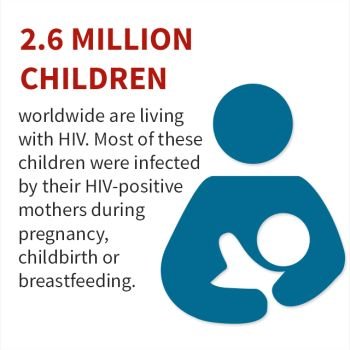
Infant and child mortality rises for two reasons. Firstly, children born to infected mothers have, in the absence of intervention, about a 30% chance of being infected. Prevention of mother-to-child transmission greatly reduces this, but those who are infected have poor life expectancy. About 25% of HIV-infected babies develop symptoms of AIDS or die within the first year. In the developed world, 70% of those infected at birth are alive at 6 years and 50% at 9 years, but in the poor world progression rates are faster. Treating children is a growing global priority.
The second reason for increased child deaths is mortality among infected mothers. Losing a mother for any reason has an adverse impact on child survival. A 2004 review of the demographic and socio-economic impact of AIDS, published by the journal AIDS, noted the death of a mother increased the chance of a child dying by three times in the year before the mother’s death and five times in the year after the death. Increased child mortality was not affected by the mother’s cause of death, but HIV-infected mothers are much more likely to die.
The most detailed projections of the likely effects of AIDS come from the US Bureau of the Census. Their 2004 report, The AIDS Pandemic in the 21st Century, produced country data ‘with AIDS’ and ‘without AIDS’. The figures are sobering.
In Botswana, in 2002 the crude death rate was estimated at 28.6 per 1,000, without AIDS it would have been a mere 4.8: by 2010, it may be as high as 42.8. For Tanzania, the 2002 fi gures are: without AIDS 12.1, with AIDS 17.3. Because Tanzania’s epidemic is more advanced, by 2010 the CDR may have fallen slightly to 17.1. In Guyana, the death rate in 2002 was 8.9, 2.3 above what it would have been without AIDS, and by 2010 it may be 13.2. The greatest increase in Asia is projected for Myanmar at 2.2 deaths per 1,000 above the non-AIDS level in 2010. For child mortality rates, the greatest increase is in Botswana: in 2002, the rate was estimated at 107.1, without AIDS it would have been only 30.6; by 2010, it is projected to be 122.9 instead of falling to 22.8. In Cambodia, AIDS is adding 7 deaths per 1,000 to child mortality, and in Haiti 10.5 deaths.
Demographics: key measures
Life expectancy is a single index describing the level of mortality in a given population at a particular time as measured in years of life. It is the age at which a person can expect to die. Currently, according to UNDP’s 2006 report, Japan has the longest life expectancy at 82 years; the lowest is Swaziland at just 31.3 years.
Infant mortality measures the number of children dying before age 1 per 1,000 live births. The lowest is 2, in Iceland; the highest is Sierra Leone’s 166. Child mortality measures the number of deaths in children under 5 per 1,000 live births and is therefore a better measure of the impact of AIDS. Sierra Leone has the highest child mortality at 283; the lowest is 3 in Singapore and Iceland (it is 6 in the UK and 8 in the USA). Reducing child mortality by two-thirds is a Millennium Development Goal.
Other important measures are the crude birth rate (CBR) and crude death rate (CDR) and the total fertility rate (TFR). The CBR and CDR are the total number of births and deaths respectively per 1,000 people per year. The TFR is the number of live births per woman in her reproductive life. The dependency ratio is the ratio of the economically dependent part of the population (those too young or too old to work) to those who are productive. Generally, individuals under the age of 15 and over the age of 65 are considered to be dependent. The dependency ratio is given as a rate per 100.
The sex ratio is the number of males to females. At birth, it is usually 105 males to 100 females, though higher male mortality means there are more females than males among the elderly: in Germany, 70 men for every 100 women over 65.
Falling life expectancy
Demographers and international policy-makers agree that AIDS is knocking years off life expectancy, especially in Africa. In 2003, the UN Population Division looked at the impact of AIDS on 38 African, 5 Asian, 8 Latin American and Caribbean countries, the Russian Federation, and the USA. Data are not presented for individual countries, probably a ‘political’ decision as governments react adversely to being named when the news is bad.
The Bureau of the Census produced projections for individual countries. The impacts are expected to be dramatic. By 2010, life expectancy could be just 26.7 years in Botswana and 27.1 years in Mozambique. Access to therapy by sufficient numbers of people could change this. Worst affected outside Africa are Guyana, which is predicted to lose 14.3 years of life, and Cambodia, which will lose 4.2 years. The data don’t show what this catastrophic decline in life expectancy will actually mean for these societies. Will it affect societal ability to function? This issue is returned to in later texts, but it is worth stressing we don’t know, because we have yet to experience such impacts and demographers do not think in terms of what these predictions mean for society at large.
Changing population composition, growth, and dependency ratios
Increased numbers of deaths reduce population size. Some 2.8 million people, mostly young adults, are dying from AIDS every year. In the worst affected countries the mortality is considerable: UNAIDS estimates that in 2005 South Africa had 320,000 deaths from AIDS, Nigeria 220,000, and Zimbabwe 180,000. The deaths are cumulative: by 2015, some 6 million South Africans may have died of AIDS – 13% of the population.
Population growth decreases through premature deaths; a reduction in fertility; and changing sexual behaviors. As the epidemic progresses there are fewer women of child-bearing age. HIV-positive women are less likely to conceive and carry the infant to term, thus further reducing the number of live births. The potential effects of behavior change are considerable. Condoms may be used to protect against disease, but also have an impact on fertility. An increased age of sexual debut will reduce the total fertility rate.
In most countries, AIDS simply means the population will grow more slowly. In Thailand, growth is expected to be 1% per annum rather than 1.1%; in India and China, the impact will be negligible as the populations are so large and the epidemic is, relatively, so small. In other countries, AIDS will greatly reduce population growth. The Bureau of the Census estimated Botswana’s growth rate in 2002 was –0.2% per annum instead of 2.3%, and by 2010 it will be –2.1%. In South Africa, the growth rate is projected to be –1.4%, in Swaziland –0.4%, and in Lesotho and Mozambique –0.2%. Without AIDS these populations would be growing. The impact of this on the national psyche, economy, and social welfare system will be considerable. As yet there is no evidence that the impact is being thought through, and is an area requiring more research.
In Latin America and the Caribbean, the Bahamas and Guyana will see the greatest relative impact, with growth rates reduced from 1% to 0.5%. In Eastern Europe, the impact of AIDS will exacerbate an already troubling demographic situation, where there are very low total fertility rates and populations are declining. By 2030, the median age of the Russian population will be over 40, with half the population having been born before 2000. By 2015, there will be just four workers for every three non-workers, with a dramatic shift among the non-working-age population toward the elderly. AIDS is increasing mortality among the current 15- to 30-year-old age group, so that there will be fewer working-age people at a time when they are sorely needed.
The peak mortality is between 25 and 35 years old for women, and 30 and 45 for men. This alters the population structure and dependency ratios. By 2020, instead of just under 60,000 women in the 40 to 50 age group there will be about 12,000. There will be half the children under 5 that there would have been in the absence of AIDS. While the gaps in the under-25 age group are a combination of mortality and births that did not occur, among the over-25 age group the changing pyramid is due to deaths.
The dependency rate will increase, placing demands on the government and society to provide education for the young, and health and social support care for both the young and the elderly.
It adversely affects economic growth by depressing the national savings rate and reducing future domestic resources available for investment. The dependency rate in Zambia is 99 dependants for every 100 adults, in Uganda it is 112. An excellent example of the potential benefits of changing dependency comes from Ireland, where in 1970 the TFR was 3.9, but by 2006 it was estimated to have fallen to 1.86. The dramatic and sustained economic growth in Ireland, described as a ‘Celtic Tiger’, was in part due to the availability of resources which had previously been tied up in educating and supporting the large number of young people. Of course, ageing populations cause problems but these are different.
Conventional dependency ratio calculations assume most adults are productive, but in generalized AIDS epidemics a significant number are chronically sick and properly belong in the ‘dependants’ category, a factor that needs to be considered. There will also be changes in the gender balance. In heterosexually driven epidemics more women will die than men at younger ages. Over the next 20 years, in many countries, men between the ages of 35 and 54 will outnumber women. This may motivate men to seek sexual relationships with younger and younger women, increasing HIV infection rates, and leading to a vicious cycle of transmission operating for generations. The changing gender and age structure of populations and the consequences desperately need thought and research. As the epidemic bites, families are being held together by the elderly, especially the grandmothers.
Orphaning
As conventionally understood, an orphan is a child who has lost both parents, but the definition has changed, in large part due to AIDS. The current definition used by UNICEF, other international agencies, and most NGOs is that an orphan is a child under the age of 18 who has lost one or both parents. Maternal orphans have lost a mother, paternal orphans a father, and double orphans both parents.
Globally, orphan numbers were declining, and despite the AIDS epidemic this trend has been sustained in Asia, Latin America, and the Caribbean. However, in sub-Saharan Africa numbers of orphans have grown dramatically. AIDS orphans increased in number from fewer than one million in 1990 to 12 million in 2005. In 2003, 12.3% of all children in sub-Saharan Africa were orphans (in Asia it was 7.3% of children and 6.2% in Latin America and the Caribbean).
Countries with high HIV prevalence levels or recent armed conflict have the most orphans. Botswana has the peak rate of orphaning in sub-Saharan Africa, with 20% of its children orphaned. South Africa has the largest total number, an estimated 1.2 million AIDS orphans. Beyond Africa, the highest level of orphaning is in Haiti, where 15% of children are in this situation. The number of orphans will increase. UNICEF estimates that by 2010, globally, there will be 142 million orphans, of whom 50 million will be in sub-Saharan Africa, and here 18.4 million or 36.8% will be due to AIDS. There is no estimate of AIDS orphaning in the other regions. Ugandan data show orphaning peaks some 15 years after prevalence, which means that in many countries we will not see the crest of the orphan wave until after 2020.
There are limits to what demography shows us. Children orphaned by AIDS have different experiences and bear additional burdens to those orphaned by other causes. The death of a parent is preceded by prolonged illness. If one parent is infected, there is a probability that the other parent is infected and both will die: double orphans are more disadvantaged than single orphans. When orphans are taken in by grandparents (usually grandmothers), they face the prospect of losing elderly caregivers too, effectively a repeat orphaning. Research gives us numbers, but the psychological impact is still to be assessed.
The impact of AIDS on production and people
Theses texts discuss the effects of the epidemic on economies, production, and social reproduction. AIDS does not, at the macroeconomic level, appear to have a significant and measurable impact. However, long-term economic growth and development depends on investment in people, and human capital is particularly threatened. As the level of focus narrows to the community, households, and families, HIV/AIDS has clear and measurable effects, which are worse for women. Of particular importance are the adverse consequences on subsistence agriculture, especially since there are other stressors at work.
Tracking the social and economic costs of AIDS is more complex than measuring the demographic consequences but the reasons are similar. The epidemic does not have a long history but what we measure is what has happened, not what will happen. Then there is the danger of research which may not ask the right questions or look in the right places. Most surveys look at households, but AIDS means some disappear. There is tension between intensive ethnographic research done at an individual level, and national survey instruments that lose detail. People, communities, and economies have coping strategies, and the presence of AIDS means adaptations occur. Some predictions of what AIDS would do were simply wrong. An example was the forecast of ‘feral bands of AIDS orphans roaming the streets and engaging in criminal activity’: this has not happened. However, most illnesses and deaths are still to come. Unlike demographers who are able to model and project, it seems social scientists, policy-makers, and politicians do not have the tools, skills, or even the wish to look into the future.
The conundrum of macroeconomic effects Trying to ascribe causality to HIV/AIDS for economic impact is problematic, as there are so many other factors to be considered, from the price of oil to national fiscal policy. Conventional economics misses the complexity and full significance of the epidemic. AIDS cannot be treated as an ‘exogenous’ influence that can be ‘tacked on’. In many settings AIDS is a reality, there is no ‘without AIDS’ scenario.
The models produced by economists in the early 1990s predicted a negative relationship between HIV/AIDS and growth. World Bank economists estimated a 1.2% point reduction in annual growth for a 20% prevalence rate. However, AIDS does not appear to have held back economic growth in Uganda, Botswana, or South Africa. Uganda, with the worst epidemic in the world at the beginning of the 1990s, managed consistent economic growth, estimated at 6.5% per annum from 1991 to 2002. Botswana’s growth rate over the same period was 5.6%. South Africa posted its 47th month of consecutive growth in March 2006, and growth was estimated at 4.4%. Why do the models of HIV/AIDS impact and the data appear at odds? Might these countries have grown faster in the absence of AIDS? It is possible that the epidemic may be contributing to Malawi’s miserable economic performance or Zimbabwe’s collapse, but this is difficult to assess.
Economic theory states growth is determined by capital accumulation (both physical and human) and total factor productivity. HIV/AIDS is assumed to affect growth through reduced savings and investment, and by reducing the size of the labour force, which lowers efficiency and productivity. Capital accumulation, physical or human, is a central tenet of most growth theories. The Asian economic successes were due in part to high levels of capital accumulation driven by domestic savings. Physical capital accumulation happens through savings and investment. HIV/AIDS affects this at the individual, firm, and international level. For instance, families affected by HIV/AIDS may deplete their savings and assets in order to cope with increased expenditure and income shocks. Similarly, firm profits (and hence saving and investment) may decrease due to lower labor productivity and increased AIDS-related expenditure.
Falls in life expectancy and increased mortality shorten planning horizons and lower incentives to save and invest. Do AIDS affect investment flows at the international and national level? Assessing a lack of capital flows requires measuring something that has not happened, which is nigh on impossible. There are a few recorded instances of HIV/AIDS deterring investors. The Swazi press reported that a Taiwanese textile firm had decided to start its factory employing 5,000 workers in Lesotho due to high HIV prevalence in Swaziland. The investors did not want to train workers who, they believed, would soon fall ill and die.
There is also the vexing question of per capita income. This is calculated by dividing the total output of the country by the number of people, usually expressed in US dollars and adjusted for what the dollars will buy in the country: the purchasing power parity. Thus the per capita income in Luxembourg, the world’s richest country, is over US$ 62,000, while the poorest, Sierra Leone, is US$ 548. The per capita income in the UK and USA is US$ 27,147 and US$ 37,562 respectively. If the people who die are contributing little and their deaths do not affect overall production, then in economic terms the per capita income may go up. This economic reality is uncomfortable and rarely talked about as it values lives differently.
Thus, if the epidemic is located among the poor or in very poor countries, the impact may be minimal. Where peasant farmers’ contribution to the formal economy is insignificant and they expect little from the state, then their disappearance may be economically insignificant. In a society with high unemployment among the unskilled, losing these people will not have the same economic impact as when there is a skills shortage and the loss is among the skilled.
So what are we to conclude about the macroeconomic impact of this disease? Theory suggests that AIDS will cause economies to grow more slowly. There is, as yet, little clear evidence of this. The two key phrases are ‘as yet’ and ‘little clear evidence’. In many cases, the effects are still to be felt and depend not only on numbers, but also the location and context. In Eastern Europe, although numbers are not large, infections are occurring in a context of declining populations and poor health, therefore AIDS may well affect the economies. The other part of the deconstruction of ‘as yet’ is that economies are highly dynamic and will adapt. For example, if certain skills become in short supply then the response might be to buy in those skills or to mechanize.
AIDS and the private sector
The impact of AIDS on the private sector will depend on the scale of the epidemic in the country or area, the capital labor mix of the firm, the role of the government in terms of regulation and sharing the burden of AIDS, and what actions individual companies take to avert the effects of the epidemic. In some countries, firms are experiencing increased illness and death among workers which results in rising costs and falling productivity. AIDS equates to a payroll tax. However, the ‘tax’ ranges from 0.5% of aggregate annual labour costs in a retail business in South Africa to 10.8% in tourism in Zambia, depending on HIV prevalence, the type of industry, and employee benefits.
More interesting is what decreased productivity costs companies. This is hard to measure except where workers are paid according to output. The fi rst such study by Boston University’s Center for International Health and Development (CIHD) looked at a tea plantation in Kenya where workers were paid per kilogram of leaf plucked. The CIHD research reviewed records of output and absenteeism from January 1997 to December 2002. HIV-infected individuals plucked on average 3.6 kg/day less tea 2 to 3 years prior to death, 5.1 kg/day less 1 year prior to death, and 9.3 kg/day less when approaching death. In the 3 years leading up to death, HIV-positive workers used between 3.4 and 11.0 more days of sick leave, depending on the stage of illness. Recent research with this cohort shows the benefits of ART. When workers were put on treatment, productivity increased to about 80% of that among uninfected workers.
Firms are not helpless in the face of the epidemic. They have a range of responses open to them – from changing the composition of the workforce, to reducing their benefits, to, in the most extreme cases, relocating to places with lower HIV prevalence. AIDS can be factored in like any other cost or threat. Unknown is how the epidemic affects the environment in which companies operating. The impacts of HIV/AIDS, including decreasing productivity, are often exacerbated in the public sector when compared to the private sector. In the public sector, job security and benefits are a substitute for salary and there is limited capacity to respond. The costs of public-sector benefits are borne by government; the costs of declining efficiency are borne by society at large.
AIDS and human capital
In the 1950s, a bright future was predicted for African countries but people were pessimistic about Asia. However, from 1965 to 1998 the average annual growth rate was 7.5% in East Asia and the Pacific, and per capita incomes grew by 5.7%. In South Asia, growth was 4.9% and per capita incomes grew by 2.7%. The corresponding figures for sub-Saharan Africa were growth of 2.6% and a decline in per capita incomes of –0.3%.
Today, Asia maintains high growth and people have seen benefits in terms of human development. Poverty and child mortality have declined and life expectancy risen. Latin America has not seen the same economic growth, but there have been gains, particularly with regard to social service delivery and social development. Sub-Saharan Africa remains the laggard: poverty has increased, the number of people malnourished remains high, and life expectancy is falling.
The HIV/AIDS epidemic is making a bad situation worse, and may soon become one of the primary drivers of African under-development. Patterns of development have been different in Asia, Latin America, and Africa because of dissimilar investments in human capital, which was highest in Asia. AIDS means a growing inability to invest in human capital, including education and health, and growing numbers of orphans.
The role of the state is crucial. As early as the mid-1700s, the economist Adam Smith argued that the state should create the conditions in which the market could work, and this still holds true. The state needs, at a minimum, to ensure the rule of law, property rights, and accountability. In the early stages of development good economic governance is critical. If the converse is true and the market can’t work due to poor human rights, instability, or corruption, then investment won’t happen. AIDS has an impact on state capacity, to which we will return in the next texts.
The second critical area is increased productivity which comes from investing in people. In many Asian countries, the state and parents poured resources into education. This, with the demographic transition – smaller families and a lower dependency ratio – created the environment in which investment was both possible and desirable.
Health in itself is an important goal. It is people’s priority, as a survey for the 2000 Millennium Development Summit found. There are links between health and economic growth, as articulated in the WHO’s 2001 Commission on Macroeconomics and Health, which noted health and education are cornerstones of human capital, and the basis of an individual’s economic productivity. Every 10% improvement in life expectancy results in an annual rise in economic growth of 0.3 to 0.4 percentage points.
The effects of falling life expectancies described in the previous texts have not been considered by development agencies and economists.
The effect of AIDS on the next generation, the human capital of the future, is considerable. There are fewer children and more orphans. Orphaning is the measured event, but is part of a process, as illustrated in the text box overleaf. Priscilla’s experience with AIDS began before her mother died. Priscilla nursed her mother and watched her die, a psychological trauma. She is parenting her younger sister while she is still attending school, which is clearly a struggle. The father does not make an appearance.
Education is crucial. Even in the absence of AIDS, children face barriers to school attendance. There has been a global push to abolish school fees. A survey presented at a DFID/UNICEF Global Partners Forum meeting in London in 2006 showed that of 92 developing countries, 76 charged fees. But fees are not just charged by governments, they include levies by schools for textbooks and stationery; Parent-Teacher Association (PTA) charges; and the costs of compulsory uniforms. There are also indirect costs such as transport, and the forgone benefits of the labor the child would provide where they working.
It is harder for orphans to access education. Orphaning means there are fewer resources to enable the children to attend school, and orphans face psychological pressures and stigma. A teacher in KwaZulu-Natal reported, ‘we can tell which children are orphans, they are dirty and uncared for and have many difficulties’. Priscilla at age 14 has taken on the task of getting her younger sister to school, a burden to both.
However, the numbers of child-headed households are not as high as predicted. Data from UNICEF and USAID-supported surveys in sub-Saharan Africa show that 9 out of 10 orphans are cared for by the extended family. This is commendable, but taking in additional children often means meager resources have to stretch further. Siblings may be parted, which can be traumatic.
In Zambia, in 2005, I heard the story of how a grandmother and her sister had taken in the two grandchildren, boys aged 9 and 13, when their mother died. Both had gone to homes with an income, care, and love, though one child was taken to the north, the Copper belt, the other to Livingstone in the south. The women remarked the boys really missed each other and were overjoyed to see each other on the infrequent occasions they met.
The story of Priscilla in the Free State in South Africa ‘I lost my mum six months ago, she was very sick. I did everything for her. Whenever she wanted water to drink I would get it for her. I would spoon-feed her and dress her. When I had to go to school I had to ask my neighbors to look after her, and particularly the careers from the clinic. She was really ill for five months and did not have a doctor.
Before my mother was sick she did everything for me. She promised to take me to school to get a good education, which I’m worried about now. Whenever I look at the clothes my mum liked, they remind me of her. When I wake up I wash myself and sometimes I eat breakfast if there’s pap [cornmeal porridge] or bread. Then I go to school, which is far to walk to. I like playing netball and I love school very much, especially politics and history, and learning about things that took place around the world and here. Every day I come home and wash my uniform. I wash my little sister and, if there is homework, I do this too. I cook pap for everyone, which takes a long time on the [Primus] stove.
When my older sister comes, she eats in her bedroom with her children, and me and my younger sister eat together. I want to finish school and raise my little sister in my mum’s house. The house is registered in my name now.’
Missing Mothers, Save the Children UK (London, 2006), p. 4