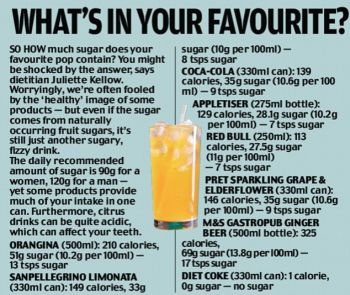
IS DIET SODA REALLY THE HEALTHIER SOFT DRINK?
Sugary Drinks and Obesity Fact Sheet
Avoiding a Trip to the Dentist
Carbohydrates play a role in the formation of dental caries. Over the past 30 years, the incidence of dental caries (tooth decay) in the United States has decreased as the use of fluoride has increased. Though things are improving in the world of dental health, an estimated 20 percent of children age 2 to 4 still has dental caries, and by the time these children reach age 17, almost 80 percent will have experienced a cavity, the later stage of dental caries. Dental caries are the cause of tooth loss in more than two-thirds of adults aged 35 to 44 years. To avoid dental caries, you need to understand the role your diet plays in tooth decay.
Feeding into Dental Caries
If you constantly eat carbohydrate-heavy foods, such as cookies, candy, and crackers, you are providing a continual buffet of easily fermentable sugars and starches to the bacteria that bathe your teeth. A study of American diets found that adults who drank sugary sodas three or more times daily had 60 percent more dental caries than those who didn’t drink any soda. To make matters worse, soft drinks often contain phosphoric acid and citric acid, which can also erode teeth if consumed over a prolonged time. Soft drinks are not the only beverage that may damage your teeth. Sports drinks, including energy drinks and vitamin waters, if consumed often, have been shown to be even more damaging to your teeth than soft drinks.
Eating three balanced meals daily is best for minimizing tooth decay. Snacks should be kept to a minimum, and you should choose fruit or vegetables over candies or pastries.
Whole fruits and raw vegetables tend not to cause tooth decay, so snack on these to your teeth’s content.
Sticky foods like dried fruits, such as raisins and figs, can adhere to your teeth, so their fermentable sugars hang onto the tooth for longer periods. The longer the carbohydrate is in contact with your tooth, the more opportunity there is for the acids to do damage. Eating sticky foods in combination with other foods will discourage their adherence to your teeth.
Drinking water after you eat will help by rinsing your teeth.
Fruit juice, even unsweetened juices, may be a problem for teeth, especially in small children. A child who routinely falls asleep with a bottle in his mouth that contains carbohydrate-containing beverages is at risk for developing baby bottle tooth decay because the baby’s teeth are continually exposed to fermentable sugars during sleep.
Children need adequate amounts of fluids, such as water, but they should not be given a continual supply of sweetened beverages.
Foods That Fight Dental Caries
There are actually some foods that may help reduce this risk of acid attacks on your teeth. The texture of cheese stimulates the release of cleansing saliva. Cheese is also rich in protein, calcium, and phosphorus, all of which can help buffer the acids in your mouth following a meal or snack. The calcium can also assist in remineralization of your teeth. Eating as little as half an ounce of cheese after a snack, or eating cheese with a meal, has been shown to protect your teeth. Chewing sugarless gum can also be a healthy ending to a meal or snack if you can’t brush your teeth. It encourages the production of saliva and provides a post meal bath for your teeth. Xylitol, a sugar substitute often found in sugarless chewing gum, may even help with remineralization.
With regular visits to your dentist, good dental hygiene, and a healthy diet, you can reduce the risk of dental caries.
Follow these Do’s and Don’ts to keep your teeth healthy:
DO eat three solid meals daily but keep snacks to a minimum.
DON’T graze all day long!
DO snack, if necessary, on whole fruit, raw vegetables, and low-fat cheese, which tend to be friendlier to your teeth.
DON’T munch on sugary foods such as candy, cookies, and other sweets.
DO drink plenty of water.
DON’T drink a lot of sugar-sweetened beverages.
DO chew sugarless gum or eat a piece of low-fat cheese after meals and snacks when you can’t brush your teeth.
DON’T think that sugarless gum and cheese can replace a routine of brushing and flossing.
DO brush your teeth at least twice a day and floss daily.
DON’T forget this!
Terms:
Dental caries – The decay or erosion of teeth.
Baby bottle tooth decay – The decay of baby teeth in children due to continual exposure to fermentable sugary liquids.
Remineralization – The repairing of teeth by adding back the minerals lost during tooth decay. Saliva can help remineralize teeth.
How Much Added Sugar Is Too Much?
The DRI recommends that added sugars make up no more than 25 percent of your daily calories, but the Dietary Guidelines for Americans suggest that no more than 5 to 15 percent of your daily calories come from a combination of added sugars and solid fats.Americans tend to consume 16 percent of their daily calories from added sugars.This may be too generous for many Americans, especially for most women, sedentary individuals, and older adults who have lower daily calorie needs. These individuals need to make sure that they are getting a substantial amount of nutrition from each bite of food.
The World Health Organization and the Food and Agriculture Organization recently commissioned an expert report, which recommends that individuals lead an active lifestyle and consume a diet that is abundant in fruits and vegetables and low in saturated fat, sugar, and energy dense foods. The report recommends keeping calories from added sugars to less than 10 percent of the diet. These two agencies maintain that this type of diet is among the best strategies to fight chronic diseases such as heart disease, diabetes, and obesity.
This more conservative limit for consumption of sugars would mean that a person who consumes 2,200 calories (about the number of calories needed daily for active women) should keep added sugar to about 8 teaspoons daily (128 calories), or 9 percent of total calories. Those consuming 2,800 calories daily (approximately the amount of calories needed daily for active men) should consume no more than about 18 teaspoons of added sugar daily (288 calories), or 10 percent of total calories.
Concerned with the prevalence of obesity in Americans, the American Heart Association has recommended similar conservative limits for added sugars in the diet. American adults consume approximately 20 teaspoons of added sugars daily. Eating this much added sugar can have a major impact on daily nutrition and is one of the many reasons Americans are overweight. The Table Tips can help you trim some added sugars from your diet.
A super-large soda at the movie theatre can be as large as 64 ounces! This giant beverage contains more than 800 calories and 50-plus teaspoons of added sugars.
The use of sugar-free products has more than doubled since 1986.
The Take-Home Message
Your taste buds can’t distinguish between naturally occurring and added sugars. Foods with naturally occurring sugars, such as whole fruit, tend to provide more nutrition and satiation than empty-calorie sweets such as candy. Sugar can contribute to dental caries, an elevated level of fat in your blood, and a lowering of the “good” HDL cholesterol. Foods with added sugars may displace more nutritious foods and quickly add excess calories to your diet. The current recommendation is to keep added sugars to no more than 25 percent of your daily calories, but this amount may be too high for individuals with lower daily calorie needs.
What Can You Get for a Quarter These Days?
Sweetened beverages can provide 6 teaspoons or more of added sugar in each 8-ounce serving. Soft drinks not only provide a sugary punch and few to no nutritional benefits, but they can also be quite a drain on your wallet. Let’s compare what a quarter ($0.25) spent on each of the following beverages actually “buys” for you: Wow! A quarter will buy you a full, 8-ounce glass of fat-free milk and delivers 9 essential nutrients. Compared with the milk, a quarter’s worth of a sports drink, energy drink, vitamin water, or iced tea doesn’t provide much volume or nutrition.
None of these beverages provides the good nutrition that fat-free or low-fat milk will provide at a reasonable price. Further, drinking milk, which is high in the mineral calcium, today will lead to better bone health tomorrow. So, when it comes to choosing a healthy beverage for your money, which one would you choose?
Fat Free Milk 1 Glass contain: Calcium, Vitamin D, Vitamin A, Protein, Potassium, Riboflavin, Niacin, Vitamin B12, and Phosphorus – 9 Nutrients.