Patient Education Video: HIV and AIDS
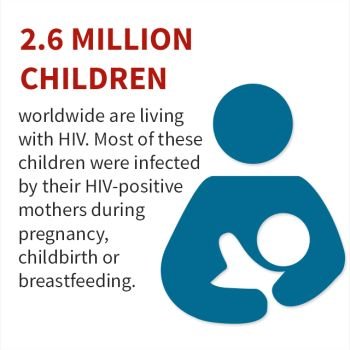
The human immunodeficiency virus (HIV) is a retrovirus that infects cells of the immune system, destroying or impairing their function. As the infection progresses, the immune system becomes weaker, and the person becomes more susceptible to infections. The most advanced stage of HIV infection is acquired immunodeficiency syndrome (AIDS). It can take 10-15 years for an HIV-infected person to develop AIDS; antiretroviral drugs can slow down the process even further. HIV is transmitted through unprotected sexual intercourse (anal or vaginal), transfusion of contaminated blood, sharing of contaminated needles, and between a mother and her infant during pregnancy, childbirth and breastfeeding.
HIV continues to be a major global public health issue, having claimed more than 34 million lives so far. In 2014, 1.2 [980 000–1.6 million] million people died from HIV-related causes globally.
There were approximately 36.9 [34.3–41.4] million people living with HIV at the end of 2014 with 2.0 [1.9–2.2] million people becoming newly infected with HIV in 2014 globally.
Sub-Saharan Africa is the most affected region, with 25.8 [24.0–28.7] million people living with HIV in 2014. Also sub-Saharan Africa accounts for almost 70% of the global total of new HIV infections.
HIV infection is often diagnosed through rapid diagnostic tests (RDTs), which detect the presence or absence of HIV antibodies. Most often these tests provide same day test results; essential for same day diagnosis and early treatment and care.
There is no cure for HIV infection. However, effective antiretroviral (ARV) drugs can control the virus and help prevent transmission so that people with HIV, and those at substantial risk, can enjoy healthy and productive lives.
It is estimated that currently only 54% of people with HIV know their status. In 2014, approximately 150 million children and adults in 129 low- and middle-income countries received HIV testing services.
By mid-2015, 15.8 million people living with HIV were receiving antiretroviral therapy (ART) globally.
Between 2000 and 2015, new HIV infections have fallen by 35%, AIDS-related deaths have fallen by 24% with some 7.8 million lives saved as a result of international efforts that led the global achievement of the HIV targets of the Millennium Development Goals.
Expanding ART to all people living with HIV and expanding prevention choices can help avert 21 million AIDS-related deaths and 28 million new infections by 2030.
Devastating agriculture systems: the ‘new variant famine’ hypothesis
There is evidence that AIDS is having an overwhelming effect on agriculture, primarily but not only through the impact on labour. The HIV/AIDS epidemic has such far-reaching adverse implications that it can be argued, in some settings, we are witnessing a ‘new variant famine’. This was discussed in an article, published in The Lancet in 2003. This is best illustrated with examples from Southern Africa, which since the turn of the new century has been experiencing a large-scale food crisis. Proximate causes include drought, a lack of inputs such as seed and fertilizer, as well as mismanagement of national food stockpiles and distribution. The current profile of vulnerability to starvation is different from previous drought-induced famines and rural livelihoods are collapsing. In Zambia’s Central Province, the effect of adult illness and death on farm production was assessed among smallholder cotton farming households between 1999 and 2003. There were high levels of death and illness: 40% of households had an adult death in the study period, and 36% reported an adult was sick ‘regularly’. This work showed that where households experienced the death of a previously healthy working-aged adult, the amount of land planted to maize declined by 16% and that under cotton by 11%. Across the border in a Zimbabwean communal farming area, a study found an adult death resulted in a 45% decline in a household’s marketed maize; where the cause of death was identified as AIDS, the loss was 61%.
Illness among subsistence farmers means high-value and nutritious crops, such as cereals and oilseeds, are replaced by ones that are easier to cultivate but are lower-value and less nutritious. The area under cultivation is reduced. There is an impact on animal husbandry, as livestock receive less attention. In Swaziland, both the quantity and the quality of the nation’s cattle holding are diminishing.
AIDS is eroding the resilience of rural livelihoods, by undermining coping strategies. Food crisis coping strategies depend critically on labour availability, skill, and experience. The disease and impacts cluster at the household level and (to a lesser extent) within communities. Because AIDS changes age and gender distribution, there are fewer mature adults (especially women), and relatively more teenagers and people in their early 20s. The loss of older people means skills and knowledge are not passed on – ‘institutional memory’ is lost. Women are particularly important in time of famine as they often have knowledge of wild foods that can be gathered.
Agriculture, even of the most basic subsistence type, does not operate in a vacuum. AIDS means key services such as marketing cooperatives and agricultural extension are less efficient due to staff attrition and declining morale. In Malawi, attrition due to death among the Ministry of Agriculture and Industry staff rose from 0.45% to 1.1% annually between 1996 and 1998. Malnutrition has adverse implications in high HIV-prevalence settings. Nutritional status is a determinant of risk of transmission both between adults and from mothers to infants, and undernourished people is more likely to be infected. Those who are infected endanger their health by going hungry, as HIV replicates more rapidly in malnourished individuals, hastening the progression from HIV to AIDS. People living with HIV have greater nutritional requirements. There is a vicious cycle, since some illnesses associated with HIV reduce appetite and even ability to eat, oral candidiasis being an example, and others such as diarrhoea inhibit the absorption of nutrients. In normal famines it is possible for adults to go for periods without food and survive, but this is not so with HIV.
The issue is not simply overall availability of food, but rather the ability of the poorest members of society to purchase it. This is especially the case in urban areas. Zimbabwe provides an extreme example. The Famine Early Warning Systems Network declared, in March 2006, that macroeconomic collapse had put the cost of basic foodstuffs beyond the reach of most Zimbabweans. Despite good rains, output of maize was well below requirements. The cost of imported maize grain in Harare in January 2006 was 1860% more than in January 2005, and the annual rate of inflation in May 2006 reached 1193%. In June 2006, the minimum wage in the commercial sector only covered 40% of the cost of the minimum food basket, and the economic collapse has continued.
A detailed case study of the desperately poor country of Malawi, co-edited by Anne Conroy, Malcolm Blackie, Justin Malewezi, and Jeffrey Sachs, published in late 2006, paints a bleak picture. Nationally, HIV prevalence was estimated at 14.1% of adults. In the Central Region, a survey by Care International found a significant number of households suffered from chronic illness and was unable to provide the labour needed for even low-productivity subsistence agriculture. Between 22% and 64% of households in study sites suffered from chronic sickness, leading to loss of labour. In households with labour loss, 45% delayed agricultural operations, 23% left land fallow, and 26% changed the crop mix. Resources were being used for health care and funerals, and this led to even lower levels of household income and nutrition Female-headed households were worst affected. Malawian women do much of the agricultural work and combine this with child-bearing and -rearing and household responsibilities. They have the ‘double burden of care’, as they are most likely to suffer from HIV/AIDS and are also responsible for caring for others.
Before 2002, many Malawians were consuming fewer than 1,500 calories per day. Since then the country has faced a number of major food crises. The per capita income of Malawi is US$ 605, life expectancy a mere 39.7 years, and two-thirds of the population live below the national poverty line. In such poverty, few households have assets: a household survey in the late 1990s found just over one-third of all households owned a bed and less than a half owned chairs and tables.
The picture that emerges from Malawi is of an increasingly malnourished, stressed society. There is long-term environmental degradation: 85% of energy comes from traditional fuel, mainly wood, leading to massive deforestation. Fish production from Lake Malawi has declined by nearly 40%, which is particularly significant since fish contributes 60–70% of the total animal protein consumption. Poor governance has been a persistent theme. The country is highly indebted and aid-dependent – in 2003 aid accounted for close to 30% of GDP. The economy is stagnant: the 2005 growth rate was only 1.9%. Where poverty is this deep, there is virtually no scope for normal coping mechanisms. AIDS may be the last straw; Malawi may yet provide an example of AIDS as a cause of state failure.
Malawi may be an extreme example, but across the world the pressure caused by AIDS needs to be seen in the context of other stressors. The most important one for subsistence farmers is climate change. As with AIDS, vulnerability to climate change is differentiated and it is the poor who are most exposed. In Africa, one manifestation of climate change is less reliable, shorter, and later rains. The consequence is that the window of opportunity to plough and plant is decreased, and if someone is sick at the crucial time then this can be catastrophic as no crops will be harvested for a year. Ironically, in 2006 and 2007 the rains in Malawi were good, resulting in excellent harvests. Of course, there is an additional irony for all subsistence agriculturalists. At the beginning of the agricultural year, the farmers scan the heavens anxiously awaiting the rains that will allow them to go to their fields. But rain brings the mosquitoes and malaria and the waterborne diseases which further affect the health, especially of those with weaker immune systems.
Families and households
The first consequence of an infection is stress. No matter who is HIV positive, the question is: how did they come to be infected? Stories from across the world tell of the devastation an HIV diagnosis can bring. Because HIV is often identified through antenatal testing or when an infant is sickly, the infection is gendered – women are first to be diagnosed, and so they are assumed to have brought it into the family. At worst, it can lead to bitter family break-up. Those who argue for massive voluntary testing campaigns underestimate the stigma and shame associated with what is, after all, a deadly sexually transmitted infection. Illness initially affects individuals. Adults who are unwell can’t engage in productive work, including paid and unpaid employment as well as housework and childcare. It means people are less able to engage in community activities, the weft and warp of social reproduction. But it is not just the labour of sick adults that is lost; they in turn need care, which takes time and resources.
Some help may be provided through state social and medical services, but where this is not available; care has to come from the family and community. This means that spouses care for each other, children care for their parents, and the elderly tend their children and grandchildren. Most care is provided by women, and it is generally not recognized as ‘real’ work. The idea that families will provide care for the sick is hardly revolutionary, it happens out of necessity all the time. AIDS, however, is costly, increasingly common, and has a bleak prognosis. This disease is causing huge trauma across households and communities.
The inability of an adult to work means less income or production. The initial response is to change resource use, so that if the family has been saving, it will stop, and expenditures are reduced. People eat fewer meals, with a lower range and quality of food. Possessions may be sold, or the family may borrow. If the household is forced to sell the assets used in production (ploughs, oxen, or a sewing machine, for example), chances of recovery are reduced.
Shocks to households are not unusual, and much has been written on this topic. People face droughts, earthquakes, floods, tsunamis, illness, and other catastrophes, and there are coping mechanisms that come into play. Unsurprisingly, the better resourced a household is at the outset, the better it will be able to cope. What makes AIDS different is that long periods of illness put a strain on even the richest. In Zambia, households with a chronically ill member have reductions in annual income of 30–35%, and where the male head of household dies, the income falls by up to 80%.
Treatment is expensive, and even where drugs are provided free there are additional costs, from transport to the clinic, to ensuring the patient has an adequate diet. Thus the stark choice may be between eating and obtaining medication. As the pandemic progresses, the burden is increasingly falling on the older women, particularly maternal grandparents. Many people in the final stages of illness return home to be cared for by parents, bringing their children. Work in Warwick Junction in Durban by May Chazan found that older women are unevenly and increasingly burdened by AIDS, bearing the brunt of the social, care-taking, economic, and emotional demands in their families. Two-thirds of those interviewed had cared for family members or neighbors sick with AIDS. The older women in this study suffered from (largely untreated) chronic illnesses such as diabetes, arthritis, and hypertension and feared personal illness, not just for them, but because of what it would mean for their families. The burning question is what happens when today’s grandmothers die; AIDS means the next generation of grandmothers will be absent.
In general, it is at the household level that the worst impacts of AIDS are visible. One of the main factors which exacerbate the impoverishment of people is the burden of care, providing for orphans and sick adults, which is a major expenditure and diversion of labour. Most affected households do not, in an identifiable sense, ‘cope’, but rather they ‘struggle’, and they do this because they have no other choice. In addition, households, especially rural ones, are obliged to carry the burden that is ‘shifted’ from the formal sector and urban areas. The unstated assumption is that ‘wider society’ will carry the burden: ‘wider society’ in this context is chiefly women in urban slums and rural areas and they are reaching breaking point.
Development goals
Development is about more than economic growth. The UNDP’s first Human Development Report, published in 1990, stated: ‘The real wealth of a nation is its people. And the purpose of development is to create an enabling environment for people to enjoy long, healthy and creative lives.’ This introduced the Human Development Index (HDI), a simple composite index constructed from three indices: life expectancy, educational attainment, and the standard of living.
The UNDP did not consider the effect of HIV/AIDS on life expectancy until 1997. When it did, the effects were dramatic – HDI scores and rankings in many countries fell signifi cantly. Botswana dropped from 71st rank in the HDI in 1997 to 131st in 2003. Its HDI went from a peak of 0.681 in 1990 to 0.565 in 2003. By comparison, the UK’s index was 0.883 in 1990 and 0.939 in 2003, and that of the USA 0.916 and 0.944 respectively. Even lower prevalence countries have been affected: Thailand fell from 52nd place in 1997 to 76th place in 2000.
In 2000 the international development targets, Millennium Development Goals (MDGs), for 2015 were set at the United Nations. These goals were to be realistic and achievable, but a 2005 progress report found movement towards these goals was not encouraging, especially for the poorest countries.
The worst affected goal is child mortality. Countries afflicted by AIDS, especially in Southern Africa, have seen increases in deaths in children under five years of age. At current rates, child mortality will be reduced by 15% by 2015, not the two-thirds target. Goal 6 is specifically to combat the three diseases of AIDS, malaria, and tuberculosis. However, they remain the primary cause of premature death in some of the poorest countries.
Tuberculosis is on the rise in Africa and parts of the former Soviet Union, largely as a result of HIV/AIDS. Although we are in the third decade of the epidemic, there is little appreciation of what HIV/AIDS means for development targets. Indicators do not pick up the impact of the disease, because they are based on historical data and take no account of current and future impact. Those who prepare the data do not compare ‘with’ and ‘without’ AIDS scenarios. Development targets and measures of ‘development’ need to be revised in the light of HIV/AIDS. The gendered and local nature of the epidemic must be understood.
AIDS and politics
HIV/AIDS mixes sex, death, fear, and disease in ways that can be interpreted to suit different prejudices and agendas. AIDS was (and is) used to stigmatize groups. Health responses to epidemic outbreaks focus on the technical and scientific answers. The popular images are of squads of epidemiologists arriving in villages and locating the source of disease – civet cats, bats, birds – and medical task teams appearing to dispense pills and injections. We want to believe there are quick technical scientific solutions: if there are, then we can buy them, use them, and move on. This is not the case, particularly with HIV/AIDS, and rather we need to understand the underlying causes. Providing good health is not easy; it is messy and about sustainable development, equity, and justice. It needs political engagement.
AIDS is politicized. The idea of AIDS as a security threat was raised in 2000 in the UN Security Council. The ‘securitization’ of the disease, especially in the military sense, was overstated. However, in the context of broader human security, impact is great and far-reaching. The political implications of AIDS have received little attention. The text looks at how the disease is affecting representation, election processes, and political engagement, and instances of social mobilization in response to the epidemic. Finally, it looks at government, governance, and delivery at the national and international levels. AIDS is damaging the ability to deliver. Current international health governance falls short in providing leadership and direction.
The numbers game
The early history of HIV was driven by media hype. How many cases were there? Where were they? Who was being infected, and why? The first cases in the West were identified in groups of people who shared behaviours – gay men and drug users; specific nationalities – Haitians in the US; or those who received contaminated blood products – haemophiliacs and blood transfusion recipients. As the ways in which HIV is transmitted were understood, the focus shifted from identifiable categories of people to identifiable behaviours.
Initially, the data were highly political. No country wanted to be identified with the epidemic. The most blatant example of cooking the figures was in the late 1980s. Zimbabwe had officially notified the WHO that it had several hundred cases of AIDS. When South Africa fi rst reported, it notified the WHO of 120 cases. Within days, Zimbabwe revised its figure to 119, not wanting to exceed the number reported by the racist regime to the south. Another response was simply to deny the figures. India did this by refusing to allow UNAIDS to publish an estimate of total infections in the 2004 global report. In 2006, the Ethiopian government followed suit, only allowing UNAIDS to publish a range of the estimated number of HIV infections, not the total number.
In South Africa, there has been constant debate as to how many people are actually infected. The highest fi gure from the Department of Health estimated there were 5.54 million infections in 2005; the lowest, from Statistics South Africa (the body charged with collecting and publishing national data), was 4.5 million; in between come the estimates from the Actuarial Society of South Africa and the Human Sciences Research Council. Does size matter? It does if data debates prevent action or provide an excuse for inaction. Once there is a generalized epidemic, more important are the number of new infections, the incidence, and consequent demand for treatment and care. Numbers matter for funders. PEPFAR is providing US$ 15 billion, over 5 years, to 15 countries to prevent 7 million HIV infections; provide antiretroviral treatment for 2 million; and care for 10 million infected and affected people. PEPFAR’s record-keeping was criticized in an April 2006 report by the US Government Accountability Office. It suggested that the programme failed to keep basic records and both under-counted and over-counted.
This is important because the numbers allow Congress to track progress towards specific targets, which influences the flow of money. The scale of the epidemic matters at the global level. In the 2006 UNAIDS report, estimates of infections were lower than those published six months previously. The decrease is ascribed to new data from the Demographic and Health Surveys and better antenatal clinic data. Will this mean that AIDS gets fewer resources, or other diseases and causes should get higher priority? Decisions as to where to put resources are dependent on more than data – they are political and economic – but numbers do matter.
HIV/AIDS, conflict, and security
The concept of HIV/AIDS as a security risk was put forward in the early 1990s. I was one of those who made this argument. We said AIDS was linked with conflict because armed forces (regular armies, militias, and rebels) had high HIV prevalence, and were more likely to engage in risky sexual behaviours and rape. Economies would be affected; development would slow down or even be reversed; and there would be substantial loss of skilled people and leadership. AIDS, therefore, had to have potential security implications.
The link between AIDS and security became a rallying cry. In 1999, the American Ambassador to the UN, Richard Holbrooke, visited Lusaka and was confronted by the issue of AIDS orphaning. This epiphany is believed to have influenced the January 2000 statement to the UN Security Council by US Vice President Al Gore. He said: ‘it (HIV) threatens not just individual citizens, but the very institutions that define and defend the character of a society. This disease weakens workforces and saps economic strength. AIDS strikes at teachers, and denies education to their students. It strikes at the military, and subverts the forces of order and peacekeeping.’ Six months later, the Security Council passed Resolution 1308, which stated: ‘the HIV/AIDS pandemic, if unchecked, may pose a risk to stability and security’.
Increased orphaning was particularly viewed as a potential threat. Children who grew up unloved, uncared for, and unsocialized were thought more likely to become criminals or even child soldiers. There are indeed many more orphans and street children, and societies and communities are stretched, but the doom-laden predictions have not materialized. Intuitively it seemed situations of conflict would facilitate HIV spread, but limited evidence suggests the post-conflict period poses greater risk. As Pulitzer Prize-winning science writer Laurie Garrett points out, the idea that war spreads HIV does not stand up to scrutiny. In a time of conflict there may be less spread of communicable disease: trade decreases; borders close; and mobility, apart from refugees and armies, is diminished. It is peace, with renewed movement of people and reconstruction that poses a bigger risk.
Alex de Waal and Tsadkan Gebre-Tensae, published an assessment of the risks of infection in militaries. The idea that military populations have a higher prevalence of HIV than male civilian populations does not hold at the aggregate level, although it may be true for older soldiers. Armed forces are primarily made up of young men, and male HIV prevalence rises with age. Most militaries test recruits (although few admit it), and some may test repeatedly. Being HIV positive usually excludes a person from recruitment and may result in their service being terminated. Armed forces can educate and control, and could even ‘grow’ an infection-free workforce. The challenge is losing senior, experienced and skilled personnel, who are difficult to replace. Smooth functioning depends on the availability and fitness of individuals in key positions, such as the technicians who service aircraft or quartermasters. However, the military has features to minimize these impacts, including built-in redundancy: an army expects to lose individuals, usually on account of combat. A military hierarchy resembles a flattened pyramid: at every layer there are too many candidates for promotion; staff attrition is expected.
Analysts, including senior army officers, suggested, in the early years of the epidemic, that HIV/AIDS might undermine military effectiveness. The Ugandan army in the late 1980s and early 1990s under President Obote may have been affected in this way. There have been reports of some African countries having difficulty in putting together units for peacekeeping operations due to HIV in their ranks, though these are mostly anecdotal and solid evidence has still to be produced. Most analyses of AIDS and national security appear to consist largely of a catalogue of reasons why the epidemic may lead to all kinds of crises. Such warnings were appropriate in the 1990s, when there were few data and much complacency. There are more data now, although they are still not being properly analysed and interpreted. This has been well documented by academics Tony Barnett and Gwyn Prins of the London School of Economics in their UNAIDS report HIV/AIDS and Security: Fact, Fiction & Evidence. This points to the use of ‘factoids’ – frequently reported statements which then are deemed to be truth – as has been the case too often with HIV/AIDS and security links.
Understanding South African denialism
Why did President Mbeki question the cause of AIDS? Why was the government so slow to roll out ARTs? Why did Minister of Health Tshabalala-Msimang have a fixation with nutrition, beetroot, garlic, olive oil, and lemons?
These questions are posed to all South Africans engaged in HIV/ AIDS work. Possible explanations include:
The issues of sexuality and masculinity faced by all African men – including the author. AIDS threatens our construction of ourselves; having multiple partners may be seen as a ‘right and reward’ for being male, but it may literally cost one one’s life.
The origin of AIDS is seen by some as stigmatizing. A poor knowledge of the facts can lead to such incorrect conclusions as ‘HIV comes from monkeys and HIV is sexually transmitted: therefore Africans must have had sex with monkeys’.
HIV is sexually transmitted and African prevalence is highest. This has supported the myth that Africans can’t control their sexuality. Mbeki warned of this stereotyping in the Z. K. Matthews memorial lecture at Forte Hare University in 2001.
The politics are complex. One of history’s terrible backhanders is that HIV spread as the country was liberated. Returning soldiers and exiles came from high HIV prevalence areas.
AIDS was used by the opposition to attack government, helped by scandals: a play costing millions but achieving little; a phony cure; the Presidential Panel to investigate the link between HIV and AIDS; and the emphasis on nutrition as opposed to medicines.
Science and race were bound together by apartheid, which used science to its own ends; few black people had access to scientific education.
Early messages about HIV came from the apartheid government.
HIV/AIDS is expensive. Use of resources here meant that other expenditures could not be undertaken. Perhaps, in a Stalinist mindset, some felt AIDS was inevitable and society could become stronger for having gone through it.
The press painted the government, President, and Minister of Health into a corner. They could do nothing right.
Yet South Africa mobilized domestic resources for HIV/AIDS. Year after year the amount of money in the budget rose. The problem lay in implementation. At the end of 2006, Vice-President Mlambo-Ngcuka took control of the AIDS programme. In mid-2007 a new National Strategic Plan, developed with wide consultation and endorsement, was released, heralding a new era.