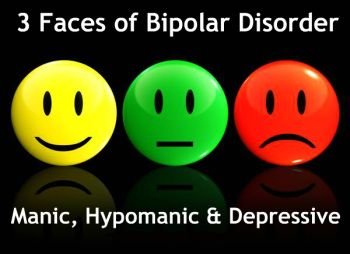
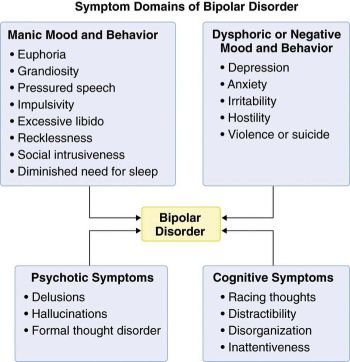
“Up/Down” Bipolar Disorder Documentary
Bipolar Disorder – 3% of American adults live with bipolar disorder each year.
Mood Swings vs. Mood Disorders – Discovering Bipolar Disorder
Is it necessary to involve my family in my treatment?
Although the decision as to the level of involvement of a family member in the evaluation and treatment of bipolar disorder is generally up to you, your clinician may request (and in certain circumstances insist) that an involved family member be brought in as part of the evaluation process. Both mania and depression typically affect a person’s cognitive abilities and can be so severe that the ability to make decisions becomes impaired. The involvement of a family member helps to clarify symptoms, relationship and work difficulties, as well as family history. The involved family member may have certain insights as to recent stressors that triggered the onset of the episode. Most important, your family can be a source of support during the initial phase of treatment and the recovery process. Due to effects on motivation, self-esteem, and feelings of self-sufficiency, a depressed or manic person may not engage fully in the treatment process. You may need reminders to take your medication and keep appointments.
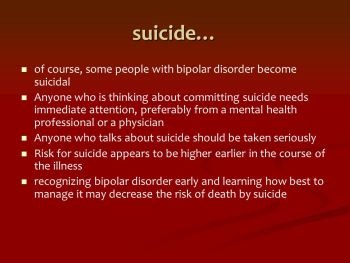
In particular, during the hypomanic or manic state, you may find it difficult to follow up in treatment, as this state is often one of good feeling. Affected individuals often do not recognize the symptoms in themselves, which is where family involvement becomes especially important. In addition, if you have suicidal thinking, an involved family member may be an important factor your clinician uses in determining your ability to be safe. A family member can monitor for suicidal behaviors. A person who is alone and without any support network is at higher risk for complications of bipolar disorder, including suicide. Thus, a clinician may insist a family member be involved in the treatment if it is believed your personal safety is at risk.
Leslie’s comments:
For me, there was never a question whether to involve my partner in my treatment. After having suffered the consequences of living with me in an unmedicated state for many years, I believe it is only fair and right to be honest and upfront about my treatment. I think it would also do us both a huge disservice if I neglected to tell my partner about changes in my mood or to reject the feedback I get from her regarding any mood fluctuations she may witness. We are able to keep the consequences of the illness in check because we are both vigilant about the destructive power of the disorder and, in the meantime, are respectful of each other as well.
I’m worried about my employer finding out about my treatment.
All employees need to know that they are under no obligation to disclose medical information, whether they are seeking employment or are currently employed. Many job application forms request information about mental illness, and employers may request information about a gap in employment. Because many employers pay the medical bills, they frequently feel that they have a right to know an employee’s medical history. If treatment requires time away from work, some medical information may need to be released in order to justify the time off.
The information given to an employer is strictly at the employee’s discretion. If information is shared with the employer by a health care professional or a health care institution without the patient’s permission, legal sanctions may be invoked that will penalize the provider for releasing confidential information. The threat of legal sanctions should prevent the employer from finding out about your health status. The legal sanctions are described in the previous question about “your right to privacy.”
Many patients fear that if an employer finds out about their history of bipolar disorder they will be fired. The American Disabilities Act (ADA) is a federal law that was passed to protect patients with disabilities from being fired because of a specific disability. The ADA of 1990 makes it unlawful to discriminate against an employee if he or she is a qualified individual with a disability. A disabled individual is defined as “a person who has a physical or mental impairment that substantially limits one or more major life activities, has a record of such impairment or is regarded as having such impairment” (U.S. Equal Employment Opportunity Commission, 1991). This law also applies to people with mental disorders, including bipolar disorder.
If the disabled person is the most qualified person among all of the applicants to do the job then accommodations must be made, such as job restructuring, modifying work schedules, and acquiring or modifying equipment. According to the ADA, employers cannot discriminate in their hiring and firing practices based on medical information, which includes psychiatric information. Such discrimination is considered a violation of the ADA law. The law specifically prohibits an employer from asking questions about a person’s disability during an employee’s job interview unless the questions are directly related to job requirements. The same principle holds true once the prospective employee is hired. The bottom line: current laws protect employees from unwanted disclosures to employers, which should prevent the employer from finding out about your bipolar disorder. In this case, the law is on your side in preventing your employer from finding out about your medical status.
Will I get manic or depressed again after I have recovered?
Bipolar disorder is generally an episodic, lifelong illness with a variable course. The risk for becoming depressed or manic again in the future is high, with higher risk for recurrent depression. Although early in the disease episodes may occur far apart in time, as years go by, episodes frequently become closer together. This may be due in part to brain changes that occur during each episode. Thus, it is important to prevent as many episodes as possible. With untreated bipolar disorder, ten or more episodes may occur over a person’s lifetime.
In contrast to major depressive disorder, for which consideration can be given to stop medication, the recommendation for an episode of mania is to continue medication, due to the high risk for a future episode of depression or mania. Ongoing studies are looking at the maintenance treatment of bipolar disorder and the effect of medication on decreasing episodes of depression and/or mania. Most medications approved in the treatment of bipolar disorder have not been adequately studied for their ability to prevent relapse. At present, Lamictal (lamotrigine) has FDA approval for prevention of recurrence of depressive episodes. Maintenance treatment with lithium and Depakote has been shown to lower the risk for suicide in bipolar patients.
The medication regimen that successfully treated the acute manic episode should typically be continued in the maintenance phase. Often more than one medication is required for stabilization. Sometimes, efforts to reduce medication dosage or cut back to one medication are made during the maintenance phase, but there is evidence that doing so may increase the risk for relapse. In a recent two-year-long, multi-center study, published in 2006 in the American Journal of Psychiatry, close to 50% of patients relapsed. The mean time to recurrence was ~ 45 weeks. Two-thirds of the recurrences were depressive episodes and one-third was manic or hypomanic episodes. Residual depressive and manic symptoms were significantly associated with risk of recurrence. This study demonstrated that the maintenance treatment of bipolar disorder still requires ongoing investigation. The goals of maintenance treatment in bipolar disorder are relapse prevention, reduction of sub threshold symptoms, and reduction of suicide risk, as well as reduction of cycling frequency and mood instability, and improvement of functioning.
(53) Bipolar Disorder
Is it necessary to involve my family in my treatment?
Although the decision as to the level of involvement of a family member in the evaluation and treatment of bipolar disorder is generally up to you, your clinician may request (and in certain circumstances insist) that an involved family member be brought in as part of the evaluation process. Both mania and depression typically affect a person’s cognitive abilities and can be so severe that the ability to make decisions becomes impaired. The involvement of a family member helps to clarify symptoms, relationship and work difficulties, as well as family history. The involved family member may have certain insights as to recent stressors that triggered the onset of the episode. Most important, your family can be a source of support during the initial phase of treatment and the recovery process. Due to effects on motivation, self-esteem, and feelings of self-sufficiency, a depressed or manic person may not engage fully in the treatment process. You may need reminders to take your medication and keep appointments.
In particular, during the hypomanic or manic state, you may find it difficult to follow up in treatment, as this state is often one of good feeling. Affected individuals often do not recognize the symptoms in themselves, which is where family involvement becomes especially important. In addition, if you have suicidal thinking, an involved family member may be an important factor your clinician uses in determining your ability to be safe. A family member can monitor for suicidal behaviors. A person who is alone and without any support network is at higher risk for complications of bipolar disorder, including suicide. Thus, a clinician may insist a family member be involved in the treatment if it is believed your personal safety is at risk.
Leslie’s comments:
For me, there was never a question whether to involve my partner in my treatment. After having suffered the consequences of living with me in an unmedicated state for many years, I believe it is only fair and right to be honest and upfront about my treatment. I think it would also do us both a huge disservice if I neglected to tell my partner about changes in my mood or to reject the feedback I get from her regarding any mood fluctuations she may witness. We are able to keep the consequences of the illness in check because we are both vigilant about the destructive power of the disorder and, in the meantime, are respectful of each other as well.
I’m worried about my employer finding out about my treatment.
All employees need to know that they are under no obligation to disclose medical information, whether they are seeking employment or are currently employed. Many job application forms request information about mental illness, and employers may request information about a gap in employment. Because many employers pay the medical bills, they frequently feel that they have a right to know an employee’s medical history. If treatment requires time away from work, some medical information may need to be released in order to justify the time off.
The information given to an employer is strictly at the employee’s discretion. If information is shared with the employer by a health care professional or a health care institution without the patient’s permission, legal sanctions may be invoked that will penalize the provider for releasing confidential information. The threat of legal sanctions should prevent the employer from finding out about your health status. The legal sanctions are described in the previous question about “your right to privacy.”
Many patients fear that if an employer finds out about their history of bipolar disorder they will be fired. The American Disabilities Act (ADA) is a federal law that was passed to protect patients with disabilities from being fired because of a specific disability. The ADA of 1990 makes it unlawful to discriminate against an employee if he or she is a qualified individual with a disability. A disabled individual is defined as “a person who has a physical or mental impairment that substantially limits one or more major life activities, has a record of such impairment or is regarded as having such impairment” (U.S. Equal Employment Opportunity Commission, 1991). This law also applies to people with mental disorders, including bipolar disorder.
If the disabled person is the most qualified person among all of the applicants to do the job then accommodations must be made, such as job restructuring, modifying work schedules, and acquiring or modifying equipment. According to the ADA, employers cannot discriminate in their hiring and firing practices based on medical information, which includes psychiatric information. Such discrimination is considered a violation of the ADA law. The law specifically prohibits an employer from asking questions about a person’s disability during an employee’s job interview unless the questions are directly related to job requirements. The same principle holds true once the prospective employee is hired. The bottom line: current laws protect employees from unwanted disclosures to employers, which should prevent the employer from finding out about your bipolar disorder. In this case, the law is on your side in preventing your employer from finding out about your medical status.
Will I get manic or depressed again after I have recovered?
Bipolar disorder is generally an episodic, lifelong illness with a variable course. The risk for becoming depressed or manic again in the future is high, with higher risk for recurrent depression. Although early in the disease episodes may occur far apart in time, as years go by, episodes frequently become closer together. This may be due in part to brain changes that occur during each episode. Thus, it is important to prevent as many episodes as possible. With untreated bipolar disorder, ten or more episodes may occur over a person’s lifetime.
In contrast to major depressive disorder, for which consideration can be given to stop medication, the recommendation for an episode of mania is to continue medication, due to the high risk for a future episode of depression or mania. Ongoing studies are looking at the maintenance treatment of bipolar disorder and the effect of medication on decreasing episodes of depression and/or mania. Most medications approved in the treatment of bipolar disorder have not been adequately studied for their ability to prevent relapse. At present, Lamictal (lamotrigine) has FDA approval for prevention of recurrence of depressive episodes. Maintenance treatment with lithium and Depakote has been shown to lower the risk for suicide in bipolar patients.
The medication regimen that successfully treated the acute manic episode should typically be continued in the maintenance phase. Often more than one medication is required for stabilization. Sometimes, efforts to reduce medication dosage or cut back to one medication are made during the maintenance phase, but there is evidence that doing so may increase the risk for relapse. In a recent two-year-long, multi-center study, published in 2006 in the American Journal of Psychiatry, close to 50% of patients relapsed. The mean time to recurrence was ~ 45 weeks. Two-thirds of the recurrences were depressive episodes and one-third was manic or hypomanic episodes. Residual depressive and manic symptoms were significantly associated with risk of recurrence. This study demonstrated that the maintenance treatment of bipolar disorder still requires ongoing investigation. The goals of maintenance treatment in bipolar disorder are relapse prevention, reduction of sub threshold symptoms, and reduction of suicide risk, as well as reduction of cycling frequency and mood instability, and improvement of functioning.