International Journal of HIV-Related Problems
AIDS – OFFICIAL JOURNAL OF THE INTERNATIONAL AIDS SOCIETY
CENTERS FOR DISEASE CONTROL AND PREVENTION – HIVBASICS
Responding to HIV/AIDS
Are responses appropriate and adequate?
The responses will depend on the country and size and stage of the epidemic. The primary object must be to prevent people from being infected. Prevention has been broadly successful in rich countries, although vigilance is necessary to ensure that the epidemic does not take off in any particular groups or sub-groups. It is alarming to learn that there have been significant numbers of new HIV infections in the gay population in San Francisco.
In Britain, numbers of sexually transmitted infections have been rising since the 1990s – in 2005, there were nearly 800,000 new diagnoses, a 3% increase on 2004. Worryingly, according to a National AIDS Trust survey released in 2006, people interviewed at that time were more ignorant of how HIV is spread than those surveyed in 2000. Prevention campaigns must be maintained, as new cohorts of people becoming sexually active have to be reached and educated. HIV prevention is not something that can be ‘done’ and ticked off a list.
If prevention does not work, then countries must deal with the consequences. Put simply, if prevention fails, more people need treatment, fall ill, and die, and these consequences must be tackled. Treatment and impact mitigation become necessary. Even in the worst affected countries, prevention must be a priority. Prevention is not working and providing treatment for increasing numbers has been described as ‘mopping the floor while the tap is running’; it is neither sustainable nor affordable.
Constraints to response
Responses have been and continue to be constrained. The most fundamental problem has been getting people (especially decision-makers) to understand the nature of the epidemic and what it might do to society. In the early years, one prevention poster took as its theme an iceberg – AIDS cases represented the tip with the mass of HIV infections hidden. This illustrates the dilemma of getting people to take AIDS seriously. Given the iceberg is hidden, how can we persuade people of its presence? Unfortunately, for those who want an excuse to ignore HIV/AIDS, there are scientists and pseudo-scientists willing to provide ‘evidence’.
Key questions are: how do we convince people of the existence of the epidemic where it is not yet visible; how do we deal with the stigma related to the sexual nature of HIV; what do we do about it in resource-poor settings; and how do we get a sustained global response? Where it is not yet visible, the challenge is to convince people of the danger that the epidemic poses. This means that they have to believe in the existence of the disease; understand it has the potential to spread; and will pose a credible threat. Achieving this is not easy. These issues are faced by all social and public health and safety campaigns – anti-smoking, drink driving, and seat belt campaigns provide instructive examples. They show it is possible to change behaviours, but it takes time and needs appropriate rewards and penalties.
There are helpful parallels from another global issue – climate change. Most people believe weather patterns are changing: floods, heat waves, and droughts seem increasingly common and severe. Many suspect that human activity contributes to global warming and want something to be done. Climate change is generally acknowledged and ‘owned’, but individuals don’t know what to do. The parallels extend further: global climate change and HIV/AIDS have been recognized for about 25 years; there is a desire to find technical solutions; and not all will be affected or able to respond equally – the Maldives and Bangladesh face different problems from New Zealand or Japan. But there is also one important difference: much of the work on climate change impact is forward-looking, in the HIV/AIDS field we look back.
Most national and international leaders believe HIV exists. Unfortunately, the step from recognizing the existence of the virus to understanding how it operates and what impact it will have is not simple. Appropriate equitable responses also mean questioning what is otherwise taken for granted: why should we have to make a choice of who gets treatment? Why should wealthy Europeans get all the laboratory investigation they need to tailor their treatment, while the WHO guidelines for resource-poor settings provide an algorithm for treatment without even an HIV test?
Sex, gender, and stigma
HIV is not a contagious disease. It is not contracted by sitting next to a carrier on public transport, as might be the case with influenza, or by eating salad contaminated with bacteria, as with cholera. The cause can be identified. A person with HIV has either done something to cause the infection: had sex with an infected person, used a contaminated needle, or had a needle-stick injury.
Or they have had something done to them: been raped, born to an infected mother, or received infected blood. This leads to concepts of innocence and guilt. Stigma and blame is further compounded because many of the behaviours that lead to HIV transmission are circumscribed by society.
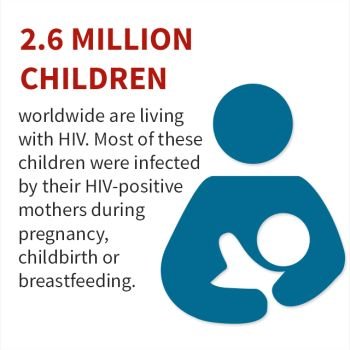
For people to accept HIV has the potential to spread, they must acknowledge the behaviours that allow its spread – drug use, homosexuality, men visiting commercial sex workers, sex outside of marriage, and so on. Admitting people behave in ways that allow the spread of HIV creates moral dilemmas and political problems. In all societies, injecting drug use is an illegal and socially unacceptable behaviour. In some settings, simply having more than one partner and having sex outside marriage are seen as shameful and stigmatizing, especially for women. Crucial here are gender dynamics and politics: women are often first to be identified as HIV infected; where the epidemic is heterosexually driven, more women than men are infected; and women may transmit HIV to their children.
Data show women are less likely than men to have sex with a non-marital, non-cohabiting partner. UNAIDS reported in Malawi in 2000 that over 70% of young men had sex with non-regular partners, but for women this was fewer than 20%. In Thailand in 1999, three-quarters of infected women reported sex with their husbands as their only HIV risk factor, and nearly half thought they were at no or low risk. A joint report by UNAIDS, UNFPA, and UNIFEM details how in Kisumu, Kenya, 22% of unmarried girls were HIV positive compared to 33% of married girls. In India, the primary risk factor for a woman is to be married.
For many women, the messages of ‘abstain, be faithful, and use a condom’ may be meaningless. Where they are forced or pressured into sexual activity, the idea of abstinence is impossible. If their partners have extra-marital sex or are infected at marriage then being faithful offers no protection. Using a condom requires contraceptive availability, and their use is controlled by men. Using condoms also may imply a lack of trust and some believe makes sex less fun. Obviously, when a couple wants to start a family, condom use has to be discontinued. While homosexuality is accepted in some countries, in most it is stigmatized, and in several actually illegal. Homophobia at the highest level is a reality, particularly in Africa and the Caribbean.
Robert Mugabe described gays and lesbians as ‘worse than pigs and dogs’ at a book fair in Harare in 1993. These views find resonance elsewhere. In 2001, President Sam Nujoma said: ‘The Republic of Namibia does not allow homosexuality, lesbianism here. Police are ordered to arrest you, and deport you, and imprison you, too.’ In Nigeria in 2006, the Federal Government banned homosexuality and lesbianism and outlawed same-sex marriage.
Infection through sex implies, among unmarried people, that they have had sex before marriage. Where people are in committed relationships, this either means one partner brought the infection into the relationship or they had sex outside of it. The moral responses that get the most ‘air time’ are primarily driven by the Christian Right. Issues of sexuality, especially men having sex with men, and drug use fi nd resonance with conservatives in Africa, Eastern Europe, and Asia. The message is: ‘if we follow God’s teachings and don’t have sex outside a single stable union, engage in gay sex or use drugs, then we are not at risk of infection’.
Humankind is constrained by a set of attitudes to sex that is unique to our species. As Jared Diamond notes in a readable little book, Why is Sex Fun?: ‘The subject of sex preoccupies us. It’s the source of our most intense pleasures. Often it is the cause of misery, much of which arrives from the built-in conflicts between the evolved roles of women and men.’ Sexuality in humans has universal features that hinder our response to HIV/AIDS, and may stem from our particular biological, economic, and social evolution.
The perception that stable family units are the best way to bring up children is deeply ingrained and even institutionalized. Social norms say that people should have stable relationships with one lifetime partner and should stick to that partner sexually. People enter long-term male–female relationships with mutual obligations – the primary one is parental care of children. Humans are an exceptional species in the time we take to rear our young – young people may not vote until they are 18, and in America people must be over 21 before they are legally allowed to drink alcohol.
Couples (and this can be extended to polygamous families) live in societies made up mainly of other couples with whom they share common territory and cooperate socially and economically. Sexual experiences prior to marriage are acknowledged though not condoned. It is not generally accepted for people to have partners outside their long-term child-rearing relationship.
One of the ways we bond for the biological and social imperative of child-rearing is through sex. This is why most sexual activity is for fun not, directly, for reproduction. In these relationships, couples have sex repeatedly and mainly exclusively with each other; in private (public sex is generally a criminal offence); and not just when women are fertile. Humans evolved concealed ovulation and constant receptivity to make this combination of pairing and co-parenting possible.
There is an evolutionary paradox, though: biologically, any being’s goal is to pass on their genes and that means fertilizing or being fertilized by the most desirable partner. Among some creatures, the male’s contribution is simply the sperm; in others, pairing is for the season; among a few, the union is for life. In some species males seek exclusivity over their mates, examples being herds of impala, with one male and up to 20 females, or a pride of lions. Even when pairing is apparently exclusive, infidelity occurs. If a male or female can have sex and fertilize or be fertilized by a more (in evolutionary terms) desirable partner, and not be found out (thus jeopardizing the pairing that rises the next generation), then the instinct is to do this. In human society, being caught having extra-marital sex is usually catastrophic, with potential to cause marital disruption and consequent adverse effects on parental cooperation in child-rearing.
Herein is a paradox with regard to HIV and AIDS. A person who is HIV positive has almost certainly had sex with someone who is infected. Among unmarried people, this reveals sex before marriage. Where people are in relationships, an infection ‘finds you out’, has social consequences, and brings huge stress. It is the stigma of the epidemic, and of course it is gendered. Men try to control female reproduction, and most societies have double standards when it comes to sexuality; it is more acceptable for men to have sex before marriage, to have multiple partners, use sex workers, and have affairs.
Resource-poor settings: priorities and sustainability
In Toronto in August 2006, there was evidence of new discourses. There were two interlinked themes concerning medicine and money. The medical response is about getting people on treatment and is linked to the right to treatment. Monetary issues came to the fore in parallel with drug development, as money is needed to buy drugs and to provide staff and infrastructure to deliver them. There was also a growing realization that prevention must be higher on the agenda.
There are issues around setting priorities and ensuring the response is sustainable. Priority-setting is something we are all familiar with in our daily lives, dealing with the scarce resources of time and money. If the family budget is spent on a new car, then the summer holiday will be sacrificed; if the evening is spent playing monopoly, then the homework won’t get done.
Governments to make choices – if Britain spends £20 billion on a new trident nuclear submarine programme, this money is not then available for the National Health Service. We need to decide what level of resources, financial and human, should be devoted to HIV/AIDS.
Currently, considerable sums of money are pledged. However, pledges are not the same as money flows. And even when the commitments are real, spending at the country level may not happen. A looming problem is sustainability. More money may be crucial, but we are not even certain the same level of resources will be maintained into the future.
The next 25 years
This concluding focuses on major issues around HIV and AIDS, including some of the uncomfortable ‘realpolitik’ we must face. I believe the epidemic will receive less attention as other concerns hit the global agenda. These include climate change; access to energy and water resources; shifting power balances; and new diseases.
What have we learned?
The HIV/AIDS epidemic is causing a complex systemic change in human ecology. It is unleashing secondary impacts that have demographic and epidemiological consequences, which in turn create feedback loops into the dynamics of the epidemic itself.
We argues that AIDS is a unique disease with dreadful impacts on those places worst affected. It calls into question whether some nations will survive its ravages. In many African countries, the burden of care is being borne by the elderly, but HIV means there won’t be enough old people in a generation. There are changing demographics: falling life expectancy; shifting population structures; gender ratios altering; and growing numbers of orphans. Some societies will change significantly, and while this is a slow and incremental process, AIDS will be at its core.
The way the disease has spread shows the fractures and inequalities of our society; it also shows how interconnected we are. HIV emerged in Africa and spread across the globe in less than ten years. A resistant variety that materializes in New York can be transmitted in Bangkok in a matter of weeks. AIDS also shows our gains: science has made huge advances, and debates around human rights and equity have been driven by the disease. AIDS is not a threat to the human species. It is located among the poorest and most marginalized in our society, whether they be the indigenous people of Canada; the drug users in Dublin; or entire nations, the Malawians or Swazi. This means global responses, however grounded in common sense and self-interest, need to be driven by responsibility and compassion.
AIDS is exceptional
Should AIDS be treated differently from other diseases? Should it be dealt with as a crisis or as a long-term development issue? This is an ongoing debate with no single or simple answer. Let me sum up the points I have made in these texts.
AIDS is primarily a sexually transmitted infection affecting young adults. The spread is silent and the long incubation period means the virus has infected many people before illnesses manifest and the threat is apparent. Eminent British scientist Professor Roy Anderson modeled the course of the epidemic and estimated it will take 130 years to work through the global population.
There is no cure. There are treatments, but these remain relatively expensive. In poor countries, the cost of treating one AIDS patient is many times the average expenditure on health. Even if money were no object, there are human resource constraints to providing treatment. Science has made huge strides, but there will be no vaccine or microbicide available in the medium term. AIDS is already having a devastating impact on some countries. In Swaziland, the chance of a 15-year-old boy living to 50 years is 28%, for a girl it is just 22%. Before AIDS, it was 92% and 97% respectively. The UNDP estimated 2004 life expectancy in Botswana to be 34.9 years. Populations in some African countries are projected to decline. Reversing life expectancies and falling populations are events unknown in the past 200 years. Economists question whether economic growth is possible in these circumstances; sociologists and political scientists have not begun to consider the ramifications. The debate between normalization and exceptionalism is sterile.
AIDS is exceptional and needs to be treated as such. But the measures needed to deal with the schisms and fractures that give rise to the epidemic are long term. Preventing AIDS means equitable development: providing education, health, employment opportunities, and social support. These are development goals, and not (just) about HIV/AIDS.
Perceptions
The innovative responses needed mean we must change perceptions. In spatial terms, the worst of the epidemic and hence its worst impacts are geographically bounded. Early fears that HIV would spread widely and uniformly were unfounded and not all parts of the world are equally affected. Through a mixture of circumstance and predisposition, areas of Africa are particularly badly hit, though the smaller epidemics of Eastern Europe may have devastating consequences because of their demographic circumstances.
In temporal terms, AIDS shows how limited our time horizon is. Humanity has difficulty in taking long-term views. Most planning is geared to three to five year strategies. We want immediate solutions and to believe things will get better. Companies do not project declining profits; politicians do not warn of bleak futures. Humans see things in the short term and through rose-tinted glasses. But AIDS requires a long-term, realistic view. We know the number of illnesses and deaths will increase, in fact there is an awful predictability about HIV/AIDS and what it has the potential to do, and we need to get to grips with this.
Perhaps a key is to change our perspective. How would our great grandchildren see the epidemic if they were looking back from 2108? For them, HIV/AIDS will have been an historical event.
If we develop this thinking, then history could provide ideas, paradigms, and methodologies for understanding and responding. There are lessons from the past we can apply; we need to learn from history and historians.
Prevention imperatives
Most important is avoiding future infections. AIDS is devastating for households, families, and society at large. Preventing infections means, in economic language, future costs will not have to be borne, additional human suffering will be averted. Prevention must remain the priority. If we knew what worked, it would be clear where resources should go, but as the texts shows there are no easy answers. The drivers of the epidemic are multifaceted and responses need to take cognizance of the complexity of society, economies, and political management. We need to better understand sexuality.
There are effective targeted and technical interventions for early epidemics. This was seen in prevention of transmission through infected blood, responses to infection among drug users in Europe, and the timely interventions among sex workers in Thailand and Senegal. When the epidemic spreads beyond these populations, prevention becomes more haphazard and less successful.
There are three main lessons from the last 25 years. The first is that leadership is crucial. With strong, supportive leadership, prevention becomes possible; without it, it is extremely difficult. An editorial in The Lancet ahead of the 2004 International AIDS Conference in Bangkok identified the willingness of political leaders to acknowledge the crisis and implement interventions swiftly as the most important factor in changing the course of the epidemic. Uganda, Thailand, and Cambodia were singled out as countries where this happened.
The second area is gender and gender equity. Globally, HIV disproportionately infects and affects women. Not only are they more likely to be HIV positive, but they bear the burden of care and support. Prevention must empower women; give them choice over whom they have sex with, when, and how. Men must accept this and not feel threatened.
The final concerns around prevention messages are what they are and who is targeted. A narrow focus on abstinence and fidelity is unrealistic, hypocritical, and stigmatizing. The emphasis should be on responsible sexual behaviour rather than scare tactics. The discourse needs to move from sex to relationships, teaching people how to negotiate and develop responsible and loving interactions. Young people need to be inculcated with the behaviours and values that allow them to protect themselves from HIV and lead fulfilling lives. There is little point in targeting people whose sexual behaviours are set and unlikely to change. Single-component interventions do not work anywhere, and no general approach will work everywhere. The treatment debate when prevention fails, treatment is necessary. It is to the credit of science and activists that this is widely available and increasingly affordable. It took mobilization, militant campaigning, and legal action to bring the price of treatment within the means of poorer countries. Treatment is still not universally accessible, nor will it be. With the current drugs and modes of administering them, there are simply not the human resources and infrastructure to provide treatment to all. For example, in 2004 Mozambique had fewer than 800 doctors, a third of whom were foreign, less than 0.3 per 1,000 people. Providing ART to all who need it would need at least an additional 200 doctors plus nurses, pharmacists, and other staff. Health systems are under pressure, and staff is being diverted to AIDS.
Three key aspects of treatment are cost, sustainability, and access. The cheapest ART available is about US$ 150 per patient per year for the drugs alone. The associated testing, medical staff, and so on push the minimum cost to between US$ 200 and US$ 300. Put starkly, it costs between 0.54c and 0.82c a day to keep an infected person alive. One billion people, 19% of the world’s population, live on less than a dollar a day, many in the countries worst affected by AIDS, such as Zambia, where 63% of people live on less than a dollar per day. Per capita government health expenditure, assessed in the 2006 World Health Report was US$ 3 in Nepal, US$ 6 in Nigeria, US$ 25 in Lesotho, and US$ 40 in Ukraine (in the UK, it is US$ 2,081 and the USA, US$ 2,548). In high-prevalence countries, the cost of therapy is many times the annual health budget. But it has also become apparent how complex providing ART is. There are reports of drugs being held back at ports because of unpaid duties, dispensaries running out of medicine, and people having to bribe their way into programmes. Even with the limited treatment, there are questions of sustainability. Most treatment in the poor world is funded by donors, in particular the Global Fund and PEPFAR. At the end of March 2006, PEPFAR was supporting treatment for 561,000 men, women, and children. But PEPFAR was a five-year programme ending in 2008 with possible renewal to 2013, and the Global Fund projects too have a limited lifespan. The current challenge is to get people on treatment, but soon it will be to ensure there are the resources to continue, because patients need treatment for life.
Access is a complex issue, and choices have to be made. If not everyone can be treated, who do we treat? This debate creates huge difficulties among people working in the field of AIDS, human rights activists, and lawyers. Given that rationing is occurring, we need to ask on what basis these decisions should be made. In a seminal 2005 article in PLoS Medicine on rationing and its causes and consequences, Sydney Rosen and colleagues point out: ‘As used by economists, rationing is a morally neutral concept. It does not imply intent to deprive some people of a good, but rather describes the allocation of a resource of which there is not enough to go around.’
Should decisions be made on economic grounds, treating those who make the largest contribution to society first? There is a strong argument for giving health care workers preferential access – after all, they have to treat others. A WHO slogan is ‘test, treat and retain’. Should treatment be made available on the basis of equity or gender? Or on the basis of some other criterion of what society wants and how it values people? There are no easy answers. Currently, decisions are made through a combination of medical imperatives, treating the sickest fi rst; access, who can get to the treatment sites; and where the money is. Those with higher CD4 counts need the least clinical management. Using limited resources to manage crises is not optimal. As the ‘3 by 5’ initiative rolled out, it became apparent that providing treatment is not enough. The WHO recommended making antiretrovirals affordable and providing them free to the poor. What affordability means and who is poor are not defined. Our analysis shows that in low-income countries treatment should be free. Trying to implement user fees is a waste of scarce resources as they are costly to put in place and administer, and exemptions or waivers rarely reach those who need them. Asking the poor to pay for health care is not just impractical, it is also obscene. We looked at AIDS exceptionalism – should AIDS be treated free when other diseases are not? Other diseases are treated free where there is a public health reason to do so. Given the nature of the AIDS epidemic, providing free treatment should be an imperative even though the principle cannot be applied to all diseases or all in need.
Treatment issues also raise the question of targets. Should targets continue to be set given they won’t be reached? Having a goal may be good from the perspective of a Western capitalist or activist, but some in the developing world view target-setting as a hypocritical activity because they are seldom met. This debate is broader than HIV/AIDS; it extends to the Millennium Development Goals, G8 commitments, and beyond.
Locating and dealing with impact
Much writing has described how people ‘cope’, but what is coping? For many it is simply struggling with increased impoverishment and misery. A household that does not access health care or child support but somehow continues to bring up its children can be said to be coping. But is this what society wants and will accept?
Coping needs to be more than surviving.
The major impact is on human capital, which is increasingly recognized as critical for long-term development. It is being steadily and insidiously eroded. The illness and deaths of adults has effects across society. In government work gets done inefficiently, more slowly, or not at all. For the private sector, productivity is reduced and costs increased. Among farmers, it means there is less labour at critical times. The impact is intergenerational, as children with sick parents will not get the emotional and financial investment they need. Having a generation of orphans growing up uncared for and under-educated creates long-term problems. The long-wave complex impacts of HIV/AIDS are not appreciated.
Impact is gendered.
Young women are afraid of dying and leaving their children, and they feel powerless to prevent infection. Older women, who bear the brunt of the social, care-taking, economic, and emotional burdens of the epidemic in their families, are supporting growing numbers on shrinking incomes. Social transfers, sustainability, and the role of governments
In early 2006 at a Global Partners Forum on Children Affected by HIV and AIDS, British Deputy Minister for International Development, Gareth Thomas, identified social welfare as a core issue for debate. This means ensuring a minimum standard of living and access to essential services for all. The experience of rich countries has proven that social welfare is central to proper support for the most vulnerable, indeed free schooling and health facilities provide the basis for development. It is hypocritical to apply a different standard to poorer countries. Rather, we need to ensure social transfers, such as child benefits and social pensions, are the norm in all developing countries.
Dealing realistically with HIV prevention and AIDS does not lie only in responding to the disease but in addressing the underlying causes: poverty and inequality. This requires global reform in trade and international commitments. In the short term, social welfare programmes will go a long way to meeting the needs. But these interventions are not ‘sustainable’ as the word is currently used. Countries and communities won’t graduate from needing support in the short or medium term, and questions of what ‘sustainable development’ actually is need to be posed.
Final thoughts
Adam Smith argued centuries ago that governments should provide stability and law. In fact, we can and should demand far more of our governments at both the national and international levels. There are basic rights to health, education, incomes, and shelter. If these were met, we would not have the epidemic we currently face.
It bodes ill for humankind that we do not respond adequately to HIV/AIDS. We will face many other challenges. These include new, more easily spread diseases needing innovative, rapid public health responses. We confront global equity issues such as access to water. Climate change desperately requires international and coordinated action. AIDS is a harbinger, the first of many new and alarming challenges, and has given us the opportunity to learn. Only time will tell if we did.