7 Health Benefits of a Mediterranean Diet
10 Things to Know About the Mediterranean Diet
Mediterranean diet: A heart-healthy eating plan
The Mediterranean Diet: What Do People Living in the Mediterranean Do Differently?
The Mediterranean diet doesn’t refer to the diet of a specific country but to the dietary patterns found in several areas of the Mediterranean region, specifically Crete (a Greek island), other areas of Greece, and southern Italy, circa 1960.
Researchers were drawn to these areas because the adults living there had very low rates of chronic diseases, such as heart disease and cancer, and a very long life expectancy. For example, the natives of Greece had a rate of heart disease that was 90 percent lower than that of Americans at that time. Ironically, the people in Crete, in particular, were less educated and affluent, and less likely to obtain good medical care than were Americans, so their health successes could not be explained by education level, financial status, or a superior health care system.
Researchers found that compared with the diets of affluent Americans, the Cretans’ diet was dramatically lower in foods from animal sources, such as meat, eggs, and dairy products, and higher in fat (mostly from olive oil and olives) and inexpensive grains, fruits, and vegetables.
Research continues to support the benefits of a Mediterranean-style diet. A study in Greece showed that greater adherence to a traditional Mediterranean diet was associated with greater longevity. In another study, individuals who had experienced a heart attack, and then adopted a Mediterranean-style diet, had a 50 to 70 percent lower risk of recurrent heart disease compared with those following a more classic low-saturated-fat, low-cholesterol diet.
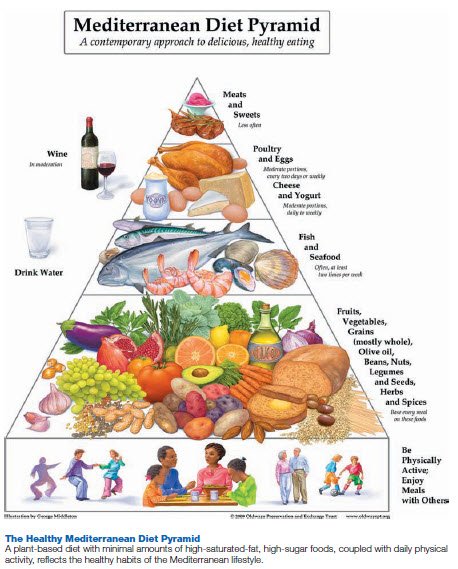
The newly updated Mediterranean Diet Pyramid shown here was designed to reflect these dietary patterns and lifestyle habits. Let’s look a little closer at this pyramid, the dietary and lifestyle changes that augment it, and some potential changes that you can make in your diet and lifestyle to reap similar benefits.
The Mediterranean Lifestyle
First, notice that there are no portion recommendations in the Mediterranean Diet Pyramid. This purposeful omission portrays the relative importance and frequency of each grouping of foods as it contributes to the whole diet, rather than to a strict diet plan. It was designed to provide an overview of healthy food choices rather than dictate rigid amounts from each food group.
Next, note that physical activity is front and center, at the base of this pyramid, reflecting the foundation for the Mediterranean way of life. This is an important concept, as the Mediterranean residents in the 1960s were very active and, not surprisingly, much leaner than Americans at that time. In addition to exercise, Mediterranean citizens enjoyed other lifestyle habits that have been known to promote good mental and physical health. They had a supportive community of family and friends, long relaxing family meals, and afternoon siestas (naps). Exercising daily, resting, and relaxing with family and friends is good health advice for all, no matter what food pyramid you follow.
A Diet of Well-Seasoned Plant Foods, Olive Oil, Fish, and Dairy
Plant-based foods such as whole grains, fruits, vegetables, legumes, and nuts are the focus of the Mediterranean diet. In fact, more than 60 percent of the calories of the Cretans’ diets in the 1960s were supplied by these high-fiber, nutritionally dense plant foods. In traditional Mediterranean-style eating, a combination of plant foods, such as vegetables and legumes ladled over couscous or pasta, was the focus of the meal. Fresh bread, without margarine or butter, often accompanied the meal, and fruit was served as dessert.
More than 75 percent of the fat in the diets of the Cretans was supplied by olives and olive oil.As previously discussed, vegetable oils are low in saturated fat, and olive oil in particular is high in monounsaturated fat. Heart healthy meals featuring fish and seafood should be enjoyed at least twice a week, following the example of the Mediterranean’s.
Nonfat milk and yogurt, and low- or reduced-fat cheeses can be enjoyed on a daily basis when eating a Mediterranean style diet. A small amount of grated Parmesan cheese sprinkled over vegetables and a grain-based meal can provide a distinct Mediterranean flavor.
Occasional Poultry, Eggs, and Meat
Foods from animal sources were limited in the Cretan diet; local people consumed less than 2 ounces of meat and poultry daily. No more than four eggs were eaten weekly, which included those used in cooking and baking. Following this trend, the Mediterranean Diet Pyramid suggests eating limited amounts of poultry and eggs weekly, but relegates red meat consumption to only occasionally.
Sweets, Water, and Wine
Historically, sweets were more prevalent during the holidays and fruit was the standard daily dessert. Consequently, this pyramid recommends that consumption of honey- or sugar-based sweets remain modest. Water is recommended daily. The Cretans drank it all day long and with their meals. They also drank low to moderate amounts of wine, typically only with meals. Sometimes the wine was mixed with water, and many times women did not consume any alcohol.
Though the pyramid depicts wine on a daily basis, it is actually considered optional and based on personal preferences, family and medical history, and social situations.
How Does the Mediterranean Diet Pyramid Compare with MyPyramid?
There are many similarities between the Mediterranean Diet Pyramid and MyPyramid. Both emphasize the importance of regular physical activity, and both encourage a plant-based diet rich in whole grains, fruits, and vegetables, and daily consumption of dairy products. Mediterranean-style eating encourages the use of olive oil, a fat source that is rich in heart-healthy, unsaturated fat, and fish and seafood. Vegetable oils are also encouraged on MyPyramid, but more modestly. Whereas poultry, eggs, and meat are recommended more modestly in the Mediterranean Diet Pyramid than in MyPyramid, both advise minimizing intake of sweets.
Both pyramids can be used as a foundation for a healthy diet. The key is to stick to the recommendations.
Dining Out with Your Heart In Mind
Having a yen for Mexican, Italian, Indian, or Chinese food but not sure what to order?
Visit the American Heart Association’s interactive website site to help you choose a dinner than pleases your palate and is healthy for your heart.
Dinner is a click away at http://www.heart.org/HEARTORG/