Proteins and amino acids (Video)
Proteins, Peptides & Amino Acids
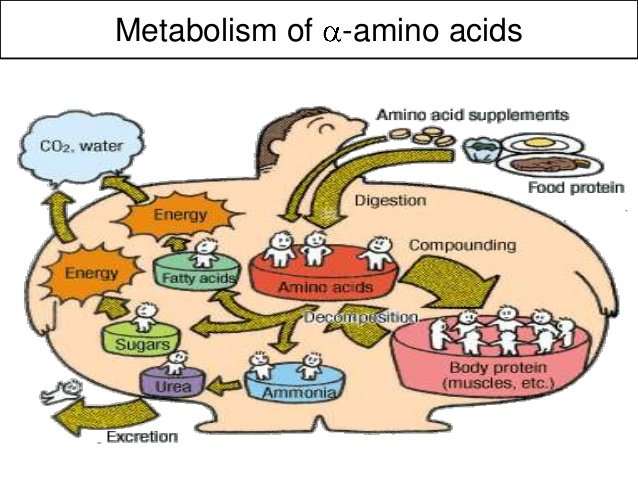
Proteins and Amino Acids
What Are Proteins and Why Are They Important?
Proteins are the predominant structural and functional materials in every cell, and you have thousands of unique proteins in your body. Your protein-rich muscles enable you to swim, walk, stand, and hold your head up so you can read this textbook. Without adequate protein, your immune system wouldn’t be able to fight off infections, your hair wouldn’t grow, your fingernails would be mere stubs, and you wouldn’t digest your food. In fact, proteins are involved in most of your body’s functions and life processes, and without them, you wouldn’t survive.
The Building Blocks of Proteins Are Amino Acids
All proteins consist of some combination of 20 unique amino acids, and they are classified according to the number of amino acids in the chain. If the chain contains fewer than 50 amino acids linked together, it is called a peptide. Two joined amino acids form a dipeptide; three joined amino acids form a tripeptide; and a polypeptide is more than 10 amino acids joined together. A chain with more than 50 amino acids is called a protein. Proteins typically contain between 100 and 10,000 amino acids in a sequence. For instance, the protein that forms the hemoglobin in red blood cells consists of close to 300 amino acids, as compared with collagen, which contains approximately 1,000 amino acids.
Amino acids are like numeric digits, in that their specific sequence will determine a specific function. Consider that telephone numbers, Social Security numbers, and bank PIN numbers are all made up of the same digits (0 to 9) arranged in different sequences of varying lengths. Each of these numbers has a specific purpose. Similarly, amino acids can be linked together to make unique sequences of varying lengths, each with a specific function.
Anatomy of an Amino Acid
Each amino acid contains a central carbon (C) surrounded by four parts: an acid group (COOH) (which is why it is called an amino “acid”), an amine group (NH2) that contains the nitrogen, a hydrogen atom, and a unique side chain. Whereas all 20 nutritionally important amino acids contain the same four parts, it is the side chain that makes each amino acid different. The side chain can be as simple as a single hydrogen atom, as in the amino acid glycine; or it can be a collection of atoms, as in aspartic acid and phenylalanine. (Do these last two amino acids sound familiar? Recall that they are the major components of the sugar substitute aspartame)
Now let’s look at how amino acids are linked together to build proteins.
Peptide Bonds and Side Chains Determine a Protein’s Shape and Function
Amino acids are joined to each other by peptide bonds to build proteins. A peptide bond is created when the acid group (COOH) of one amino acid is joined with the amine group (NH2) of another amino acid. The unique nature of each amino acid side chain prevents a protein from remaining in an orderly straight line. Rather, each polypeptide folds into a precise three-dimensional shape, such as a coil, based on the interactions of its amino acid side chains with each other and the environment. Some side chains are attracted to other side chains; some are neutral; and some repel each other. Additionally, side chains can be hydrophilic (“water-loving”) or hydrophobic (“water-fearing”), and this affects how they react with their environment. The hydrophobic side chains tend to cluster together in the interior of the protein, causing the protein to be globular in shape. The hydrophilic side chains assemble on the outside surface of the protein, closer to the watery environments of blood and other body fluids. The shape of a protein determines its function in your body. Therefore, anything that alters the bonds between the side chains will alter its shape and thus its function.
Essential, Nonessential, and Conditional Amino Acids There are nine amino acids that your body cannot make and that you must therefore obtain from foods. These are the essential amino acids, and you can find them in foods such as meat and milk. It is essential that you obtain them from your diet. The remaining 11 amino acids are nonessential amino acids because they can be synthesized, or created, in your body. It is not essential to consume them in the diet. Your body creates nonessential amino acids as needed by adding nitrogen to a carbon containing structure. Some nonessential amino acids can also be made from other amino acids. This process occurs primarily in the liver. Some nonessential amino acids may become conditionally essential if the body cannot make them because of illness, or because the body lacks the necessary precursors or enzymes. In such situations, they are considered essential and must be consumed through food. An example of this is when premature infants are not able to make enough of the enzymes needed to create arginine, so they need to get this amino acid in their diet.
Denaturation of Proteins Changes Their Shape
Proteins can be unfolded or denatured by heat, acids, bases, salts, or mechanical agitation. Denaturation doesn’t alter the primary structure of the protein (amino acids will still be in the same sequence), but it does change the shape. As mentioned earlier, changing the protein’s shape will alter its function, sometimes permanently.
The protein found in eggs can be used to illustrate denaturation. When you apply heat to a raw egg, such as by frying it, the heat denatures the protein in both the yolk and the egg white. Heat disrupts the bonds between the amino acid side chains, causing the protein in the egg to uncoil. New bonds then form between the side chains, changing the shape and structure of the protein and the texture of the egg. As the egg cooks, it solidifies, illustrating the permanent change in the protein’s shape and structure. Similarly, mechanical agitation, such as beating egg whites when you prepare a meringue, can denature protein. Beating an egg white uncoils the protein, allowing the hydrophilic side chains to react with the water in the egg white, while the hydrophobic portions of the side chains form new bonds, trapping the air from the whipping. The stiffer the peaks of egg white, the more denatured the protein Salts and acids can also denature proteins. For example, when you marinate a chicken breast or a steak before cooking, you might use salt (such as in soy sauce) or acid (such as wine or vinegar) to denature its protein. The end result is juicier, tenderer meat. During digestion, acidic stomach juices help denature and untangle proteins to reveal the peptide bonds. This allows digestive enzymes to break them apart.
Message:
An amino acid is made up of carbon, oxygen, hydrogen, a nitrogen-containing amine group, and a unique side chain. There are 20 side chains and so 20 unique amino acids. Whereas all 20 amino acids are needed to make proteins, 11 of these can be synthesized in your body and are thus nonessential. The remaining nine amino acids are the essential amino acids that your body cannot synthesize. Essential amino acids must be obtained in your diet. Amino acids are joined together by peptide bonds to create proteins. The attractions and interactions between the side chains cause the protein to fold into a precise three-dimensional shape. The protein’s shape determines its function. Heat, acids, bases, and salts can break, or denature, a protein and alter its shape and function.
Terms:
Amino acid structure – All amino acids contain carbon, hydrogen, and oxygen, similar to carbohydrates and fat. They also contain a nitrogen-containing amine group and an acid group. Different amino acids showing their unique side chains. A unique side chain (shown in yellow) distinguishes the various amino acids.
Proteins – Compounds in your body that consist of numerous amino acids and are found in all living cells.
Amino acids – The building blocks of protein. Amino acids contain carbon, hydrogen, oxygen, and nitrogen. All amino acids are composed of an acid group, an amine group, and a unique side chain acid group The COOH group that is part of every amino acid; also called the carboxyl group. amine group The nitrogen containing part (NH2) of an amino acid.
Side chain – The side group of an amino acid that provides it with its unique qualities; also referred to as the R group.
Peptide bonds – The bonds that connect amino acids, created when the acid group of one amino acid is joined with the nitrogen-containing amine group of another amino acid.
Essential amino acids – The nine amino acids that the body cannot synthesize; they must be obtained through dietary sources nonessential amino acids. The 11 amino acids that the body can synthesize.
Conditionally essential amino acids – Nonessential amino acids that become essential if the body cannot make them, such as during bouts of illness.
Precursor – A substance that is converted to another substance in the body
Denaturation – The alteration of a protein’s shape, which changes the structure and function of the protein.
A. Amino acids are joined together by peptide bonds in specific sequences to form proteins. This shows part of the sequence of the protein hemoglobin.
B. The attractions and interactions between the amino acids cause the protein to spiral, bend, and curl.
C. The protein folds into a precise three-dimensional shape.
D. Some proteins, such as hemoglobin, consist of several separate protein chains linked together. The shape of the protein determines its function
Denaturing a Protein
A protein can be denatured, or unfolded, by exposure to heat, acids, bases, or salts. Any change in a protein’s shape will alter its function.
Cooking denatures protein and will often improve the quality, structure, and texture of the protein-rich foods you eat. Raw eggs, meat, and poultry are basically inedible, but cooking these foods greatly increases their palatability.