Top 10 Protein Sources, Healthy Vegetarian & Meat Foods, Weight Loss Nutrition Tips
The Ultimate List Of 40 High-Protein Foods!
What Are the Best Food Sources of Protein?
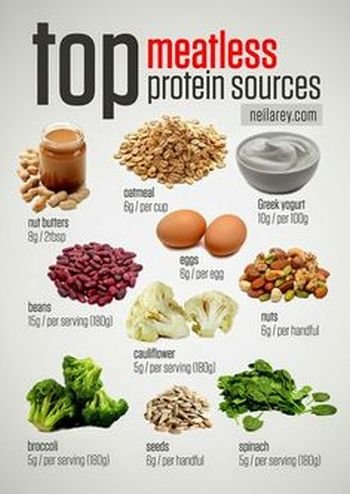
Although some amount of protein is found in many foods, it is particularly abundant in meat, fish, poultry, and meat alternatives such as dried beans, peanut butter, nuts, and soy.Americans, on average, not only consume more than the recommended servings of the protein-rich foods in the meat and beans group but also eat approximately 10 percent more than they did in the 1970s.16 A 3-ounce serving of cooked meat, poultry, or fish, which is about the size of a woman’s palm or a deck of cards, provides approximately 21 to 25 grams of protein, or about 7 grams per ounce, and is plenty of protein for one meal.
While red meat is still the most popular food in the meat and beans group, Americans’ love of meat has declined over the last four decades. In contrast, Americans currently eat more than double the amount of poultry, and over 25 percent more fish, than they did in 1970. Dried beans such as kidney beans, pinto beans, and black beans not only provide an excellent source of protein but are also a potent source of fiber. Dairy foods are also an excellent source of protein, and though grains and vegetables are less robust protein sources, as part of a varied, balanced diet they can aid significantly in meeting your daily needs.
Eating a wide variety of foods is the best approach to meeting your protein needs. A diet that consists of the recommended servings from the MyPyramid food guidance system based on 1,600 calories, which is far less than most adults consume daily, will supply the protein needs for adult women and most adult men. In fact, many people have already met their daily protein needs before they even sit down to dinner! How does your diet stack up when it comes to protein? Take the Self-Assessment to find out.
Though most Americans are getting plenty of protein in their diets, there has recently been a boom in the consumption of high-protein energy bars. Are these a bargain? Are they necessary?
More than half of the protein in an egg is in the white. In fact, two egg whites provide 7 grams of protein, compared with only 6 grams in a whole egg.
What Americans Are Eating
Americans’ consumption of red meat has been declining, and they are eating more poultry and fish.
Food Sources of Protein
Food choices from the meat, poultry, fish, meat alternative, and milk groups are the most abundant sources of dietary protein. Grains and vegetables provide less protein per serving but as part of a varied, balanced diet can add significantly to your daily needs.
Source: USDA National Nutrient Database for Standard Reference (www.nal.usda.gov/fnic).
Message:
A well-balanced diet can easily meet your daily protein needs. Meat, fish, poultry, and meat alternatives such as dried beans, peanut butter, nuts, and soy are particularly abundant in protein. Dairy products and some vegetables can also be good sources.
Protein Bars: Are They a Health Bargain?
The sales of protein and energy bars have skyrocketed over the last decade, fueling an industry that now generates over a billion dollars annually.1 There are bars advertised for women, bars for men, bars for the elderly, and junior bars for children.
When they emerged in the 1980s, these bars were marketed as a portable snack to keep athletes fueled for long-distance or endurance outings. Manufacturers often claim that the bars are needed to fuel daily activities and build strong muscles or that they serve as a quick meal in a cellophane wrapper.
As you learned from, all foods provide calories and therefore energy. Whether your calories come from a balanced meal or a “balanced bar,” your body will either use them as fuel or store them if they’re not immediately needed. You also just learned that you can easily meet your daily protein needs by making wise food choices.
Given this knowledge, what advantage, if any, do you think protein and energy bars provide?
If convenience and portability are the main attractions of protein and energy bars, then consider another classic, convenient, and portable food, the peanut butter sandwich. It can be made in a snap, and since it doesn’t have to be refrigerated, it can travel anywhere. From a price standpoint, a peanut butter sandwich is a bargain compared with bars that can cost more than $2.50 each, or ten times as much as the sandwich. While the calories and protein content of the sandwich are similar to that in many bars, the saturated fat, and sugar contents are not. Some bars provide up to 7 grams of saturated fat, which is about one-third of the upper limit recommended for many adults daily. In contrast, the sandwich contains less saturated fat than all the bars listed. Since these bars can contain up to 7 teaspoons of sugar, which supplies up to 50 percent of the calories in the bar, much of the “energy” in an energy bar is simply sugar.
The bars with the most sugar tend to have the least amount of fiber. Ironically, most consumers need more fiber in their diet. Because the peanut butter sandwich has lower amounts of sugar and a higher amount of fiber than almost all of the bars, it’s actually the healthier food choice.