What is a Protein? Learn about the 3D shape and function of macromolecules
Protein
What Are Proteins?
Proteins are the predominant structural and functional materials in every cell in your body. Proteins are made up of amino acids.
As with carbohydrates and fats, amino acids are made up of carbon, hydrogen, and oxygen atoms. Unlike carbohydrates and fats, amino acid molecules also contain nitrogen.
The atoms that make up every amino acid molecule are clustered into three groups. The acid group contains carbon, hydrogen, and oxygen atoms (COOH), which is why it is called an amino “acid.” The amine group (NH2) contains the nitrogen. These two groups are the same for every amino acid. The third group, a unique side chain, varies from amino acid to amino acid and gives each its distinguishing qualities.
There are 20 different amino acids, nine of which are essential and 11 of which are nonessential. Essential amino acids are not made in the body and need to be obtained through foods. Nonessential amino acids are synthesized in the body.
Peptide Bonds Link Amino Acids into Protein Chains
Amino acids are joined to each other by peptide bonds to build proteins. Two amino acids joined together form a dipeptide. Three amino acids joined together form a tripeptide. And a polypeptide consists of many amino acids joined together.
Shapes of Proteins Are Altered by Denaturation
The shape of a protein determines its function. The weak bonds between the side chains on the amino acids can be denatured, or broken apart, by temperature change or acids, bases, or salts. Although denaturation doesn’t alter the sequence of amino acids in the protein strand, changing the protein’s shape can alter its function, sometimes permanently.
Functions of Protein
Proteins provide structural and mechanical support and help maintain body tissues.
Proteins build enzymes and hormones.
Proteins help maintain acid-base balance.
Proteins transport substances throughout the body and act as channels in membranes.
Proteins are needed for antibodies and the immune response.
Proteins can provide energy.
Daily Needs
If you are 14 to 18 years old, you need 0.85 gram of protein per kilogram of body weight (g/kg) per day. If you are 19 years of age or older, you need 0.80 gram per kilogram daily.
Not all proteins are created equal. Protein quality is determined by two factors: your body’s ability to digest the protein, which is unique to each person, and the types of amino acids (essential, nonessential, or both) that the protein contains.
Proteins that are more easily digested and that contain both essential and nonessential amino acids are of higher quality.
Food Sources
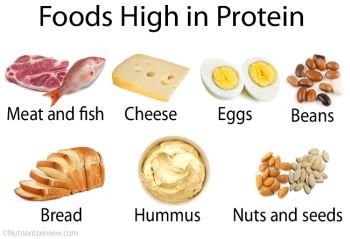
Protein is particularly abundant in meat, fish, poultry, and meat alternatives such as peanut butter and soy. A 3-ounce serving of cooked meat, poultry, or fish provides approximately 21 to 25 grams of protein, or about 7 grams per ounce. Dried beans are not only a good source of protein, but also of fiber. Dairy foods are excellent protein sources and grains and vegetables can also add to your daily protein intake.
Too Much or Too Little
A diet that is too high in protein has been linked to health problems such as cardio-vascular disease, kidney stones, osteoporosis, and some types of cancer. Eating too little protein can also lead to compromised bone health.
Diets that are inadequate in protein, calories, or both lead to protein-energy malnutrition (PEM). Two forms of PEM are kwashiorkor and marasmus. Kwashiorkor occurs when a person consumes sufficient calories but not sufficient protein. A classic symptom of severe kwashiorkor is edema in the legs, feet, and stomach. Other symptoms include dry and peeling skin, rashes or lesions, and brittle hair that can be easily pulled out. Marasmus is a disease caused by insufficient intake of energy.
Marasmic individuals are starving and are often not even at 60 percent of their desirable body weight for their height. Although protein is an important nutrient in your diet, you don’t want to consume protein-rich sources at the expense of your heart. Your best bet is to choose leaner protein foods, as they contain less heart-unhealthy saturated fat.
Here are some typical protein rich foods made over and made nutritionally better!
Are Protein Shakes and Supplements Beneficial? As you’ve learned in this text, our bodies need protein to build muscle, among other functions. But in addition to the protein we get from food, extra protein, in the form of powders and shakes, is frequently touted as a means to build muscle, lose weight, or help the body recover after exercise, especially among athletes and bodybuilders.
Does the average person need these types of specially formulated products? Is more protein always better? Read the arguments for and against and draw your own conclusions
Yes
• Older adults, who may have limited appetites and be less likely to consume adequate nutrients in foods, as well as people suffering from fatigue or certain other physical ailments, can benefit from a liquid protein supplement.
• High-level strength and endurance athletes can require twice as much protein as nonathletes to repair muscle tissue after bouts of strenuous exercise. Although most can get enough protein through their diet, some may need supplements.
• A supplement containing carbohydrates and a small amount of protein has proven effective, immediately after exercise, in improving muscle protein synthesis, which helps athletes, as well as anyone who exercises, recover faster post workout and build muscle.
NO
The average American already consumes enough protein to build muscle. Excess calories from additional protein will be stored in the body as fat.
• The claims made on supplement labels, and the purity of the supplements themselves, are not regulated by the FDA.
• Consuming too much protein, such as from shakes or supplements, can lead to loss of appetite, diarrhea, dehydration, and undue stress on the kidneys.
• Excess protein can also lead to a loss of calcium through the urine. Chronic calcium loss can increase the risk of osteoporosis, especially in women.
• While replacing certain meals with protein shakes may help reduce daily calories, thus helping you lose weight, you would miss out on the nutritional benefits of whole foods.
• Protein supplements tend to be expensive. Recall from the chapter that the average bar will cost about $1–3 each, and the average shake about $1.50, while a just-as-effective peanut butter sandwich costs about $0.22.
1. Do you think most people would benefit from consuming protein bars or shakes? Why or why not?
2. Are there any benefits of protein supplements that cannot be achieved by consuming protein-rich foods? If yes, what are they?
3. What role does marketing play in promoting protein shakes and supplements?
The Top Ten Points to Remember
1. Proteins are made of amino acids, which contain an acid group, an amine group, and a unique side chain. Each group is made of carbon, hydrogen, oxygen, and, in the case of the amine group, nitrogen. There are 20 unique side chains and therefore 20 unique amino acids. Amino acids are joined together by peptide bonds to form proteins.
2. The interactions between the amino acids cause individual proteins to fold into precise three-dimensional shapes. The shape of a protein determines its function. Heat, acids, bases, and salts denature these bonds and disrupt the shape and function of a protein.
3. Of the 20 amino acids, 9 are essential, so you need to obtain them through your diet. Your body can synthesize the remaining 11 amino acids, so they are nonessential.
4. With the help of stomach juices and enzymes, your body digests and breaks down proteins into amino acids to make them available for use. A limited amount of amino acids exists in pools in your body. The DNA in your cells directs the synthesis of proteins. Excess amino acids are also broken down and either stored in another form or used as energy, depending on your needs. The nitrogen is converted to the waste product urea and excreted in your urine.
5. Proteins play many roles in your body. They provide structural and mechanical support, supply materials for ongoing maintenance, form enzymes and hormones, maintain acid base and fluid balance, transport nutrients, and aid your immune system. Proteins can provide energy, be used to make glucose, and increase satiety at meals. Calories from excess protein will be stored as fat.
6. Healthy adults are usually in a state of nitrogen balance, which means they excrete as much nitrogen as they consume. Pregnant and lactating women and growing children are in a state of positive nitrogen balance because they use additional nitrogen to grow new tissues. People who are malnourished or experiencing medical trauma may be in negative nitrogen balance.
7. Protein quality is determined by the protein digestibility corrected amino acid score (PDCAAS), which is based on the protein’s digestibility and its amino acid profile. Protein from animal foods is more easily digested than protein from plant foods. Proteins from animal foods and soy are typically complete proteins and provide all of the essential amino acids along with some nonessential amino acids. Plant proteins are typically incomplete, as they are missing one or more essential amino acids.
8. Adults should consume 0.8 gram of protein for each kilogram of body weight. A varied diet provides most Americans with far more protein than they need. Consuming too much protein from animal sources can increase the amount of heart-unhealthy saturated fat in your diet. A high-protein diet has been associated with the loss of calcium from the body and the development of kidney stones. An excess of protein-rich foods in the diet can displace whole grains, fruits, and vegetables.
9. Protein-energy malnutrition (PEM) is caused by an inadequate amount of protein and/or calories in the diet. Kwashiorkor is a severe deficiency of protein; marasmus is a severe deficiency of calories. A deficiency of both calories and protein is known as marasmic kwashiorkor.
10. Healthy vegetarian diets can reduce the risk of certain chronic diseases. Some vegetarians abstain from all animal foods, while others may eat a limited amount. All vegetarians must take care to eat a varied diet that meets all of their nutrient needs. Answers to Myths and Misperceptions
1. True. If you make the correct food choices, your body can extract all the building materials it needs to create all of the proteins that it needs.
2. True. Protein also plays other important roles in your body.
3. True. There are thousands of unique enzymes in your body, and the majority are made of protein.
4. True. However, burning proteins, rather than carbohydrates or fat, for energy is an inefficient way to use this precious nutrient.
5. False. Growing children are in a state of positive nitrogen balance, which means that more nitrogen is being retained by the body (to be incorporated into new body proteins) than is excreted in the urine.
6. False. Although both pasta and chicken can contribute to your daily protein needs, the protein in poultry is more easily digested than the protein found in grains.
7. False. Proteins do play a vital role in your body, but a little can go a long way. For most healthy adults, less than one fifth of their daily calories should come from dietary protein.
8. False. Even an extremely active person or competitive athlete can easily meet his or her protein needs through a well-balanced diet.
9. True. A high-protein diet that contains artery-clogging saturated fat and low amounts of whole grains, fruits, and vegetables is not heart friendly and may raise your blood cholesterol
10. True. Soy foods are excellent sources of protein, and they help fight certain chronic diseases.