Botox: The Drug That’s Treating Everything
Botox boom: Millennials turning to injections for perfect selfie
What about my tiny bruises?
Susan said this:
I am 62 years old, and for many years, I have had tiny bruises about the size of a pinpoint all over my body. I keep getting more all the time, and some have gotten a little bigger. Should I be concerned?
The spots may represent petechiae, tiny blood haemorrhages in the uppermost layer of the skin. Petechiae can erupt from a variety of causes from just being normal to having leukaemia or lymphoma. Your doctor needs to rule out serious medical diseases and may choose to take a skin biopsy to check your skin on a microscopic level. Other conditions include vasculitis and Shamberg’s disease. The cause for petechiae should be explored.
What about stasis dermatitis?
Sam, age 71, said this:
I have a scaly, dark coloured spots on my ankle. I have been told it is poor circulation and to keep moisturisers on it. What else do you suggest?
Most likely you have stasis dermatitis, an extremely common rash that is caused by slowing circulation. Stasis dermatitis occurs from slowed blood flow to the legs caused by atherosclerosis (hardening of the arteries), vein disease, or chronic heart failure.
Leg elevation while at rest is a crucial part of treatment. If you have stasis dermatitis, elevate your heels to a point slightly higher than your hips without bending your knees.
What if I wear support hose?
A support-hose prescription such as T.E.D.® or Jobst® brands will help the blood flow in your legs. Heredity, age, surgery, occupation, and other issues are important factors in leg health. You can improve your circulation through exercise, good posture, choosing proper fitting clothing and footwear, and wearing gradient compression hosiery that does the job for you. These types of hose are particularly important if you are recovering from surgery and need to prevent an embolism.
Will the dark colour from stasis dermatitis ever disappear?
The brownish tan stain in the skin of your legs is caused by the deposition of iron in the skin from blood that has leaked out previously and by melanin. Although this dark skin colour can lighten over time, it usually takes a long time.
What can I do for skin rejuvenation?
Botox®, chemical peels, fillers, facial reconstruction, and prevention are all choices that you can make to help freshen your skin and lessen the accumulated effects of ageing. Products to treat mildly damaged skin include alpha-hydroxy acids, derived from fruit and dairy products, alone or in combination with tretinoin. Over-the-counter products containing retinol (of the vitamin A family), antioxidants (especially vitamins C and E), and hyaluronic acids may improve the appearance of fine lines and wrinkles. Daily use of moisturisers and sunscreens is a key to overall success.
What is a chemical peel?
As the name implies, this process peels the skin and may include one or more chemicals such as alpha-hydroxy acids, trichloroacetic acid, or carbolic acid. Other terms include chemexfoliation or derma peeling. The treatment is used to repair the skin damage of superficial to moderate photoaging and to reduce acne scars. Discuss the objectives of your treatment with your dermatologist. Based on your decision, the strength of the chemical solution and the depth of the peel will be modified.
A chemical solution causes the skin to blister mildly and to peel off over a period of hours and days. The new skin that forms to take its place is usually smoother and less wrinkled than the old skin. Often a series of mild, light peels in combination with a skin care program, including retinoids and a sunscreen protection program, is used to treat fine lines and wrinkles. If you have moderate skin damage, a medium-depth peel is often more effective to help eliminate solar elastoses, lentignines, and actinic keratoses.
What about after-effects? The redness that follows a chemical peel is similar to a sunburn and may last 3 to 5 days. If a medium-depth or deep peeling is done, the redness, swelling, blistering, and peeling may last for 7 to 14 days. Medications are generally prescribed to alleviate discomfort. Avoid overexposure to the sun.
What about laser resurfacing?
The laser is a light “pump” that narrowly segregates light of selected wavelength and “pumps” the light radiation to high intensity and varied durations depending on the required task. “Resurfacing” the skin with a laser allows for a reduction or removal of wrinkles, lines, and other effects of ageing and photoaging. Other treatments with the laser include removal of superficial brown pigmented lesions and deep pigmented lesions such as port wine stains and birthmarks and removal or improvement of scars, some skin cancers, vascular moles, tattoos, warts, and unwanted hair.
Included in the benefits of laser skin resurfacing are bloodlessness, precise effects, and 1-day outpatient treatment. A medium-depth chemical peel may be combined with laser resurfacing to achieve maximum effectiveness.
What about soft-tissue augmentation and fillers?
To achieve soft-tissue augmentation, a substance that is compatible with your body tissues is injected under the skin to eliminate irregularities such as wrinkles, pits, and scars. Collagen is a fibrous protein substance in all human and animal tissue. Injections are usually given in a series of treatments to fill out a wrinkle or depression. The effects of collagen injection may last for 3 to 12 months.
In micro lipo-injection, self-donated body fat is harvested from your own body and prepared for this fat-transfer procedure. The fat is used to replace fat lost from under the skin in the ageing process. The newest products, including Restylane®, Juvederm ®, Radiesse®, and others, show persistent effects for up to 2 years and have replaced many of the former products.
What is Botox, and is it right for me?
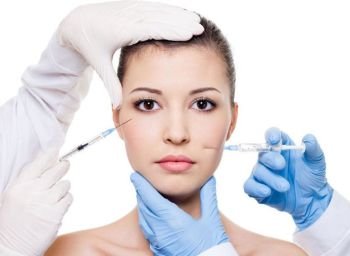
Purified botulinum toxin in very tiny amounts is injected into a targeted facial muscle, and the resulting nerve blockade of that muscle causes a local immobilisation of muscle movement that prevents crinkling and wrinkle lines from forming when you frown or squint. The potent biological effects of botulinum toxin can be used to diminish temporarily frown lines, crow’s-feet, and facial wrinkles. Although botulinum toxin is the powerful agent of botulism food poisoning, you cannot contract botulism from the cosmetic use of botulinum toxin. Although cosmetic procedures have become less invasive and require less downtime, you should know what to expect after the procedure. What are the risks and side effects of the procedure? Although the risks involved in most cosmetic procedures are minimal, any potential complication should be discussed before the cosmetic procedure is performed. Botox rejuvenation can result in temporary swelling, redness, or bruise.
How long will the results last? Most cosmetic results are not permanent, and if you smoke or have other complications when healing, it may take more time to see results. Botox rejuvenation usually lasts about 3 to 4 months. For maximum effectiveness, treatment with botulinum toxin is repeated over several sessions.
I have heard that dermabrasion might be great for me. What can I expect from it?
Dermabrasion is very useful for removal or reduction of acne and chickenpox scars and for facial skin rejuvenation. The procedure planes off the surface layer of skin with a rapidly rotating brush and removes the skin surface. A new layer of skin grows to replace the removed skin. Redness of the skin similar to a severe sunburn may occur afterwards, and healing usually is complete in about 10 days. Sunlight restriction for several months after treatment is recommended. Dermabrasion may be combined with other procedures such as soft-tissue augmentation to maximise effectiveness. At our office, we use a technique that removes less surface skin and is called microdermabrasion. It is quite useful for superficial skin defects and is repeated at intervals.
I have bumps on my nose from rosacea. What surgical alternative methods are available?
The electrosurgical resurfacing technique may be used to treat various raised surface areas. I have had several patients with the large bulbous bumps of rosacea, called rhinophymas (think of W.C. Fields’ nose), that responded well to a sculpting process using an electrosurgical technique. I smooth out the rough terrain, and the patients generally recover with few side effects. Treating the underlying rosacea also helps to prevent recurrence.
Terms:
Petechiae – Small red spots under the top layer of skin due to the leaking of nearby blood vessels.
Stasis dermatitis – A condition of the skin due to the pooling of blood in the lower legs; leaky valves in the veins prevent the proper return of the blood to the trunk of the body.
Dermabrasion – A surgical procedure used for cosmetic reasons to improve the appearance of the skin.
Botox, chemical peels, fillers, facial reconstruction, and prevention are all choices that you can make to help freshen your skin and lessen the accumulated effects of ageing.
Dermabrasion is very useful for removal or reduction of acne and chickenpox scars and for facial skin rejuvenation.