Find a Vitamin or Supplement THIAMINE (VITAMIN B1)
Thiamin (B1)
What Is Thiamin?
Thiamin, or vitamin B1, was the first B vitamin to be discovered. The path to its discovery began in the 1890s in East Asia. A Dutch doctor, Christiann Eijkman, noticed that chickens and pigeons that ate polished rice (rice with the nutrient and thiamin-rich outer layer and germ stripped away) developed polyneuritis (poly = many, neur = nerves, itis = inflammation).
This debilitating nerve condition resulted in the birds not being able to fly or stand up. Eijkman noted that polyneuritis was also a symptom of beriberi, a similar disease that had been observed in humans.
When Eijkman changed the birds’ diet to unpolished rice, with the outer layer and germ intact, the birds were cured.
Though Eijkman realized that the unpolished rice eliminated the symptoms, he didn’t know why. Finally, in 1911, Casimir Funk identified thiamin as the curative factor in the unpolished rice.
Functions of Thiamin
Thiamin Is Needed for Nerve
Function and Energy Metabolism Thiamin plays a role in the transmission of nerve impulses and so helps keep nerves healthy and functioning properly.
You also need thiamin for the metabolism of carbohydrates and certain amino acids. Thiamin also plays a role in breaking down alcohol in the body.
Daily Needs
The RDA for thiamin for adults is 1.1 milligrams for women and 1.2 milligrams for men. Currently, adult American men consume close to 2 milligrams of thiamin daily, whereas women, on average, at approximately 1.2 milligrams daily, so both groups are meeting their daily needs.
Food Sources
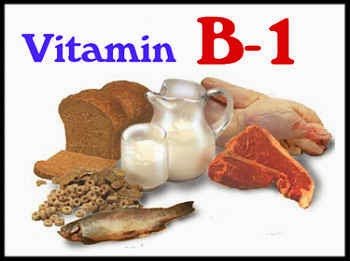
Enriched and whole-grain foods, such as bread and bread products, ready-to-eat cereals, pasta, and rice, and combined foods, such as sandwiches, are the biggest contributors of thiamin in the American diet. A medium-sized bowl of ready-to-eat cereal in the morning and a sandwich at lunch will just about meet your daily thiamin requirement.
Pork is the richest source of naturally occurring thiamin.
Too Much or Too Little
There are no known toxicity symptoms from consuming too much thiamin from food or supplements, so no upper level has been set.
The disease that occurs in humans who are deficient in thiamin is beriberi.
There are two types of beriberi. Wet beriberi affects the cardiovascular system, so symptoms often include a rapid heartbeat, shortness of breath, and oedema (swelling) in a person’s calves and feet. Dry beriberi affects the nervous system, so symptoms may include difficulty in walking, tingling in the hands and feet.