2 in 3 adults are overweight or obese
Demography/Epidemiology
I have heard people say that there is an “epidemic” of obesity. What does that mean? How bad is the problem in the United States?
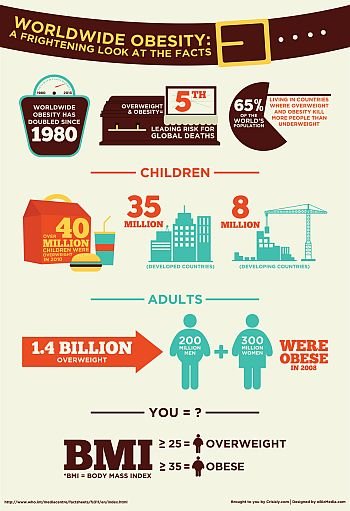
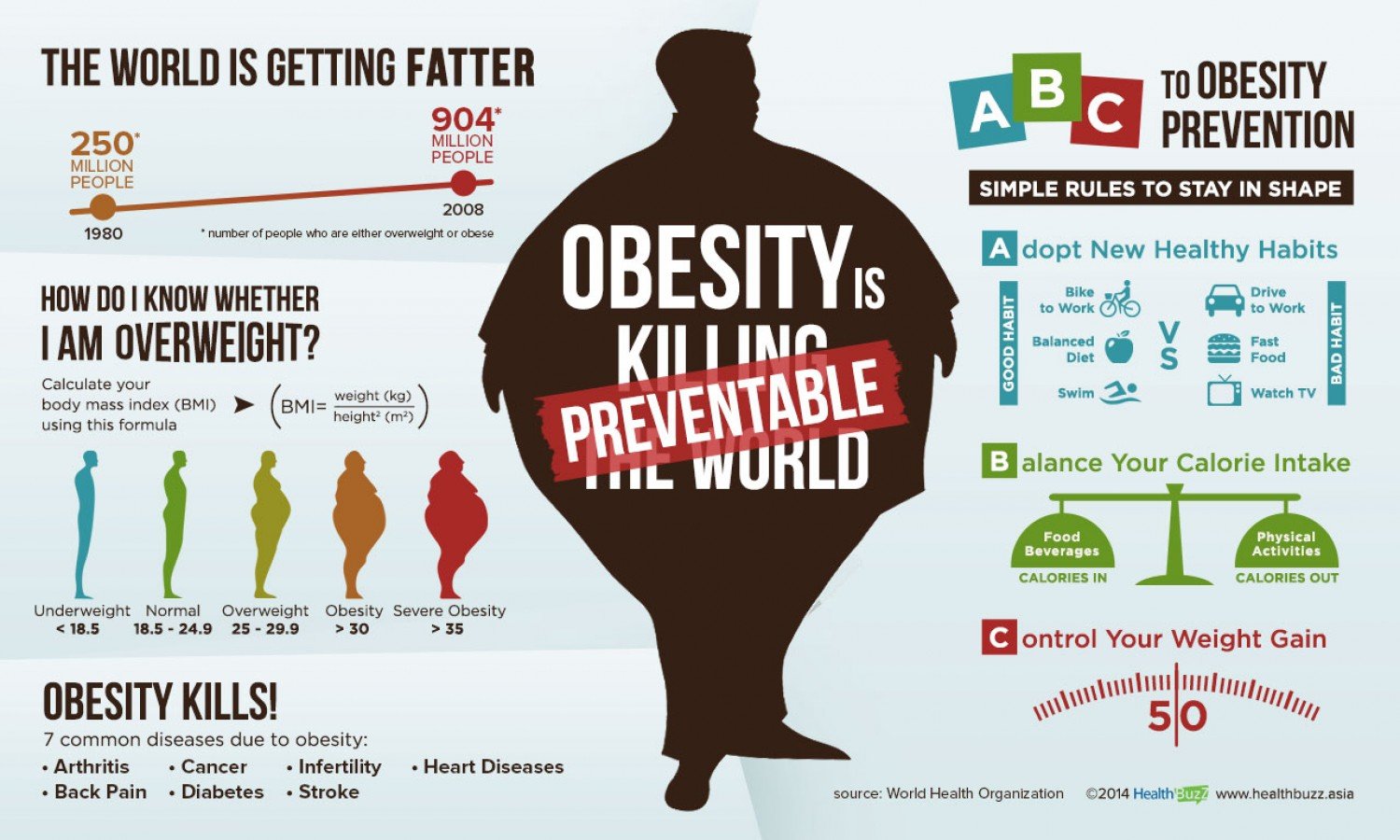
The World Health Organization has noted that there are 1 billion overweight adults and 300,000,000 obese adults on a planet of 6 or 7 billion people. There has been about a threefold increase in obesity rates in the developed world (North America, Europe, etc.) compared with 1980. Increases are seen in developing countries as well.
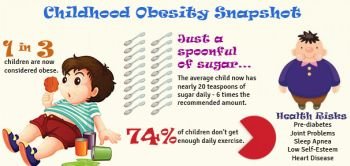
The U.S. Surgeon General has indicated that over 12 million American children (17% of all children in the United States) are overweight. The prevalence of obesity in 2 to 5-year-olds has gone from 5% in the period between 1976 and 1980 to 13.9% in 2004. The prevalence of overweight children has doubled and of overweight adolescents has tripled since 1980. Some 15% of children aged 6 to 19 are obese. The numbers are higher in Mexican-American and African-American adolescents.
The data are even more striking if one compares the rates to the 1960s when only 4% of kids 6 to 17 years old were overweight. Because up to 75% of overweight children become overweight adults, this is not just an isolated problem that goes away as children age. In a study published in 2009, researchers studied over 8,500 U.S. 4-year-olds born between 2001 and 2005. They found that over 18%-about 1 in 5-were already overweight. Differences were noted in various ethnic groups: 31% of American Indian/Native Alaskans, 22% of Hispanics, 21% of Blacks, 16% of Whites, and 13% of Asian 4-year-olds were obese. It is shocking that obesity is seen so early-even before these children started school. A recent Centers for Disease Control (CDC) conference, it was noted that in adults, the prevalence of obesity in the United States increased 37% from 1998 to 2006. The “average” American is now 23 pounds overweight. The cost of treating obesity increased from $74 billion in 1998 to $147 billion in 2008.
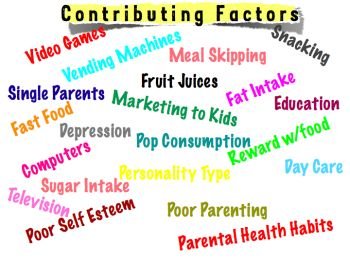
The reasons for this appear to relate to the changes in the way we live. Higher incomes seem to have produced a change in the types of food we consume, moving from complex carbohydrate foods (fruits, bread, and pasta) to foods high in fat (particularly saturated fat) and sugar. People are also doing less physical work, as machines now do many tasks that humans used to do. In addition, the work week has shortened, and there is more leisure time, as well as an increase in automobiles and public transport, all of which means that we are expending fewer calories than our ancestors did. This produces significant disease and disability in the population.
Marion’s mother:
My 15-year-old daughter is very heavy. She weighs over 220 pounds and is not very tall. We have to go to special stores to buy clothes for her, or I make them myself for her from bed sheets. Our whole family is very heavy. My husband and I are both overweight and always dieting. His brothers and my brothers and sisters are also very heavy. My mom was so heavy that she died during emergency appendix surgery. The doctors said her heart couldn’t take the stress of the weight, the infection, and the surgery. I think there’s something hereditary about this, and we’re going to ask Marion’s doctor to see if there is anything to do. I am very concerned.
My husband and I, along with our parents, are heavy. Is this a hereditary or genetic problem?
Undoubtedly, an element of genetic inheritance is involved in excess weight. In fact, two syndromes are clearly genetic: Bardet-Biedl syndrome and Prader-Willi syndrome (discussed below). However, given the enormous increase in obesity in the last 20 to 40 years, it is clear that this is not due to “genetics” alone since genes do not change that quickly. External environmental factors play a role. As some have said, your genes are not always your fate.
The U.S. Office of Health Genomics (a part of the Department of Health and Human Services) has reviewed the effect of genes on excess weight. Evidence for a genetic basis of obesity includes studies of twins, as well as of very obese people who have mutations of single genes. The number of people who have an identifiable genetic problem, however, seems to be under 5% of people with excess weight. Nonetheless, with the mapping of human genes, a Human Genome Obesity Map has been developed and is progressing rapidly. The Office of Health Genomics cites single mutations in 11 genes. These were strongly implicated in 176 cases of obesity. Fifty chromosomal locations relating to obesity have been mapped, and genes that might play a role in obesity have been identified: 426 variants of 127 genes have been associated with obesity. A gene that causes a deficiency of leptin has been found; this deficiency leads to obesity but is quite rare. Thus, obesity and genetics are clearly related, and it is likely that, over the years, researchers will identify more genes that are associated with obesity. For many or most cases of obesity, there are complex interactions among multiple genes that affect weight and obesity. It is possible that genomic therapy will ultimately be developed to allow control of the “offending” genes in obesity as well as in many other medical diseases where research is actively underway. It has recently been reported that a gene on chromosome 16 called the “fat mass and obesity-associated gene” might be responsible for up to 22% of all cases of common obesity in the general population. It is not yet known what the protein that this gene produces (transcribes) actually does, but it has been found that certain variants are associated with increased weight. There is also some link between this gene and diabetes and other components of the metabolic syndrome.
Bardet-Biedl syndrome: This is a rare familial, recessively transmitted genetic disorder. The clinical characteristics of this syndrome include impaired vision or even blindness, extra fingers, a diminished or missing sense of smell, a disease of the heart muscle, abnormalities with the reproductive and urinary systems, mental and developmental abnormalities, and obesity.
Prader-Willi syndrome: This rare genetic disorder affects one or more genes on the chromosome.
It is characterized by a difficult birth, poorly developed sex organs in the baby (hypogonadism), failure to thrive, excess sleeping, speech delay, overeating and obesity, spine curvature, poor muscle tone, learning disabilities, and other abnormalities. The overheating may be extremely excessive, leading to morbid obesity, which is perhaps the most troublesome part of the syndrome.
The “thrifty gene” hypothesis has been developed as a result of this work in genetics. This postulates that in ancient times humans developed genes to store fat so that during times of famine (when hunting or crops failed) the body would have a reserve of energy in the form of fat to get them through these tough times. But now, in the Western world at least, where food is plentiful and we have become much more sedentary, we don’t need to store body fat for hard times. Thus, fat storage genes are a remnant of older times that are no longer needed. Yet, although everybody has these genes and cells, not everybody becomes obese. There are clearly other factors in play.
If obesity is genetic, can anything be done about it?
No treatment, including gene therapy and genetic manipulation, is available to alter the genetics of a person to correct the disease. Perhaps in the future, something will be developed, but now “genetic treatments” do not exist. If your family carries the genes for the Bardet-Biedl syndrome or the Prader-Willi syndrome, then you certainly should speak with your physician and see a genetic counselor.
Terms:
Carbohydrate – One of the three main sources of energy for the body. These are compounds made up of carbon, hydrogen, and oxygen and include sugars, starches, celluloses, and gums. There are several types based on size and shape: monosaccharides, disaccharides, trisaccharides, polysaccharides, and heterosaccharides. They are a key source of energy for the body. Each gram of carbohydrate has four calories.
Bardet-Biedl – syndrome A rare familial, recessively transmitted genetic disorder. The clinical characteristics of this syndrome include impaired vision or even blindness, extra fingers, a diminished or missing sense of smell, the disease of the heart muscle, abnormalities with the reproductive and urinary systems, mental and developmental abnormalities, and obesity.
Prader-Willi syndrome – A rare genetic disorder affecting one or more genes on the chromosome. It is characterized by a difficult birth, poorly developed sex organs in the baby, failure to thrive, excess sleeping, speech delay, overeating and obesity, spine curvature, poor muscle tone, learning disabilities, and other abnormalities. The overheating may be extremely excessive, leading to morbid obesity.
Genes – Units of DNA within a chromosome that can produce a protein having a particular function or producing a change in the body.
Mutations – Permanent changes in genes. May or may not produce changes in the individual.
Leptin – A hormone produced by fat cells that seems to play a role in the appetite center of the brain.
Chromosome – Thread-like structures containing genes found in the DNA of a cell. There are 23 pairs of chromosomes in human cells.
Protein – One of the three main sources of energy for the body. Proteins are also prime building blocks for many of the cells in the body as well as for hormones, antibodies, enzymes, and other key compounds. One gram of protein contains four calories.
Genetic disorder – A disease or abnormality in the body due to a problem in the DNA (gene, chromosome) of a person or organism that is inherited.
Hypogonadism – Poorly developed or incomplete sexual organs.
The U.S. Surgeon General has indicated that over 12 million American children (17% of all children in the United States) are overweight.