Introduction
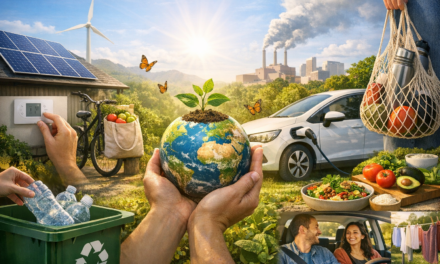
Climate action is no longer a political choice or a niche environmentalist agenda. In 2025, it stands as a civilizational imperative. The climate crisis is not merely an environmental threat-it is a threat to geopolitical stability, food security, public health, and the very continuity of life as we know it. The planet is on high alert: record-breaking heatwaves, increasingly frequent extreme events, silent ecological collapses, and mounting pressure on natural resources. In this scenario, environmental sustainability emerges as a structuring axis of public policies, business strategies, and multilateral pacts.
The End of Climate Neutrality
Climate neutrality, once seen as a distant goal, has become a starting point. Countries such as Germany, Japan, and Chile have already incorporated net-zero targets into their national plans, while blocs like the European Union advance regulations that penalize emissions and reward green innovation. China, the world’s largest emitter, has committed to neutrality by 2060, and the United States, despite political setbacks, maintains robust investments in clean energy and resilient infrastructure.
The energy transition is at the heart of this shift. Replacing fossil fuels with renewable sources-solar, wind, green hydrogen-is not just an environmental issue but an economic and strategic one. Clean energy generates jobs, reduces geopolitical dependencies, and strengthens energy sovereignty. In countries like Indonesia, international partnerships are mobilizing billions of dollars to ensure a just transition that does not leave vulnerable communities behind.
Circular Economy and Regenerative Innovation
Environmental sustainability goes beyond reducing emissions. It demands a profound reconfiguration of production models. The circular economy, which replaces the linear paradigm of “extract-produce-discard” with regenerative cycles, is gaining traction in sectors such as construction, fashion, technology, and food. Companies that once operated on planned obsolescence now invest in durability, reuse, and recycling as competitive advantages.
In heavy industries-cement, steel, aluminum-carbon capture technologies and low-impact processes are being scaled. The challenge is to reconcile economic growth with ecological responsibility, especially in developing countries that still face structural deficits. Green industrialization can be a lever for climate justice, provided it is accompanied by accessible financing, technology transfer, and local capacity building.
Climate Diplomacy and Global Cooperation
Climate action is, by definition, transnational. No country can face the effects of climate change alone, nor solve its causes in isolation. Climate diplomacy has become a strategic field where goals, funds, technologies, and responsibilities are negotiated. COP30, held in Belém do Pará, Brazil, marks a turning point: countries are being called to present more ambitious and financially viable commitments.
South-South cooperation, adaptation and mitigation funds, and loss and damage compensation mechanisms are crucial instruments for ensuring equity. After all, the countries least responsible for historical emissions are the most affected by their impacts. In 2025, the International Court of Justice is analyzing the legal implications of climate inequality, which may set precedents for reparations and redistribution of responsibilities.
Biodiversity: Guardian of Planetary Balance
Biodiversity is often treated as an appendix to the environmental agenda, but in reality, it is the foundation of ecological resilience. Tropical forests, coral reefs, wetlands, and savannas are not just lush landscapes-they are living systems that regulate the climate, purify water, store carbon, and sustain millions of species, including humans.
The accelerated loss of biodiversity, driven by deforestation, pollution, and climate change, compromises food security, public health, and economic stability. The extinction of pollinators, for example, directly threatens agricultural production. The degradation of mangroves and wetlands increases coastal vulnerability to storms and floods.
In response, countries are adopting conservation strategies based on scientific evidence and traditional knowledge. The “30×30” concept-protecting 30% of land and oceans by 2030-has gained global support. Extractive reserves, ecological corridors, and fully protected areas are instruments that reconcile preservation with local development. Biodiversity, far from being an obstacle to progress, is a strategic ally of sustainability.
Climate Justice: Between Responsibility and Reparation
The climate crisis does not affect everyone equally. Indigenous communities, riverside populations, smallholder farmers, and residents of urban peripheries are on the front lines of the impacts but often on the margins of decision-making. Climate justice seeks to correct this asymmetry, recognizing that the most vulnerable must be protected, heard, and empowered.
This implies public policies that ensure access to information, participation in decision-making processes, and equitable distribution of resources. It also means recognizing the territorial, cultural, and spiritual rights of Indigenous peoples, whose relationship with nature is profoundly sustainable.
Climate justice is also intergenerational. Decisions made today will shape the world of future generations. Youth, leading movements like Fridays for Future, demand not just action but coherence. Green rhetoric must translate into concrete, measurable, and accountable practices.
Technological Innovation: A Tool for Transformation
Technology plays an ambiguous role in the climate crisis: it is part of the problem but also part of the solution. Accelerated digitalization consumes energy and generates electronic waste, but it also enables environmental monitoring, smart resource management, and climate education at scale.
Solutions such as blockchain for supply chain traceability, artificial intelligence for disaster prediction, and biotechnology for regenerative agriculture are being applied with promising results. Climate innovation is not limited to cutting-edge laboratories-it also emerges from local communities, cooperatives, startups, and collaborative knowledge networks.
The challenge is to ensure that this innovation is accessible, ethical, and guided by equity values. The digital transition must be green, and the green transition must be inclusive.
Cities and Communities: Laboratories of Sustainability
More than half of the world’s population lives in urban areas, and this number continues to grow. Cities concentrate emissions, consumption, and inequalities, but they also concentrate solutions. Electric mobility, bioclimatic architecture, urban agriculture, waste management, and environmental education are practices that can be scaled with real impact.
Cities like Copenhagen, Medellín, and Singapore have shown that it is possible to combine population density with quality of life and low environmental impact. Urban governance, when participatory and data-driven, can transform neighborhoods into resilient ecosystems.
Communities, in turn, are fundamental agents of change. Sustainability is not imposed-it is built collectively. Initiatives such as community composting, collective gardens, solar energy cooperatives, and conscious consumption networks are examples of how local action can generate global impact.
Climate Governance: Between Complexity and Urgency
Climate governance is inherently multifaceted. It involves multiple levels-local, national, regional, and global-and multiple actors: governments, businesses, NGOs, communities, scientists, and citizens. Coordination among these agents is a constant challenge, especially in the face of divergent interests, power asymmetries, and distinct urgencies.
Instruments such as the Paris Agreements, the Sustainable Development Goals (SDGs), and IPCC reports provide technical and political guidelines, but their implementation depends on political will, institutional capacity, and social pressure. Transparency, accountability, and citizen participation are pillars of effective climate governance.
Moreover, climate governance must be adaptive. Today’s solutions may not serve tomorrow. The ability to learn from mistakes, incorporate new evidence, and adjust strategies is essential. This requires flexible institutions, visionary leadership, and a culture of continuous innovation.
Ethical and Cultural Dilemmas of Sustainability
Environmental sustainability is not just a technical issue-it is an ethical one. It forces us to rethink values, habits, and priorities. Unbridled consumption, unlimited exploitation of nature, and indifference to others’ suffering are incompatible with a sustainable future.
This leads to profound dilemmas: how far are we willing to give up immediate comforts for the collective good? How do we balance the right to development with the duty of preservation? How do we deal with climate denialism, which undermines scientific consensus and delays urgent actions?
The ethics of sustainability demand intergenerational empathy, respect for cultural diversity, and commitment to social justice. It also demands courage to confront entrenched interests and imagine alternatives. The ecological transition will not be neutral-it will involve losses and gains, ruptures and reconstructions.
Paths to a New Civilizational Culture
Climate action and environmental sustainability are not just responses to a crisis—they are opportunities to reinvent our way of living, producing, and coexisting. They invite us to build a new civilizational culture based on cooperation, care, and creativity.
This culture is already emerging in multiple spaces: schools teaching agroecology, companies adopting regenerative principles, cities prioritizing collective well-being, communities practicing ecological solidarity. Art, literature, spirituality, and education play a central role in this process, helping to imagine possible futures and cultivate transformative sensibilities.
The ecological transition will not be made only by decrees or technologies-it will be made by people. By citizens who choose to consume consciously, vote responsibly, educate with purpose, and act with coherence. By leaders who place the common good above immediate interests. By collectives that build bridges between knowledge, cultures, and territories.
Conclusion
Climate action and environmental sustainability are today’s great challenges and great hopes. They demand clarity about the gravity of the crisis, but also confidence in humanity’s ability to transform realities. The future is not given-it is contested. And every choice, every gesture, every policy matters.
The path is arduous, but possible. And more than possible-it is necessary. Because it is not just about saving the planet. It is about saving what is most dignified in humanity: its ability to care, to create, and to coexist.