The concept of government transparency and accountability stands as the cornerstone of any functioning democracy. As we navigate the year 2026, the relationship between citizens and their governing bodies has reached a critical juncture. The rapid advancement of digital technologies, the rise of artificial intelligence, and the growing demand for civic participation have fundamentally altered how governments operate and how they are held responsible for their actions. Transparency entails the availability of information about government processes, decisions, and outcomes, while accountability requires that officials face consequences for their performance and adherence to legal and ethical standards. In an era where information travels instantly across the globe, the ability of a state to maintain public trust depends heavily on its commitment to these two principles. This essay explores the evolving landscape of government transparency and accountability in 2026, examining the benefits, the technological challenges, and the essential frameworks required to foster a healthy democratic environment.
The Digital Transformation of Governance
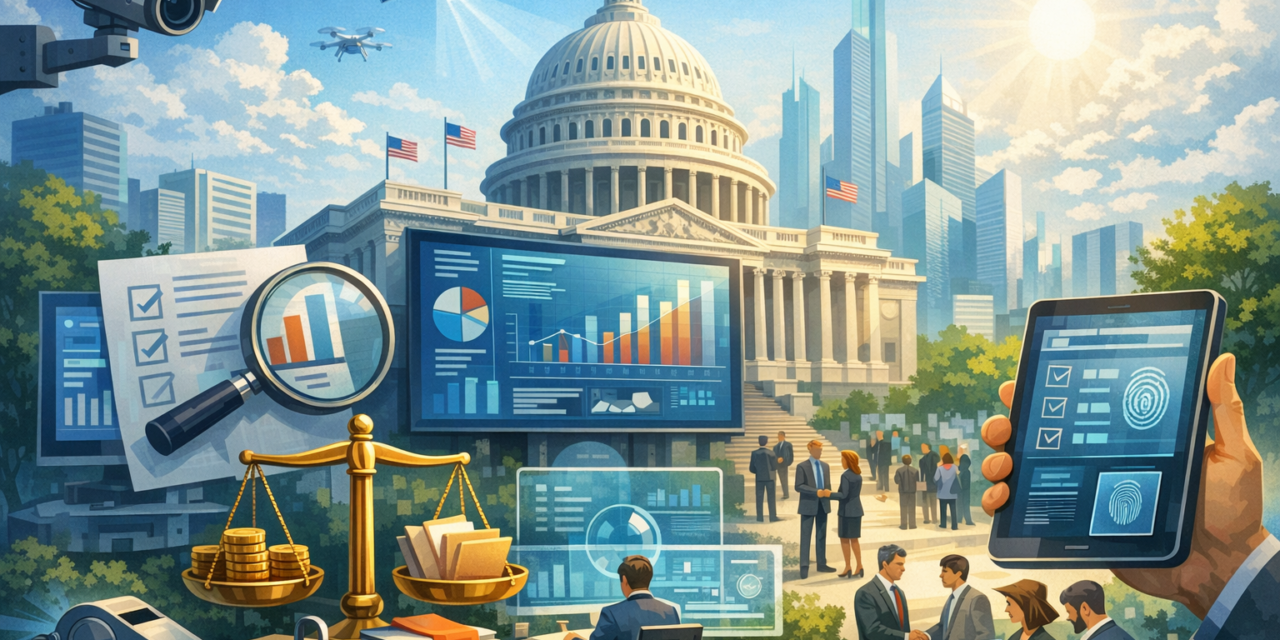
By 2026, the digital transformation of the public sector has become a primary driver of transparency. Governments across the world have transitioned from traditional paper based reporting to real time digital dashboards that track public expenditure, policy implementation, and administrative efficiency. These platforms allow citizens to monitor where their tax dollars are allocated with unprecedented precision. For instance, many municipal governments have adopted open data initiatives that provide raw information regarding infrastructure projects, public contracts, and environmental impact assessments. This shift empowers individuals to serve as oversight agents, reducing the likelihood of corruption and inefficiency.
However, this digital shift brings its own set of challenges. As governments adopt complex algorithms and artificial intelligence to manage social services, the black box problem emerges. When an automated system denies a citizen a benefit or makes a decision regarding judicial sentencing, the internal logic of that decision is often opaque. Transparency in 2026 is no longer just about publishing financial records; it is about ensuring that the decision making processes of government machines are explainable and auditable. Without these safeguards, the digital tools meant to enhance efficiency could inadvertently create new layers of secrecy that hide biases or systemic errors from the public eye.
Accountability in the Age of Artificial Intelligence
Accountability in the modern era requires a robust framework for managing technological responsibility. As we look at the progress made by 2026, it is clear that simply having access to data is insufficient if that data cannot be translated into meaningful oversight. When public sector entities use machine learning to process information, they must be held accountable for the outputs produced. This necessitates a new breed of civil servants who possess the technical literacy to audit software and the ethical grounding to demand human oversight in critical areas.
The potential for mismanagement is magnified by the speed at which automated systems operate. If a government agency automates its procurement process but fails to build in checks against algorithmic bias, public funds could be funneled toward preferred vendors without any human intervention or visible paper trail. Consequently, legislatures in 2026 have increasingly focused on creating legal definitions for algorithmic accountability. These laws require that all government entities provide a clear justification for automated decisions and allow for an appeals process that involves human intervention. This ensures that even in an automated world, the principle that government power originates from the consent and scrutiny of the governed remains intact.

The Role of Investigative Journalism and Civil Society
While technology serves as a tool for transparency, the human element remains vital. By 2026, the role of investigative journalism has evolved to include data journalism as a primary skill set. Reporters are no longer just interviewing sources; they are analyzing massive datasets to uncover patterns of misconduct that were previously invisible. This collaborative approach between tech savvy journalists and public sector whistleblowers has led to major breakthroughs in holding high level officials accountable.
Furthermore, civil society organizations have become more specialized in monitoring government performance. These groups often utilize crowdsourced data and satellite imagery to verify the claims made by official government reports. For example, in environmental policy, local communities are now using affordable air quality sensors to cross reference government environmental data. When discrepancies arise, these groups provide the public pressure necessary to force governmental transparency. This ecosystem of independent verification is essential because it prevents the state from monopolizing the narrative. In 2026, the most transparent governments are those that embrace this partnership with civil society, viewing oversight not as a threat but as a necessary component of high quality governance.
Global Standards and Cross Border Accountability
Transparency is not merely a domestic concern. In an interconnected world, the actions of one government often have ripples across borders. By 2026, international cooperation has become a necessity to ensure that global institutions and multinational agreements remain accountable. The rise of international transparency indexes has forced nations to compete for standing, as foreign investment and diplomatic relations increasingly depend on perceived levels of institutional integrity.
When nations work together to share best practices in transparency, they create a global standard that makes it harder for corruption to hide in the shadows of offshore accounts or clandestine international deals. The push for global beneficial ownership registries, which track the ultimate owners of companies and properties, has been a significant development in 2026. By exposing the hidden structures used for money laundering and bribery, these registries provide a powerful deterrent against illicit financial flows. This level of transparency reinforces the idea that public trust is a global public good. Nations that prioritize these initiatives are finding themselves more resilient to the pressures of instability and better equipped to handle the demands of their citizens.
Overcoming the Barriers to Transparency
Despite the progress made by 2026, significant barriers to transparency persist. The primary obstacle remains political resistance. When governments perceive that transparency will lead to political embarrassment or loss of power, they often enact policies that restrict access to information under the guise of national security or privacy. This creates a tension between the need for an open state and the requirement for sensitive information protection.
To overcome these barriers, education is key. A populace that does not understand how to interpret government data is easily manipulated by misinformation. Therefore, the curriculum of 2026 has increasingly prioritized civic education, teaching students how to engage with public databases, analyze government reports, and understand the administrative structure of their state. When citizens are empowered with the skills to participate, transparency becomes a lived reality rather than a passive observation. Strengthening the legal protections for whistleblowers is another critical step, ensuring that individuals who courageously speak out against corruption are shielded from retaliation. Without the courage of the individual to speak the truth, the systems designed to promote transparency will eventually fail.
The Future of Civic Engagement
As we look toward the horizon beyond 2026, the path forward requires a renewed commitment to the principles of openness and duty. The evolution of transparency will likely involve the integration of blockchain technology to create immutable records of government transactions. Such systems would make it impossible to alter records after the fact, providing an unprecedented level of verification for public spending. While the technology is promising, its success will depend on the willingness of leadership to implement it with sincerity.
The future of accountability also lies in the decentralization of oversight. By giving local communities more control over how their resources are managed and providing them with the data necessary to oversee these projects, governments can rebuild the fraying trust between the institution and the individual. Transparency is not just about showing the math; it is about showing the intent behind public policy. When leaders clearly communicate why decisions are made and are willing to take responsibility for the outcomes, they foster a culture of accountability that survives even the most difficult political challenges.
Conclusion
In conclusion, government transparency and accountability in 2026 represent a dynamic balance between technological possibility and democratic necessity. While tools such as open data platforms and algorithmic auditing have provided new ways to keep officials in check, these advancements are only as effective as the legal and social frameworks that support them. Transparency is not a static destination but a continuous process of opening government doors and inviting the public to examine the work being done. Accountability is the active result of that examination, where the consequences for failing to serve the public interest are clearly felt.
As society continues to integrate complex technologies into the fabric of governance, the demand for clear, explainable, and accessible information will only increase. We have entered a period where the traditional methods of oversight must be supplemented by modern approaches to data verification and global cooperation. Ultimately, the survival and flourishing of democratic societies depend on their capacity to remain honest with the people they serve. By prioritizing transparency and fostering a culture where accountability is expected rather than requested, nations can build a stronger, more resilient foundation for the years to come. The experience of 2026 demonstrates that while the challenges are great, the commitment to open and accountable government remains the most effective tool we have for ensuring justice, equality, and progress for all citizens across the globe. We must continue to push for a world where every public decision is made in the light of day, for the benefit of the many rather than the few.
Bibliography
- Bovens, M. Analysing and Assessing Accountability: A Conceptual Framework. European Law Journal, 2007.
- Fung, A., Graham, M., & Weil, D. Full Disclosure: The Perils and Promise of Transparency. Cambridge University Press, 2007.
- Hood, C. & Heald, D. (Eds.). Transparency: The Key to Better Governance? Oxford University Press, 2006.
- Meijer, A. Understanding the Complex Dynamics of Transparency. Public Administration Review, 2013.
- OECD. Open Government Data Report: Enhancing Policy and Accountability. OECD Publishing, 2020.
- United Nations. E‑Government Survey 2022: The Future of Digital Government. UN DESA.
- European Commission. Ethics Guidelines for Trustworthy AI. High-Level Expert Group on Artificial Intelligence, 2019.
- Transparency International. Corruption Perceptions Index 2025. Transparency International, 2025.
- Zuboff, S. The Age of Surveillance Capitalism. PublicAffairs, 2019.
References:
https://pmc.ncbi.nlm.nih.gov/articles/PMC12711073/
https://pmc.ncbi.nlm.nih.gov/articles/PMC11255140/
https://www.mdpi.com/2673-6470/5/4/59
https://journal-bpa.org/index.php/jbpa/article/download/34/19/176
https://pmc.ncbi.nlm.nih.gov/articles/PMC5250644/
https://www.mdpi.com/2076-3387/15/12/493
https://www.mdpi.com/2071-1050/17/23/10700
https://pmc.ncbi.nlm.nih.gov/articles/PMC9487844/
https://ejournal.goacademica.com/index.php/jv/article/download/1420/872/
https://www.frontiersin.org/journals/political-science/articles/10.3389/fpos.2025.1671373/full
https://www.mdpi.com/2071-1050/15/5/4672
https://www.scirp.org/journal/paperinformation?paperid=142207
https://www.sciencedirect.com/science/article/abs/pii/S0313592624001462
https://www.jstor.org/stable/27170531
https://journalisslp.com/index.php/isslp/article/view/451
https://www.sciencedirect.com/science/article/pii/S2667096824000934
https://www.sciencedirect.com/science/article/pii/S0740624X24000467
https://bristoluniversitypressdigital.com/view/journals/wge/6/1/article-p122.xml
https://pmc.ncbi.nlm.nih.gov/articles/PMC7968001/