- Be a Nutrition Sleuth
- Spotting a Bogus Weight-Loss Product
- When a miraculous weight-loss product sounds a little too good to be true, it probably is! Identify the signs of a bogus product at www.pearsonhighered.com/blake.
- Get Real!
- Find Online Information You Can Use
- Don’t know where to begin to find credible nutrition information on the Internet?
- Visit www.pearsonhighered.com/blake for a reliable starting point.
35.1 The Top Ten Points to Remember
1. Food choices are influenced by personal taste, culture, social life, accessibility, cost, and time constraints. You eat out of habit, in response to your emotions, and, of course, because food is delicious.
2. There are six categories of nutrients: carbohydrates, lipids (fats), proteins, vitamins, minerals, and water. Your body needs a mixture of these nutrients in specific amounts to stay healthy.
3. Nutrition plays an important role in preventing many of the leading causes of death in the United States, including heart disease, cancer, stroke, and a certain type of diabetes.
4. Carbohydrates, fats, and proteins provide the energy (calories) that your body needs. The majority of your daily calories should come from carbohydrates. You also need adequate amounts of both fats and proteins. Most of the proteins that you eat should be used to build and maintain your body tissues, muscles, and organs, rather than for energy.
5. Vitamins and minerals are important for metabolism and to properly utilize carbohydrates, fats, and protein. Many vitamins aid enzymes in your body.
6. Water is an essential nutrient that is vital for many functions. It bathes the inside and outside of your cells, helps maintain your body temperature, and acts as a lubricant and protective cushion.
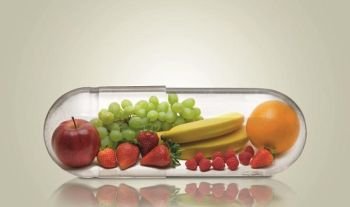
7. Eating a well-balanced diet is the best way to meet your nutrient and health needs. Vitamin and mineral supplements can help complete a healthy diet but should not replace foods.
8. Nutrition is a science and new discoveries are continually made. Nutritional genomics is the integration of nutrition and genomics. Genomics is the study of genes, their functions in your body, and how the environment, including the foods and nutrients that you eat, influences the expression of your genes and, therefore, your health.
9. Sound nutrition information is the result of numerous scientific studies that are based on the scientific method. These research findings should be reviewed by and shared with the medical and scientific community. You should never change your diet or lifestyle based upon the findings of just one or a few studies.
10. Nutritional advice should come from credible sources. Individuals who call themselves nutritionists may or may not have a credible nutrition education. Always assess the source of nutrition information to make sure that it is credible.
35.2 Test Your Knowledge
1. Which of the following can influence your food choices?
a) Your ethnic background
b) Your busy schedule
c) Your emotions
d) All of the above
2. Nutrition is
a) The study of genes, how they function in your body, and how the environment can influence your genes.
b) The study of how your body functions.
c) The scientific study of how nutrients and compounds in foods that you eat nourish and affect your body functions and health.
d) The study of hormones and how they function in your body.
3. The energy in foods is measured in carbohydrates
a) True
b) False
4. The majority of your daily calories should come from
a) Fats.
b) Minerals.
c) Vitamins.
d) Carbohydrates.
e) Water.
5. Which nutrients may help enzymes function in your body?
a) Carbohydrates
b) Vitamins
c) Minerals
d) All of the above
e) b and c only
6. Everyone needs to take vitamin and mineral supplements to be healthy.
a) True
b) False
7. Which of the following are overarching goals for Healthy People 2020?
a) Attain high-quality, longer lives free of preventable disease, disability, injury, and premature death
b) Achieve health equity, eliminate disparities, and improve the health of all groups
c) Create social and physical environments that promote good health for all
d) All of the above
8. The first step in the scientific method is to
a) Make observations and ask questions.
b) Form a hypothesis.
c) Do an experiment.
d) Develop a theory.
9. You decide to have your diet assessed and be counseled by a nutrition professional because you want to lose weight. Which of the following individuals would be the most credible source of information?
a) An employee of your local health food store
b) Your personal trainer at the gym
c) A licensed dietitian
d) Your aunt
e) Your roommate, who runs for the campus track team
10. When exploring a website that provides nutrition and health information, which of the following should you looks at to assess its content?
a) Who wrote it
b) When it was written
c) When it was last updated
d) a and b only
e) a, b, and c
35.3 Answers
1. (d) Your food choices are influenced by many factors, including your ethnic background, the limited time you may have to devote to food preparation, and your emotions.
2. (c) Nutrition is about how nutrients affect your body and health. The study of genes is called genomics. Physiology is the study of how your body functions. The study of hormones and their function in your body is called endocrinology.
3. (b) False. Carbohydrates are a source of energy in your foods. The energy in your foods is measured in units called calories.
4. (d) The majority of your daily calories should come from carbohydrates. Vitamins, minerals, and water don’t provide calories. Fats do contain calories, but these shouldn’t be the main source of energy in your diet.
5. (e) Certain vitamins and minerals may aid enzymes in your body. Carbohydrates don’t aid enzymes, but these nutrients need enzymes to be properly metabolized.
6. (b) False. Many people can meet their vitamin and mineral needs from a well-balanced diet. Those who can’t should take a supplement in addition to eating a healthy diet.
7. (d) All are goals for Healthy People 2020.
8. (a) The scientific method begins with scientists observing and asking questions. From this step, a hypothesis follows. The scientists will then test their hypothesis using an experiment. After many experiments confirm their hypothesis, a theory will be developed.
9. (c) Unless the salesperson, personal trainer, your aunt, and your roommate are all licensed dietitians, they are not qualified to provide nutrition counseling.
10. (e) When reading nutrition and health information on the Internet, it is very important to make sure the source is qualified to provide this information. Because you also need to assess if the information is current, you should find out when it was written and if it has been or needs to be updated.
35.4 Web Resources
Examples of reliable nutrition and health websites of United States include:
Agricultural Research Service:
American Cancer Society: www.cancer.org
American College of Sports Medicine: www.acsm.org
American Diabetes Association: www.diabetes.org
American Dietetic Association: www.eatright.org
American Heart Association: www.heart.org/HEARTORG/
American Institute for Cancer Research: www.aicr.org
American Medical Association: www.ama-assn.org
Centers for Disease Control: www.cdc.gov
Center for Science in the Public Interest: www.cspinet.org
Food Allergy Network: www.foodallergy.org
Food and Drug Administration: www.fda.gov
Food and Nutrition Information Center: www.nal.usda.gov/fnic
National Cholesterol Education Program: www.nhlbi.nih.gov/about/ncep
National Institutes of Health: www.nih.gov
National High Blood Pressure Program: www.nhlbi.nih.gov/hbp
National Osteoporosis Foundation: www.nof.org
Shape Up America!: www.shapeup.org
Tufts University Health & Nutrition Newsletter: www.tuftshealthletter.com
U.S. Department of Agriculture: www.nutrition.gov
Vegetarian Resource Group: www.vrg.org
Weight Control Information Network: www.win.niddk.nih.gov/index.htm
35.5 Answers to Myths and Misperceptions
1. True. There are many outside factors that stimulate and motivate you to eat.
2. True. Heart disease is the leading cause of death among Americans. The good news is that your diet can play an important role in preventing it.
3. False. Carbohydrates and fat provide energy, but vitamins are not an energy source. They do play important roles in helping your body use both carbohydrates and fat.
4. True. Calories are the measure of energy in foods.
5. True. Although water is often overlooked as an essential nutrient, it shouldn’t be.
6. False. A supplement can augment a healthy diet, but it can’t replace it.
7. False. Although lean meats, poultry, and fish are excellent sources of protein, they don’t contain fiber.
8. True. Shocked? Americans spend an enormous amount of money shopping for supplements.
9. False. Currently, obesity is at epidemic proportions in the United States, and it isn’t just affecting adults.
10. False. Anyone can call himself or herself a nutritionist.