Why are geriatric dermatology and aging skin receiving particular attention?
According to current U.S. Census statistics, the population that is over 65 years old is increasing, and this trend is expected to continue well into the 21st century.
Additionally, the population of those aged 80 years or older is rapidly increasing. As baby-boomers begin to enter senior citizenship and the older get older, an increased emphasis in geriatric medicine is inevitable. Because the human population is living longer, chronic diseases, including skin diseases, will become more prevalent.
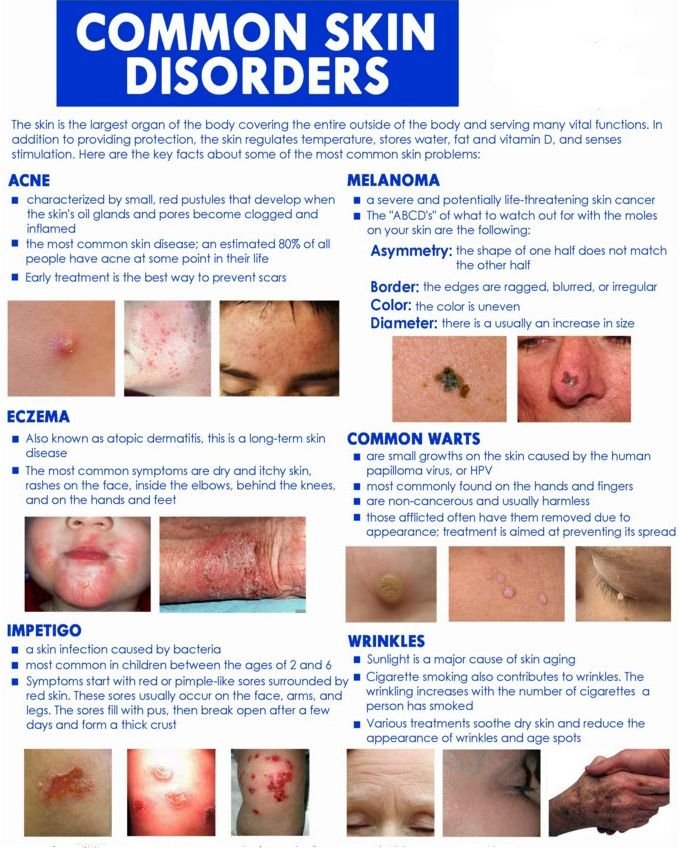
As people age, they may increasingly develop skin-related disorders.
Two types of skin aging exist:
(1) Intrinsic aging, which includes those changes that are due to normal maturity and thus occur in all individuals, and
(2) Extrinsic aging, which is produced by extrinsic factors such as ultraviolet light exposure, smoking, and environmental pollutants.
Decreased mobility, drug-induced disorders, and increased incidences of many chronic diseases are among the reasons that older persons are at heightened risk for skin diseases.
Terms:
According to current U.S. Census statistics, the population that is over 65 years old is increasing, and this trend is expected to continue well into the 21st century.
Melanocytes Cells in the basal layer of epidermis that are involved in the production of dark colored pigment known as melanin.
Sebum – The oily substance produced by glands in the skin.