The panel has made every attempt to base its recommendations on published evidence, with particular attention to RCTs. Data from RCTs provide the strongest evidence regarding the impact of an intervention.
The RCT literature predominantly describes short-term outcomes (< 1 year), although there are a small number of published RCTs of intermediate and long-term treatment and maintenance of weight loss. The panel chose to examine RCTs lasting 4 months or longer as their first priority.
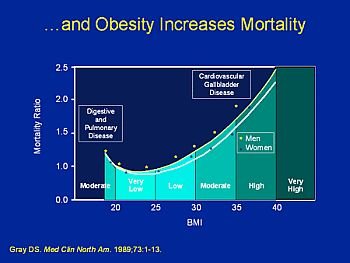
Evidence of beneficial effects of weight reduction on risk factors and on diseases with which obesity is associated, and evidence of the association of obesity and mortality, is also available in the non-RCT epidemiological literature. Therefore, although the treatment recommendations in these guidelines are derived primarily from RCT evidence, they also come in part from the considered judgment of the expert panel members who weighed the non-RCT epidemiological evidence. In setting forth its recommendations, the panel assumes that, for most individuals, the benefits of weight loss on overall health outweigh the harmful effects, and that weight loss can be maintained in many individuals with resulting long-term health benefits. The recommendations apply to all segments of the adult population, although apparent differences in applicability have been considered and some guidance is provided with respect to certain sectors of the population such as the elderly and in clinical situations.
This additional guidance is in the form of notations within the text and is sometimes supplemented by an appendix.