VIDEO
Truth About Antidepressants & Chemical Imbalance, Psychology
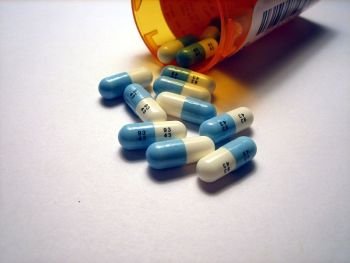
Antidepressant treatment for depression
How were antidepressants discovered?
The discovery of antidepressants was a lucky chance. The drug used for treating tuberculosis was found to brighten mood in depressed people, or they even became ‘high’. This drug was developed into iproniazid, the first monoamine oxidase inhibitor.
At about the same time, another drug company was developing a preparation to help sedate and treat people with schizophrenia.
They started working with an antihistamine-like drug and found it helped lift mood. This substance was developed into imipramine, the first widely used antidepressant. This family of drugs worked primarily on the noradrenaline system. Some years later, drugs that worked on serotonin (5-HT) systems were developed.
For about 40 years the choice of antidepressant was fairly limited, but then there was a very rapid expansion of new families of drugs.
How effective are these drugs?
The effects of active medication have always to be compared with the so-called placebo response – or the changes produced by an inert substance thought to be active by the person using it. About a third of depressed people will have a placebo response if given an inert tablet. They will feel better despite the fact that the substance has no known chemical effect. This effect happens in the treatment of a wide variety of illnesses from high blood pressure to epilepsy. It is not a reflection of the patient’s intelligence, or general ‘mind set’, but rather a response of a normal human being to being given a substance that they believe is a treatment. Common placebo responses (whether an antidepressant or any other tablet) are dry mouth, headache, nausea and drowsiness. All these ‘side-effects’ with a placebo are also found as side-effects of antidepressant medication. These same symptoms can also be symptoms of an untreated depressive illness. This makes evaluating side-effects and the effects of illness more difficult.
What difference does drug treatment make?
Most depressive illness will get better given time, with or without treatment. However, drugs have a very important role in the treatment of depressive illness because they help reduce the unpleasantness of the illness, and speed up recovery. No antidepressant is habit forming – this has been widely researched.
About two-thirds of depressed people will improve given an antidepressant; although they may not respond to the first drug they are given.
So when antidepressants should be prescribed?
The decision whether or not to prescribe an antidepressant depends on whether or not you are actually ill with depression (not merely low in mood). Having a ‘reason’ (or not) for being depressed, does not affect that decision. The signs of illness are biological, or consist of body changes that include:
• Low mood with negative, and possibly suicidal, thoughts
• A change in sleep pattern
• A change in eating pattern (most often a loss of appetite)
• A change in activity level (either agitation or a slowing down of activity)
• A loss of sexual interest and performance, and
• Poor concentration.
There are a variety of suggested mechanisms by which people become depressed.
How long do I need to go on taking an antidepressant?
This has been carefully researched and we tend to give longer courses of treatment now. If this is the first illness, you will need to take medication for a minimum of 6 months from the point at which you felt better (not from day one of taking the tablets). If this is a second episode, it is usually recommended that you have medication for 2-3 years.
This may sound a very long time but, if you are feeling better, and are established on a tablet that you know and trust, it is a very good ‘insurance policy’ to staying well. If you are unfortunate enough to have had three or more episodes of depression in the past, it may be suggested that you take the medication for 5 years.
Some elderly people who become very depressed may need to take medication for the rest of their lives.If you do need to take medication for a relatively long period, try to regard it as a regular, necessary part of your daily routine, like an asthma sufferer using an inhaler.
I’ve been on antidepressants for 2 months but they haven’t worked. My doctor says I might have treatmentresistant depression. What does this mean?
If a second course of antidepressants is given for an adequate time, and there is still no good response, the term ‘treatmentresistant’ depression is used. This does not mean that the illness cannot be treated, but it does mean that both doctor and patient have to keep working at finding a treatment strategy that works.
Treatment-resistant depression can be caused by:
• Not taking the treatment prescribed
• Stopping treatment too soon
• An accompanying physical illness, which has either caused the depression or is making it more difficult to treat
• Alcohol abuse – drinking to try and feel better, which in fact makes mood worse
• Unresolved family or social problems – depressive illness might well not respond to medication until the underlying problem is addressed.
There are many strategies available for treatment-resistant depression. You may be referred to the outpatient clinic for review. Try not to despair – it can be shifted.
Should I increase the dose? Would that help?
That depends on which drug you are taking. Most of the selective serotonin re-uptake inhibitors (SSRIs) have a single dose suiting most people. The older tricyclic antidepressants (TCAs) on the other hand have more leeway with dosage, and we can fine-tune this to suit the individual. Take careful advice from your doctor before altering your dosage. Some psychiatrists use a combination of antidepressants, but this requires expert judgement to get it right.
My dad says ‘Depressed people should just pull their socks up. They don’t need drugs.’ What can I say to him to put him straight?
Tell him that depression is an illness and can affect every area of our lives. The lack of drive and enthusiasm that goes with it can be pretty frustrating for family and friends, especially if their work or home responsibilities are being devolved to others, but it is just as much a medical condition, and just as disabling as, say, a broken leg. It might not look as though something is wrong, but there is.
The drugs we use are well proven, known to be effective and have prevented a great deal of human misery. Of course, self-help tactics are important too, but people may need to be prepared to use a variety of methods to get better. The drugs are not to be taken lightly either!
My gran is on antidepressants but I think she forgets her tablets. She’s on five tablets daily and it does seem complicated. What can we do?
Talk to your chemist about organising a ‘dosette box’. This is a weekly calendar pack with spaces for the day’s pills in morning, noon and night-time enclosures. The chemist can load this up for her weekly, and will arrange the necessary weekly prescriptions from her doctor. All she has to do is open the compartment at mealtimes, and you can easily see if she has missed any. Some chemists can deliver these for the elderly, by arrangement. These boxes are also quite useful if she is going away on holiday.
I took an antidepressant for a few weeks but it didn’t work. What should I do?
Probably you have not gone on for long enough. Antidepressants work slowly. You need to rebuild your levels of brain chemicals over a number of weeks and months. We believe you need to take an antidepressant for 8 weeks to give it a proper trial. You will probably see some improvement after 7-10 days. If there isn’t any benefit, then your doctor may need to switch medication, or review the diagnosis. People who are drinking regularly are less likely to respond fully to antidepressants. A full course of treatment should last for 6 months after you get better, if it is the first time you have been treated.
Can I drink whilst taking antidepressants?
You can, but only in very modest amounts – say a glass of wine or half a pint of beer. Alcohol will exaggerate the sleepy effects of an antidepressant. Never have even the smallest amount of alcohol when you are on antidepressants and intend to drive. You will effectively become drunk much faster. Remember what happened to Princess Diana’s chauffeur – and his passengers.
Can I drive while depressed or taking antidepressant medication?
This is a very difficult question. You certainly could drive whilst you are very depressed and many people knowingly or unknowingly do. There are no statutory regulations about this. In theory nobody who is taking antidepressants should drive. However, serious untreated depression can cause very poor driving because of lack of attention, slow reaction time and indecision.
Someone who is not oversedated with medication and is feeling a lot stronger will be a much safer driver than an untreated depressed person. Some tablets, such as imipramine and similar drugs, cause drowsiness and slower reaction times even at a fairly low dose. The newer antidepressants are much less sedating. If somebody has to drive and needs medication, the latter would be the treatment of choice. If you are a driver of a heavy goods vehicle, you should not drive while taking antidepressant medication.
Generally, if you feel well enough to drive, it is best to give yourself several practice runs in the car in a quiet road, in good light. Make sure that you would be safe if you had to do an emergency stop – if a child ran out into the road, for example. Do not embark on long motorway journeys. Recognise that you will tire faster than you would do normally, if you are depressed or on antidepressants. Be aware that your reaction times will be slower if you are on medication. Do not drink alcohol while on antidepressants if you wish to drive (see question above).
Are there any antidepressant medications that haven’t been tested on animals?
I’m afraid not. Every medication that doctors can prescribe has had to be extensively tested for safety, first in test-tubes, then in animals, then finally in human volunteers. Herbal remedies, which are not licensed as medications, are not checked for safety in this way. This does mean that their safety, effectiveness, correct dose and side-effects are less well understood. Some herbal remedies can be very effective, but can have lethal sideeffects or interactions.
If you have a serious illness causing you distress, perhaps the wisest thing to do is to take the best established, most proven remedy.