VIDEO
Dr. Golding on Chinese Herbal Medicine
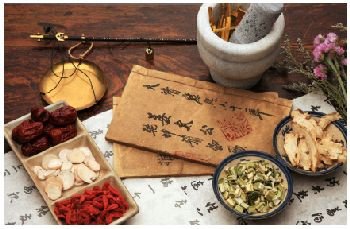
Sheng Jiang (Zingiberis rhizoma recens), Sheng Jiang Zhi (Zingiberis rhizoma recens succus), Wei Jiang (roasted Zingiberis rhizoma recens), and Sheng Jiang Pi (Zingiberis rhizoma recens cortex) are all products of the same herb. What are the differences between their actions?
Sheng Jiang is pungent and slightly warm, and enters the Lung, Spleen and Stomach meridians.
It can disperse Cold and Wind, but its action is not strong. It is used only for mild Exterior Wind-Cold syndrome. However, as it enters the Spleen and Stomach meridians, it has some other excellent functions. It can warm the Middle Jiao, soothe the
Stomach-Qi and alleviate nausea and vomiting. Because it is so effective in stopping vomiting, it is considered as the first-line choice for treating nausea.
This herb is also a good choice if a patient suffers from a Wind-Cold syndrome, has fever, chills, blocked nose and headache, and in the meantime the Stomach-Qi fails to descend, so nausea and vom iting are present-such as in abdominal influenza or acute gastritis.
As Sheng Jiang enters the Lung and Stomach meridians, and is warm and pungent, it can dissolve Phlegm in the Lung and stop a cough. It can be used in patients with chronic bronchitis or asthma and in the meantime who are being attacked by Wind-Cold once more. Sheng Jiang is also suitable for conditions of water accumulation in the Stomach when overconsumption of cold drinks has injured the Stomach and Spleen. The manifestations include fullness in the upper abdomen, poor appetite, nausea and vomiting, such as in acute gastritis.
Sheng Jiang can also reduce the toxicity of Ban Xia (Pinelliae rhizoma) so it is often used to process Ban Xia. After processing, Ban Xia is then called Jiang Ban Xia or Zhi Ban Xia (processed Pinelliae rhizoma).
In Chinese kitchens, Sheng Jiang is often used not only for the taste of the dishes, but also for promoting digestion. It soothes the Stomach-Qi, improves the appetite, and reduces or prevents the toxicity of seafood if it is not fresh. The warm nature of Sheng Jiang can also reduce the cold nature of seafood, so the latter is more easily digested and healthy. If Sheng Jiang is smashed and the juice squeezed out, the result is Sheng Jiang Zhi. This is pungent and slightly warm.
Its function is more or less the same as Sheng Jiang, but stronger and quicker. It is therefore used in acute conditions, such as severe nausea, vomiting, and coma due to Phlegm covering the orifices. In this situation, the normal dose is 3–10 drops of Sheng Jiang Zhi in warm water.
If Sheng Jiang is cleaned with water, then covered with a moistened soft paper and placed near the fireplace, but not above the fire, after a while the paper turns brown and the Sheng Jiang is roasted; it is then called Wei Jiang. It is warm and pungent, but after this processing its pungent taste and the dispersing function are weaker than those of Sheng Jiang and Sheng Jiang Zhi. Meanwhile, the temperature has been increased and the harmonizing function is obtained. It is good at warming the Spleen and Stomach and is used for nausea, vomiting, abdominal pain and diarrhea caused by Cold invasion of the Middle Jiao.
Sheng Jiang Pi is the peel of Sheng Jiang. It is the only product of Jiang that is cold in temperature. It is also pungent and enters the Spleen meridian. It can regulate water metabolism, promote urination, and leach out Dampness. As the herb is quite gentle, it is used especially for edema in pregnant women. For severe edema, it must be used with other herbs that have stronger actions.
Qiang Huo (Notopterygii rhizoma), Bai Zhi (Angelicae dahuricae radix), Chuan Xiong (Chuanxiong rhizoma), and Gao Ben (Ligustici sinensis radix) are often used for treating headache. What are the differences between their actions?
Headache is a symptom as well as a syndrome. Besides the treatment of the causes according to the differentiation of syndromes, some specific herbs that are very effective for alleviating headache as a symptom are often used in treatment. All of these four herbs can alleviate headache.
They are warm, pungent, and aromatic. Warmth and pungency can activate Qi movement, pungency and aroma can penetrate the accumulation of Dampness, Qi and Blood, therefore dispersing the accumulation. Warmth and pungency can also dry Dampness and unblock the meridians, so relieving pain. They are very effective in the treatment of headache caused by invasion of exogenous pathogenic factors and disturbance of the Qi movement and Blood circulation. They can also be used for headache due to stagnation of Qi and Blood in the dysfunction of internal organs.
The four herbs also have their individual characteristics in their action because they enter different meridians. Qiang Huo enters the Bladder meridian and treats pain in the occiput especially; Bai Zhi enters the Stomach meridian and is especially effective for relieving pain in the forehead; Chuan Xiong enters the San Jiao and Gall Bladder meridians and treats headache on the sides of the head; Gao Ben enters the Bladder meridian, so can reach the top of the head and alleviate the pain there.
As many meridians pass through the head, headache is often caused by blockage of one or more meridians, such as in migraine, headache due to stress, spondylosis and sinusitis. These herbs are often used together according to the location of the pain. Since they focus on the symptoms rather than the syndrome, they should be used as only one part of the complete treatment of the syndrome.