VIDEO
Food Shopping with an Eating Disorder
I am concerned that my roommate may have anorexia, but I am not certain. Are there any behaviors or warning signs that I should be watching for?
A diagnosis of anorexia nervosa is established after a thorough examination by a healthcare professional.
However, there are some behavioral signs, or “red flags,” that may signal a reason to be concerned. Early intervention and treatment are shown to assist in the recovery from anorexia, so it is important to speak to loved ones and encourage talking to a healthcare professional as soon as you suspect a problem.
With gratitude to Anorexia Nervosa and Related Eating Disorders, Inc. (ANRED) and the Multiservice Eating Disorders Association (MEDA), the following checklists present warning signs associated with anorexia nervosa. The signs are grouped into different behavior categories for the sake of clarity.
Someone with anorexia nervosa may exhibit some or all of these symptoms. Many of the signs and symptoms listed can also be signs of other illness, so be sure to consult a trained professional for a complete evaluation and proper diagnosis.
Food Behaviors
Circle behaviors observed:
• Denies hunger
• Will only eat a few “safe” foods
• Avoids eating with others
• Cooks for others but does not eat what is prepared
• Is ritualistic about food (e.g., chews each bite a certain number of times, measures food servings, counts the number of food items eaten) or has other rules about eating (e.g., will not eat past a certain time)
• Restricts eating or maintains severe dieting
• Purges (i.e., self-induced vomiting)
• Makes frequent trips to the bathroom after eating (can be a sign of purging)
• Hoards food
• Eats alone; eating patterns are vague or secretive
• Overuses caffeine
• Skips meals
• Chews food and spits it out before swallowing
• Makes excuses for not eating; plays with food on plate, or moves it around, instead of eating
• Is preoccupied with food content and ingredients
• Divides food into “good” and “bad” based on fat content
• Suffers intense guilt after eating
Appearance and Body Image Behaviors
• Has lost significant weight and/or refuses to maintain minimum normal weight
• Exhibits great concern about weight; shows intense fear of gaining weight; complains of “feeling fat”
• Spends time inspecting self in mirror
• Entertains magical thinking about weight (e.g., “If I am thinner, I will feel better about myself.”)
• Seeks to emulate thin people
• Wears baggy clothes to hide weight loss
• Weighs self frequently
• Has negative body image
• Weight fluctuates
• Abuses diet pills or prescription medications
Exercise Behaviors
• Exercises even when injured or overly tired
• Exercises compulsively
Thoughts, Beliefs, and Feelings
• Difficulty expressing feelings that are not related to food or weight
• Suicidal thoughts
• Depression (may include feelings of shame, anger, or guilt) • Self-critical and/or a “perfectionist”
• Overly concerned with opinions of others; may be described as a “people-pleaser”
• Extremes in thinking (e.g., “all or nothing thinking”;
• Low self-esteem, feelings of worthlessness
• Mood fluctuations, irritability
• Difficulty concentrating
• Isolated, withdrawn
• Impaired relationships
Physical Complaints
• Abdominal cramps, bloating
• Decreased coordination
• Headaches
• Dental problems, swollen glands, discolored teeth
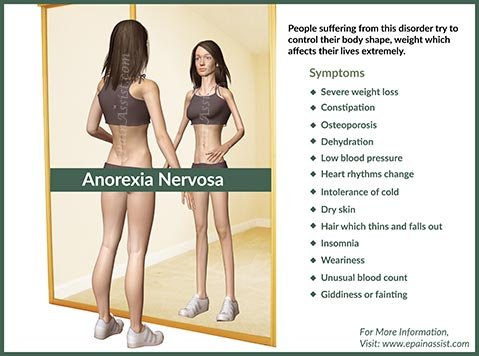
• Hair loss
• Dry skin, bruises
• Bloodshot eyes
• Insomnia
• Constipation, gastrointestinal problems
• Frequent complaints about being cold
• Fatigue, or in contrast, hyperactivity
• Complaints of nausea
• Dizziness or fainting
• Growth of fine, downy body hair
Other Behaviors
• Self-mutilating behaviors (e.g., hitting, burning, or cutting oneself)
• Denial of symptoms
• Substance use or abuse
• Suicidal gestures
• Dramatic weight loss
• Frequent use of laxatives or diuretics
While all of these “other” behaviors can raise concern for anorexia, their appearance, even in isolation, is associated with an additional increased risk of harm. Professional attention is strongly recommended.
Sarah shares:
I used to constantly worry about what other people were eating and would compare my daily intake to that of my close friends. I meticulously planned out every little detail of when/where/what I ate, and rigidly stuck to my self-created rules. To anyone who spent a significant amount of time with me, it was pretty apparent that something wasn’t right.
Eating Disorders Self-Test
Do You Have an Eating Disorder?
Respond honestly to these questions. Do you:
• Constantly think about your food, weight, or body image?
• Have difficulty concentrating because of those thoughts?
• Worry about what your last meal is doing to your body?
• Experience guilt or shame about eating?
• Find it difficult to eat in public?
• Count calories whenever you eat or drink?
• Still feel fat when others tell you that you are thin?
• Obsess that your stomach, hips, thighs, or buttocks are too big?
• Weigh yourself several times daily?
• Feel that the number on your scale determines your mood and outlook for the day?
• Punish yourself with more exercise or restrictions if you don’t like the number on the scale?
• Exercise more than an hour every day to burn calories?
• Exercise to lose weight even if you are ill or injured?
• Label foods as “good” and “bad”?
• Vomit after eating?
• Berate yourself if you eat a “forbidden” food and compensate by skipping your next meal?
• Use laxatives or diuretics to keep your weight down?
• Severely limit your food intake?
If you answered “yes” to any of these questions, regardless of whether you fit the diagnostic criteria for an eating disorder, your attitudes and behaviors about food and weight may need to be addressed.
A professional familiar with the treatment of eating disorders can give you a thorough assessment, honest feedback, and advice about what you may want to do next. You may find it helpful to share your thoughts, concerns, and feelings with someone who can listen compassionately while suspending judgment. At the very least, you deserve help maintaining your physical and medical safety, something that an eating disorders professional can provide.
Source: Adapted from Hall, L., and Ostroff, M. (1999). Anorexia nervosa: A guide to recovery. (pp. 29–30).